
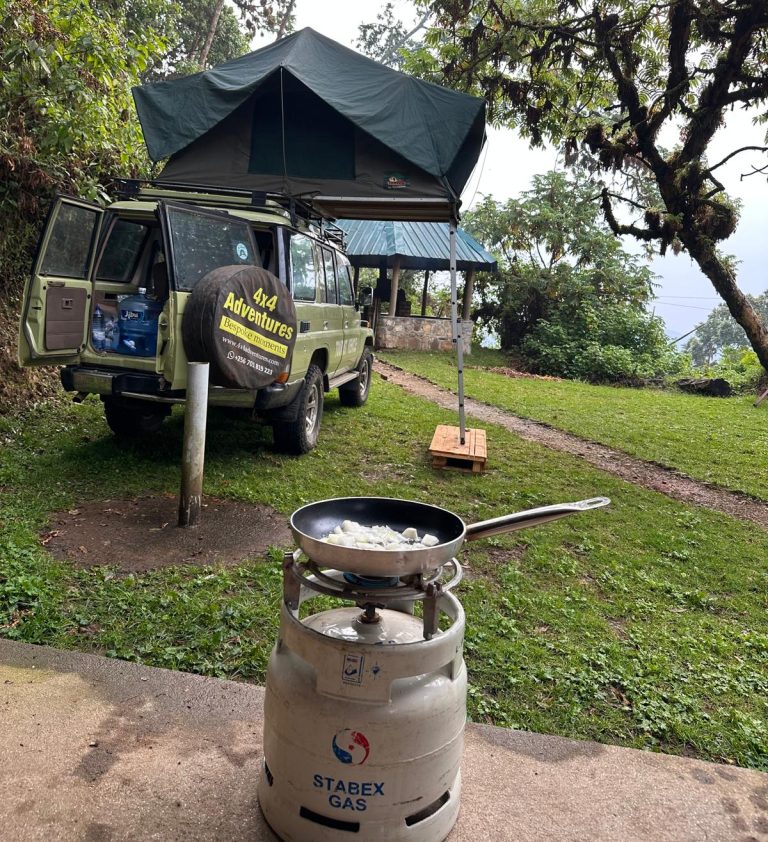
4x4 Rooftop Tent Car Rental in Kenya
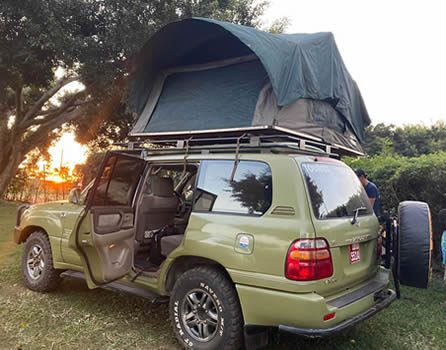
A 4×4 rooftop tent car in Kenya is a self-drive 4-wheel-drive vehicle — typically a Toyota Land Cruiser, Land Cruiser Prado, Toyota Hilux, or Land Rover Defender — fitted with a fold-out tent mounted permanently on the roof rack. Instead of pitching a tent on the ground or booking a lodge, travellers climb an integrated ladder and sleep above the vehicle, off the ground, inside a durable, weatherproof canvas or hardshell tent.
This style of self-drive camping has become one of the most popular ways to explore Kenya’s national parks, conservancies, and coastal routes. It combines the freedom of a fly-drive safari with the comfort, safety, and convenience of an elevated sleeping platform — no need to check into a different lodge every night, no tent pegs to fight with in the dark, and no direct ground-level exposure to insects, snakes, or curious wildlife wandering through camp.
Rooftop tent 4×4 hire in Kenya is ideal for independent travellers, overlanders, photographers, families, and couples who want to design their own route — from Nairobi to the Maasai Mara, Amboseli, Lake Naivasha, Samburu, Tsavo, or the Kenyan coast — while carrying their accommodation with them. Most rental companies in Nairobi offer fully-equipped 4×4 rooftop tent vehicles that include camping gear, a fridge/cooler box, cooking equipment, recovery gear, and GPS or route guidance, making it possible to book a single vehicle and be ready to hit the road within hours.
Types of 4×4 Rooftop Tents in Kenya (Hardshell vs Softshell)
Rooftop tents used on Kenyan self-drive 4×4 vehicles generally fall into two categories: softshell (fold-out) tents and hardshell tents. Each has distinct advantages depending on your budget, group size, and travel style.
Softshell Rooftop Tents
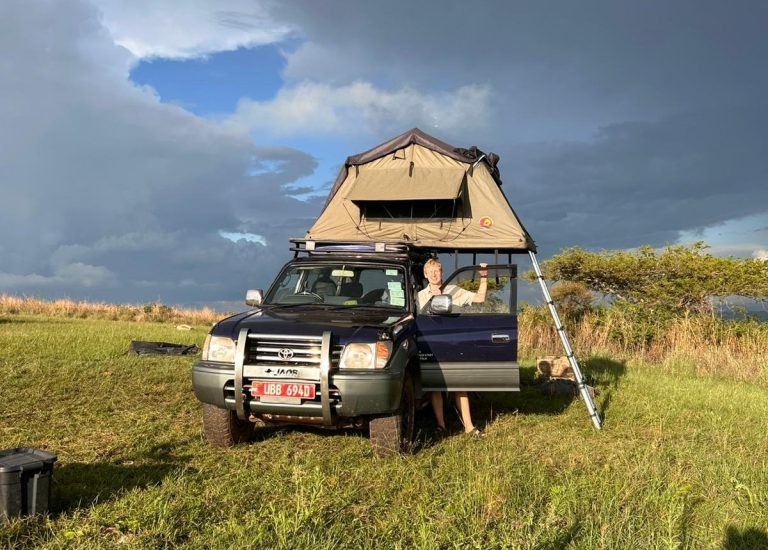
Softshell tents are the most common type fitted to rental 4x4s in Kenya. They are made of heavy-duty, UV-resistant, waterproof canvas or ripstop poly-cotton stretched over a folding aluminium or steel frame. When closed, they fold down into a low-profile bag on the roof rack; when opened, a built-in ladder extends down to the ground and the tent unfolds into a spacious sleeping area with a built-in high-density foam mattress.
- Affordability: Softshell tents are cheaper to rent, which keeps daily hire rates lower.
- Space: They generally offer more usable floor and headroom once fully unfolded, making them comfortable for double and family setups.
- Set-up time: Take roughly 5–10 minutes to open and close, slightly longer than hardshell models.
- Weight: Lighter on fuel consumption and easier to fit to a wider range of 4×4 vehicles.
Hardshell Rooftop Tents
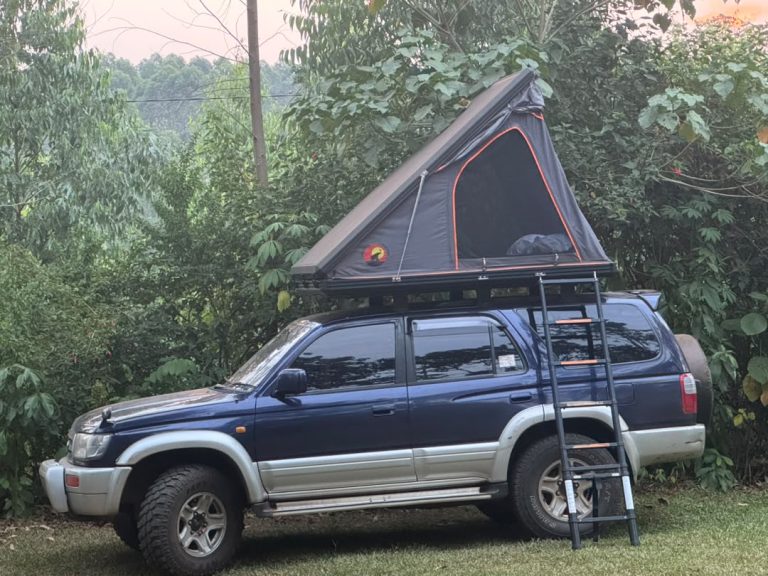
Hardshell tents use a rigid fibreglass, aluminium, or ABS shell that pops up (vertically) or wedges open (like a clamshell) rather than folding out fabric walls in the traditional sense. They are a premium option increasingly available from specialist overlanding outfitters in Kenya.
- Speed: Open and close in under 60 seconds — ideal if you’re setting up camp after a long game drive or in fading light.
- Durability: The rigid shell withstands rain, wind, and rough handling better over the long term.
- Aerodynamics: Lower profile on the roof means less wind noise and slightly better fuel economy on tarmac.
- Price: Command a higher daily rental rate and are usually limited to 2-person capacity.
For a deeper technical comparison of shell types, frame designs, and mattress specifications, see this detailed breakdown of rooftop tent types used across East Africa.
3. 4×4 Rentals with Rooftop Tents in Kenya (Single, Double & Family)
Kenyan 4×4 rooftop tent rentals are typically categorised by sleeping capacity, since the tent size determines both comfort and the vehicle’s fuel efficiency and off-road handling.
Single Rooftop Tent 4×4 Hire
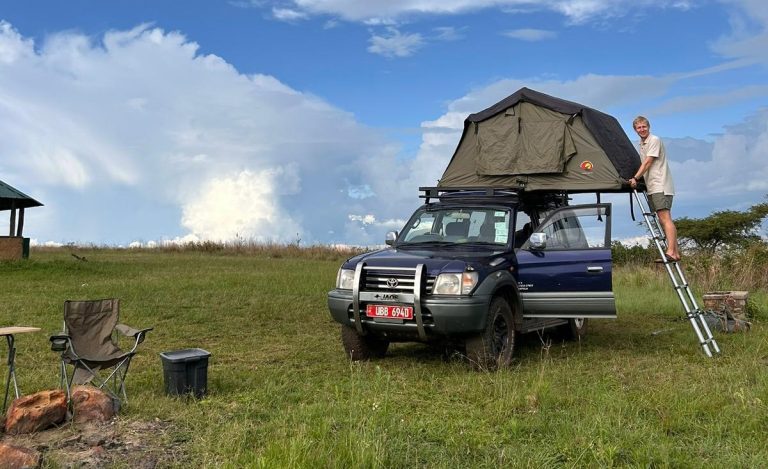
A single (2-person) rooftop tent, usually mounted on a Toyota RAV4, Land Cruiser Prado, or Toyota Hilux single cab, is the go-to choice for solo travellers or couples. It offers a compact footprint, better fuel economy, and easier manoeuvrability on narrow park tracks and mountain roads such as those around Mount Kenya or the Aberdares.
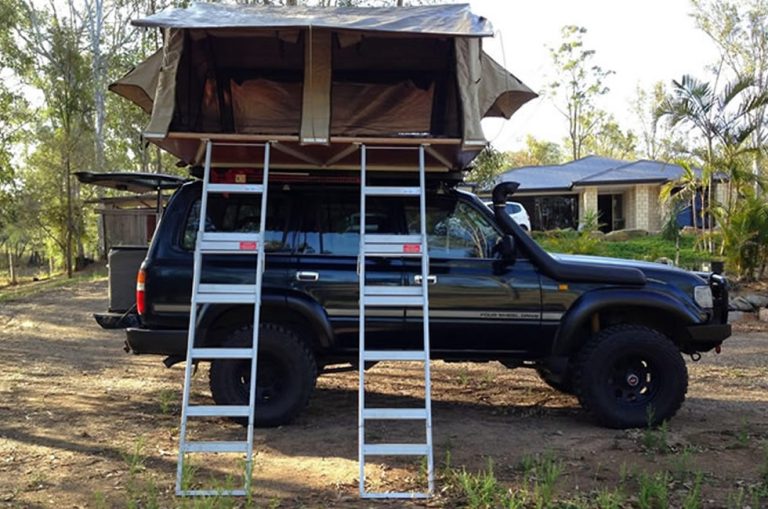
Double Rooftop Tent 4×4 Hire
Some vehicles — particularly double-cab pick-ups like the Toyota Hilux Double Cab or Land Cruiser 79 series — are fitted with two separate rooftop tents (one over the cab, one over the rear canopy), allowing two couples or up to four adults to travel together in one vehicle while still sleeping in private, separated tents. This is a popular option for two-couple road trips to the Maasai Mara or Amboseli.
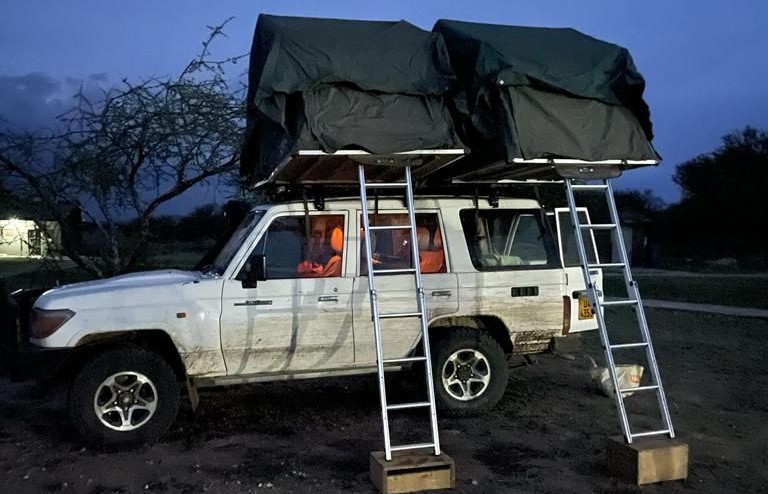
Family Rooftop Tent 4×4 Hire
Family-sized setups pair a larger 3–4 person rooftop tent (extra length for children) with a ground annex tent that zips onto the vehicle’s side, effectively doubling the sleeping area. These are usually fitted to a Land Cruiser 78/79 Series, Land Cruiser 105/200 Series, or a Land Rover Defender 110, all of which have the load capacity and roof-rack strength to carry a larger tent plus camping equipment, water tanks, and a fridge. Family packages typically include extra bedding, a larger cooler box, and sometimes a second ground tent for teenagers or additional guests.
4. Top Car Rental Options with 4×4 Rooftop Tents in Kenya
Below is a general overview of the type of 4×4 rooftop tent vehicles most commonly available for self-drive hire in Kenya. Exact models, tent brands, and inclusions vary by operator, so always confirm specifications directly with the rental company before booking.
Toyota Landcruiser LX
Standard Toyota Land Cruiser
Toyota Mini-Van Hiace
Toyota Hilux
Toyota Land Cruiser Extended
Land Cruiser with Rooftop Tent
Land cruiser v8 100 Series with Double Rooftop Tent
Land cruiser V8 - VX
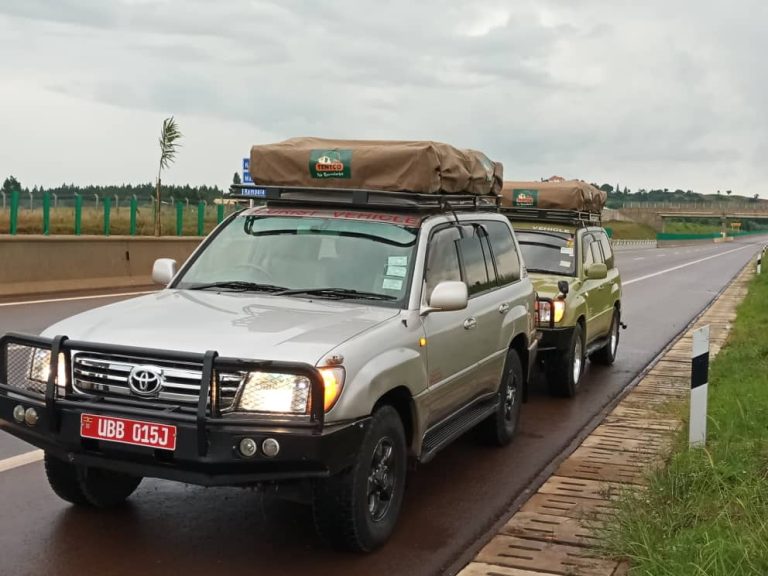
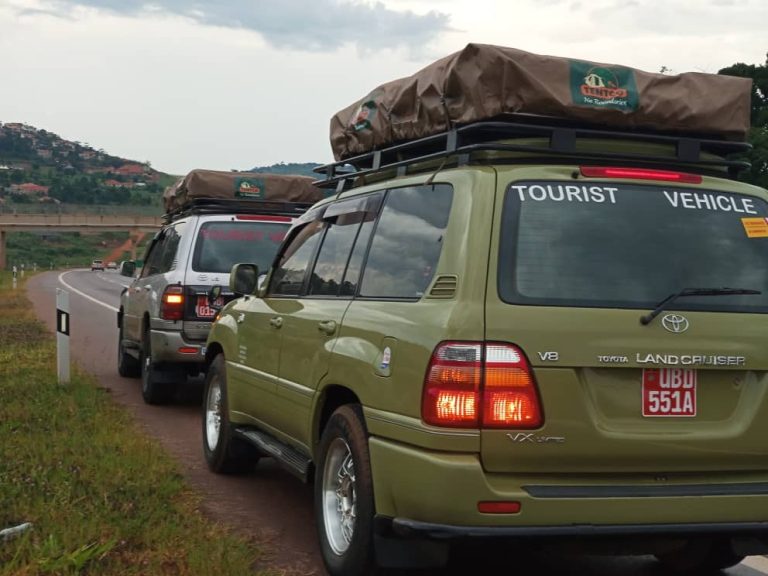
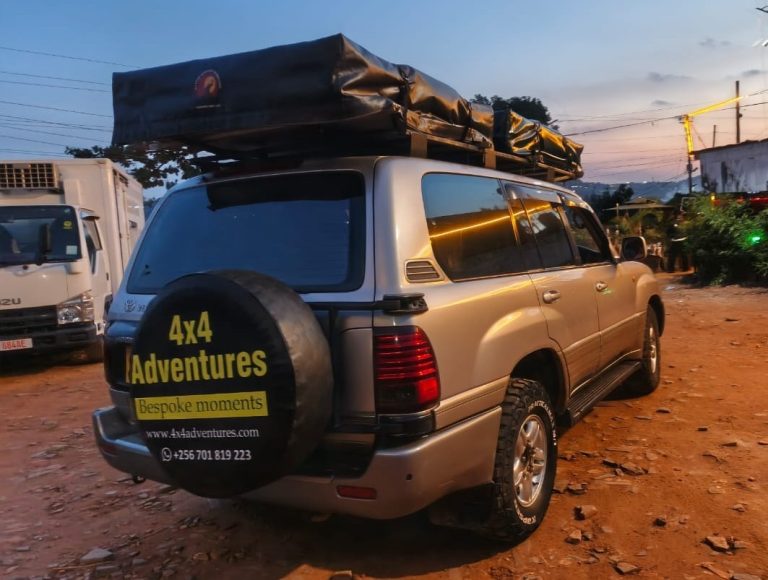
We bundle the rooftop tent hire with a full self-drive equipment package — rooftop tent with mattress and bedding, camping table and chairs, gas cooker, cooler/fridge box and jerry cans.
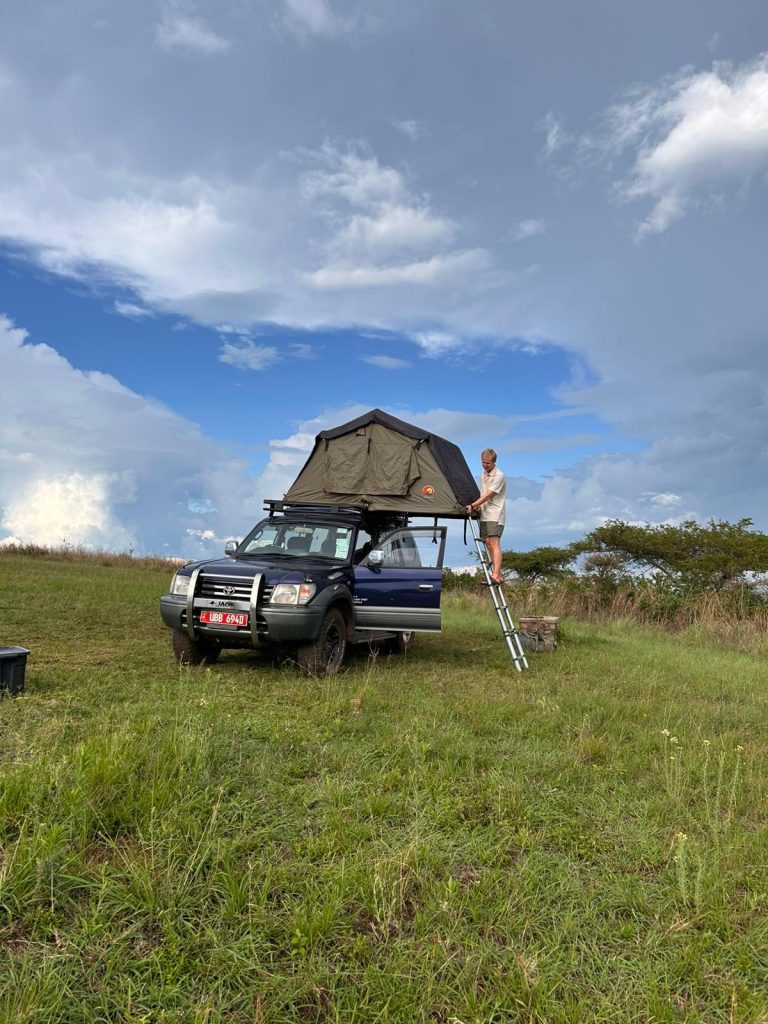
5. How to Set Up a 4×4 Rooftop Tent in Kenya
Setting up a rooftop tent is straightforward and most rental companies walk you through it during vehicle handover. Here’s the general process:
- Park on level ground: Choose a flat, stable spot away from overhanging branches, anthills, or slopes that could tilt the vehicle.
- Release the cover: Undo the storage cover straps or clips (softshell) or release the corner latches (hardshell).
- Unfold or lift the tent: Push the folded tent open along its hinge (softshell) or use gas struts to lift the shell (hardshell) until the frame locks into place.
- Extend the ladder: Pull down the telescopic access ladder and secure its feet firmly on the ground; this also acts as a support pole for softshell models.
- Secure the rainfly and windows: Zip up mesh panels for ventilation, or close the rainfly/PVC windows if rain or wind is expected.
- Load your bedding: Most tents come with a permanently fitted high-density foam mattress — simply roll out your sleeping bag or provided bedding.
- Pack down each morning: Air out and dry the canvas if possible, fold the ladder up, refold the tent, and re-secure the cover before driving off.
Full setup typically takes 5–10 minutes for softshell tents and under a minute for hardshell tents. Rental staff in Nairobi almost always run a live demonstration at pickup, and many vehicles include a printed quick-guide stored in the glovebox.
Sleeping Comfort
- High-quality canvas rooftop tent with a built-in, thick foam mattress.
- Warm sleeping bags or full linen sets (sheets, duvets/blankets, and pillows).
- Integrated mosquito netting on all tent windows and doors.
- Collapsible lightweight aluminum access ladder.
Fully Equipped Kitchen & Dining
- 40L to 45L portable 12V electric fridge/freezer (powered by an independent dual-battery system).
- Dual-burner gas cylinder and stove.
- Heavy-duty plastic storage crates for food items.
- Full set of cookware: pots, pans, kettle, cutting boards, and sharp knives.
- High-quality tableware: stainless steel plates, bowls, cups, mugs, and cutlery.
- Folding camping table and comfortable canvas safari chairs.
Recovery & Off-Road Safety Tools
- Heavy-duty mechanical jack or high-lift jack.
- Spare tire (often dual spares for long-distance routes) and wheel spanner.
- Spade, tow rope, and jumper cables.
- First aid kit and warning triangles.
6. 4×4 Rooftop Tent Self-Drive Itinerary Ideas in Kenya
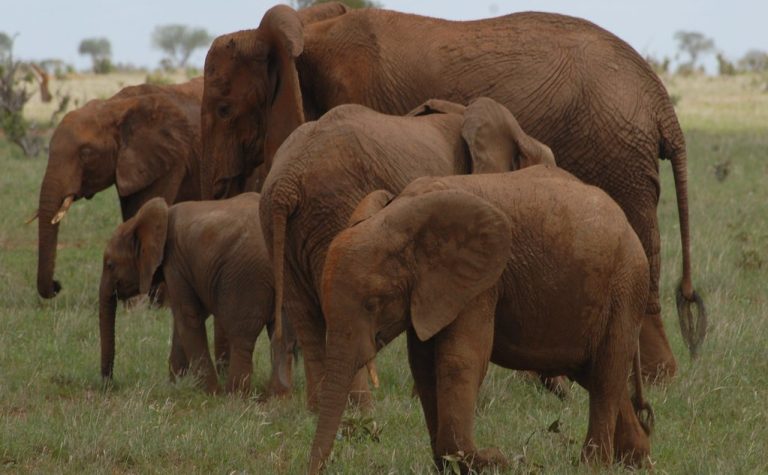
Classic Southern Circuit (7–10 Days)
Nairobi → Lake Naivasha → Maasai Mara National Reserve → Amboseli National Park → Tsavo West → back to Nairobi. This route mixes Rift Valley scenery, big-cat game viewing in the Mara, and iconic Kilimanjaro backdrops at Amboseli.
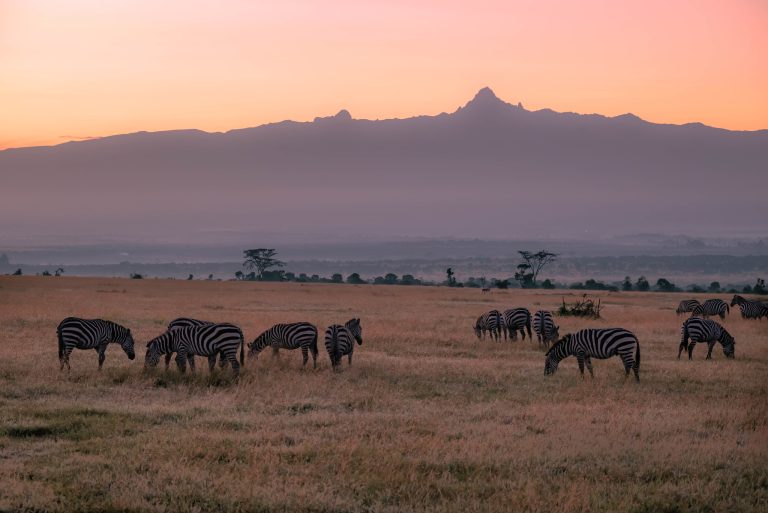
Northern Frontier Adventure (10–14 Days)
Nairobi → Mount Kenya region → Samburu National Reserve → Lake Turkana → Marsabit → back via Isiolo. A more remote, off-road-heavy route best suited to a Land Cruiser 78 Series or similar rugged 4×4 with extra fuel and water capacity.
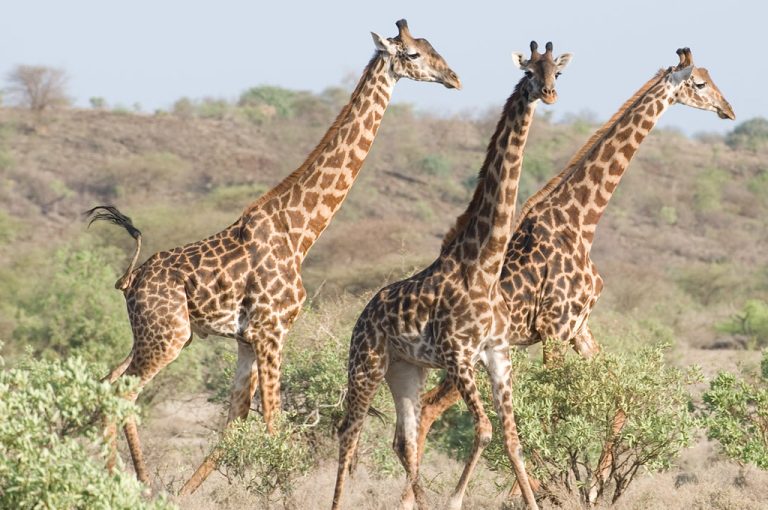
Rift Valley Lakes Loop (4–5 Days)
Nairobi → Lake Naivasha → Lake Nakuru National Park → Lake Elementaita → Lake Bogoria → back to Nairobi. A shorter, family-friendly loop with easy tarmac access, ideal for a first-time rooftop tent self-drive.
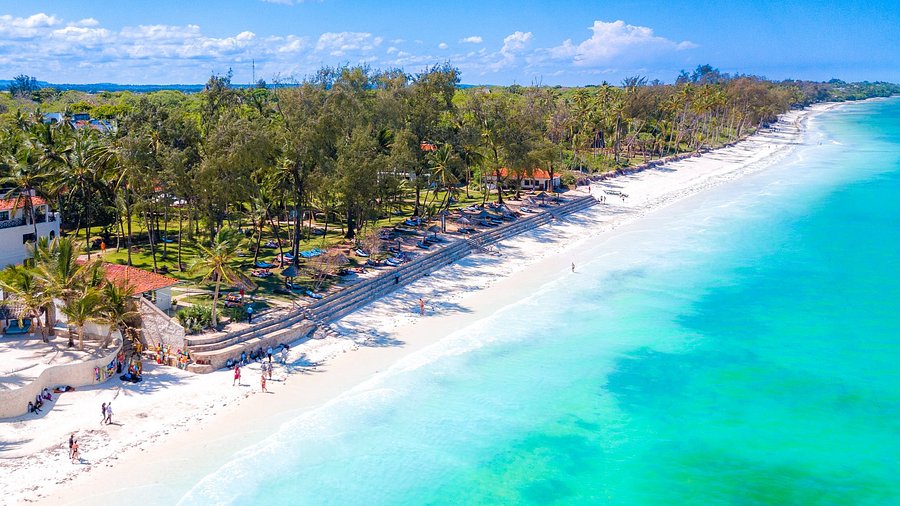
Coastal Combo (7 Days)
Nairobi → Tsavo East → Tsavo West → Diani/Watamu coastline. Pairs inland game drives with beach camping, best attempted in a Land Cruiser Prado or Hilux for the long tarmac stretches.
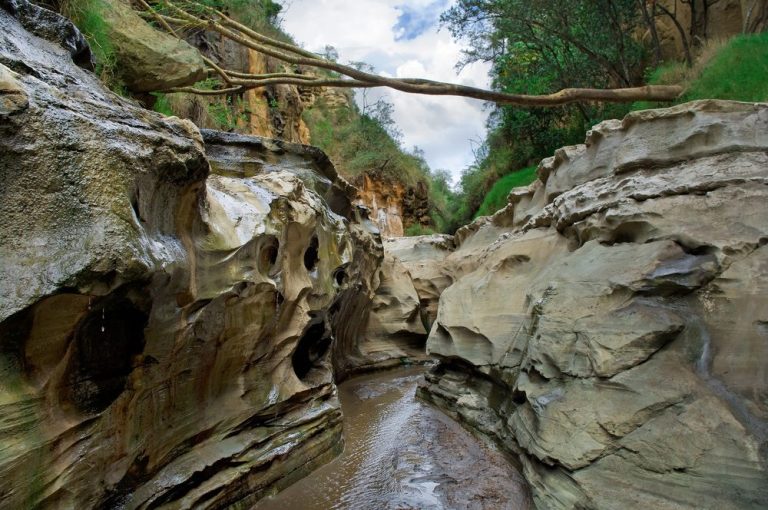
Quick Weekend Escape (2–3 Days)
Nairobi → Lake Naivasha or Hell’s Gate National Park → Nairobi. A perfect low-commitment trial run for first-time rooftop tent campers, with easy access and established campsites.
7. How to Book a 4×4 Rooftop Tent in Kenya
- Define your route and dates: Know roughly which parks you’ll visit and how many nights you need, since prices are usually quoted per day.
- Choose your tent capacity: Decide between single, double, or family setup based on your group size.
- Compare rental operators: Look at vehicle age, tent brand/condition, included camping gear, mileage limits, and customer reviews.
- Request a detailed quote: Ask for a full breakdown — daily rate, park entry logistics, insurance, deposit, extra camping equipment, and any one-way or delivery fees.
- Confirm licensing requirements: You’ll need a valid driving licence (an International Driving Permit is recommended alongside your national licence) and to meet the minimum age requirement, usually 23–25 years.
- Pay the deposit and sign the rental agreement: Review the insurance excess, off-road usage terms, and cancellation policy carefully.
- Attend the vehicle handover: Inspect the vehicle, test the rooftop tent setup, check all camping equipment is present, and confirm emergency contact numbers before departure.
Book at least 4–6 weeks in advance for peak season (July–October and December–January), when demand for 4×4 rooftop tent vehicles in Nairobi rises sharply due to the wildebeest migration and holiday travel.
8. Where to Go with a 4×4 Rooftop Tent in Kenya (Top Camping Sites)
- Maasai Mara National Reserve: Public and conservancy campsites along the Mara River and Talek areas offer unbeatable access to the Great Migration and resident big cats.
- Amboseli National Park: Campsites with direct views of Mount Kilimanjaro, ideal for sunrise photography from your rooftop tent.
- Lake Naivasha: Riverside and lakeside campsites close to Nairobi, popular for a first or short rooftop tent trip, with hippos often grazing near camp at night.
- Lake Nakuru National Park: Forested campsites within a fenced, predator-light park — a good option for families and nervous first-timers.
- Samburu National Reserve: Riverine campsites along the Ewaso Ng’iro River in Kenya’s arid north, home to species found nowhere else in the country.
- Tsavo East & Tsavo West: Public campsites amid Kenya’s largest protected wilderness, known for red-earth elephants and volcanic scenery.
- Hell’s Gate National Park: One of the few parks where self-driving and even cycling among wildlife is permitted, with campsites at the park gate.
- Mount Kenya region: Forest-edge campsites at cooler altitude, good for travellers combining rooftop camping with day hikes.
Diani & the South Coast: Beachside campsites for travellers extending an inland safari with a coastal
9. Advantages of Sleeping in a Rooftop Tent vs Ground Tents & Lodges
- Elevation and safety: Sleeping above ground level keeps you clear of snakes, scorpions, and most ground-dwelling wildlife that might wander through an unfenced campsite.
- Faster, easier setup: No pegs, poles, or groundsheets to wrestle with — the tent is already attached to the roof and opens in minutes.
- Built-in comfort: A permanent high-density foam mattress beats an inflatable mat or lodge floor mattress laid on uneven ground.
- Better airflow and views: Mesh panels and an elevated vantage point give cooler night-time ventilation and often a direct view over the bush or a lake.
- Cost savings over multiple nights: Renting one rooftop tent vehicle is typically far cheaper across a multi-night itinerary than booking a string of lodges or tented camps.
- Freedom and flexibility: You decide when to move on, where to stop for photos, and which campsite to try next — without being locked into a fixed lodge schedule.
- Weather protection: Being off the ground means no flooding into your sleeping area during heavy rain, a real risk with ground tents in Kenya’s wet season.
10. Is It Safe to Sleep in a 4×4 Rooftop Tent in the Wilderness?
Yes — rooftop tent camping is widely regarded as one of the safer ways to camp in Kenya’s wild areas, precisely because it keeps you elevated and inside a vehicle-anchored structure rather than at ground level. That said, sensible precautions still matter:
- Camp only in designated or ranger-approved sites: Official campsites in national parks and conservancies are chosen with wildlife movement patterns in mind.
- Never leave food inside or near the tent: Store all food, especially anything scented, in a sealed cooler box inside the closed vehicle cabin.
- Keep the ladder up and windows zipped at night: This maintains the tent’s main safety barrier — an unsecured entrance defeats the purpose of elevation.
- Avoid climbing down at night unless necessary: Use a flashlight and check your surroundings before descending if you must leave the tent after dark.
- Choose fenced or ranger-patrolled campsites for first-timers: Parks like Lake Nakuru or Hell’s Gate offer a gentler introduction to wilderness camping.
- Follow park and conservancy guidelines: Many require an armed ranger escort or advise against walking outside camp after dark in Big Five areas like the Mara and Tsavo.
Reputable rental companies brief every renter on wildlife safety, campsite selection, and emergency procedures at handover, and many provide 24-hour support contacts for the duration of the rental.
11. How to Choose Where to Camp with Your 4×4 Rooftop Tent
- Match the site to your experience level: First-timers should start with fenced or low-predator-density parks (Lake Nakuru, Hell’s Gate) before attempting open, unfenced Big Five wilderness camping.
- Check facilities in advance: Confirm whether the site has ablution blocks, drinking water, and a cooking shelter, or whether you need to be fully self-sufficient.
- Consider proximity to game-viewing areas: Camping inside or near a reserve cuts down early-morning drive time to catch dawn game drives.
- Assess ground conditions and access roads: Some campsites are only reachable via rough tracks that need a high-clearance 4×4 and, in the wet season, low-range capability.
- Book ahead in peak season: Popular Mara and Amboseli campsites fill up quickly between July and October — reserve your site alongside your vehicle booking.
- Balance scenery with safety: A riverside or lakeside pitch offers beautiful views but may also attract hippos and elephants at night — always ask local rangers or campsite staff for guidance on that night’s wildlife activity.
- Plan fuel and supply stops: Choose camping sites within a reasonable distance of the last fuel station or town, particularly in remote northern circuits like Samburu or Turkana.
12. Frequently Asked Questions
How much does it cost to rent a 4×4 with a rooftop tent in Kenya?
Daily rates vary by vehicle type, tent capacity, and season, generally ranging from budget compact 4x4s with a single rooftop tent up to premium Land Cruiser or Land Rover setups with family tents and full camping kits. Request a personalised quote from your chosen operator based on your exact dates and route.
Do I need off-road driving experience?
Basic driving competence is enough for most main park circuits, but remote northern routes and technical tracks are best suited to travellers with some 4×4 experience, or you can hire a driver-guide for those sections.
Is camping gear included in the rental?
Most 4×4 rooftop tent rentals in Kenya include core camping equipment — bedding, cooler box, table, chairs, cooking gear, and recovery equipment — but always confirm the exact inclusion list with your rental company before booking.
Can children sleep in a rooftop tent?
Yes, family-sized rooftop tents with a ground annex are specifically designed to accommodate children alongside adults, giving extra sleeping space within the same camp setup.
Ready to hit the road? Compare 4×4 rooftop tent rental options in Nairobi, confirm your route and campsites, and book early for peak migration season to secure the best vehicle and tent combination for your Kenya self-drive adventure.