
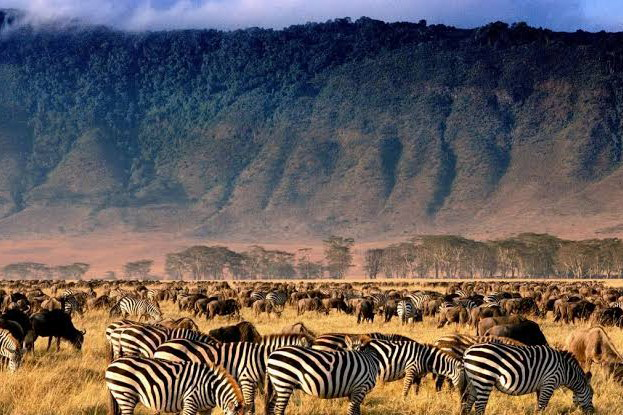
Discover Ngorongoro Conservation Area: A Unique Confluence of Nature and Culture
East Africa stands as one of the world’s most ecologically diverse and visually stunning regions, offering an unmatched tapestry of dramatic landscapes, rare wildlife, and profound cultural heritage. From the snow-capped peak of Mount Kilimanjaro overlooking dusty savannahs to the volcanic calderas of Tanzania and the dense, misty bamboo forests of southwestern Uganda, this region provides travelers with lifelong memories. This comprehensive guide explores three of East Africa’s most iconic destinations: Amboseli National Park, Mgahinga Gorilla National Park, and the Ngorongoro Conservation Area, providing all the insights, itineraries, and practical details needed to plan an extraordinary expedition. Part 1: Amboseli National Park — A Jewel of Kenya’s Wilderness Introduction to Amboseli Nestled at the foot of Mount Kilimanjaro in southern Kenya’s Kajiado County, Amboseli National Park stands as one of Africa’s premier wildlife destinations. Spanning 392 square kilometers, the park’s name is derived from a Maasai word meaning “salty dust,” reflecting its dynamic and arid environment. Located northwest of Tanzania’s Mount Kilimanjaro, it is globally celebrated for offering the classic, most photographed view in Africa: massive herds of free-roaming elephants silhouetted against the snow-capped majesty of the continent’s highest peak. Why Choose a Self-Drive Rooftop Tent Safari? For high-intent travelers and independent explorers looking for an immersive outdoor adventure, tackling Amboseli on a self-drive camping and rooftop tent safari offers unmatched freedom, flexibility, and a front-row seat to raw African nature. Trading rigid tour schedules for an independent 4×4 expedition transforms your journey into a true personal adventure: Total Itinerary Control: Travel at your own pace, linger as long as you want at prime wildlife viewing spots, and design custom routes across Kenya’s iconic national parks. Elevated Wilderness Camping: Sleep securely off the ground in a heavy-duty, weather-proof rooftop tent featuring built-in high-density foam mattresses, excellent ventilation, and panoramic mesh windows. Fully Equipped Mobile Kitchens: Your 4×4 rental vehicle comes outfitted with complete camping gear—including cooking utensils, a portable gas stove, a cooler or electric fridge, sleeping bags, camping chairs, and essential recovery gear. Wildlife & Captivating Scenery in Amboseli Amboseli’s unique ecosystem combines open plains, acacia woodlands, and permanent marshlands fed by underground meltwaters from Kilimanjaro’s snowcaps. The Elephant Sanctuary: The park is globally famous for its massive elephant herds boasting impressive tusks, often observed moving sedately in large family groups against breathtaking backdrops. The Big Five & More: Alongside elephants, encounter lions, buffaloes, cheetahs, and leopards prowling the savannah, while elusive rhinos occasionally make their presence felt. A Birdwatcher’s Paradise: The park’s swamps attract over 400 to 600 bird species, including waterfowl like pelicans and egrets, kingfishers, African jacanas, and African fish eagles. Cultural Tapestry: Beyond its natural allure, Amboseli is steeped in cultural richness as the land is entwined with the heritage of the Maasai people. Visitors can engage with Maasai communities through organized tours, gaining insights into their traditions, livelihood, and harmonious coexistence with wildlife. Navigation & Access Guide via Kimana Gate Amboseli features multiple entry points—including Meshanani, Kitirua, Iremito, and Kimana—allowing you to map your drive depending on your departure point. Entering via Kimana Gate: This main portal serves as a transition from bustling human settlements into a raw ecological haven of sprawling plains and marshlands. Self-Drive Route from Nairobi: Travel from Nairobi via the Nairobi-Mombasa road to Emali, switch onto the Emali-Loitokitok road, and follow the directional signage straight toward Amboseli’s gates. Vehicle Requirement: Navigating the changing terrain, dusty tracks, and park terrain requires a robust, high-clearance 4×4 vehicle (such as a Toyota Land Cruiser or 4×4 double cab) equipped with 4WD capabilities. Conservation in Amboseli Like many natural wonders around the globe, Amboseli faces conservation challenges, including climate change, human-wildlife conflict, and habitat pressures. Ecotourism plays a pivotal role by funding conservation while uplifting local communities. Practicing responsible tourism ensures that visitors leave nothing behind but footprints while absorbing the breathtaking beauty of the park. Wildlife at Ngorongoro Crater Part 2: Mgahinga Gorilla National Park — Uganda’s Untamed Volcanic Paradise Introduction to Mgahinga Nestled deep within the southwestern corner of Uganda in the Kisoro District—near the borders of Rwanda and the Democratic Republic of Congo—Mgahinga Gorilla National Park is an extraordinary hidden treasure. Spanning 33.7 square kilometers, this compact yet biodiverse sanctuary forms part of the greater Virunga Conservation Area, offering travelers an immersive escape into pristine montane forests, bamboo thickets, and dramatic volcanic highlands. Why Visit Mgahinga? While often compared to its neighbor Bwindi Impenetrable National Park, Mgahinga offers a distinct, less-crowded safari experience characterized by several unique highlights: The Rare Dual Primate Experience: Unlike Bwindi, where you track mountain gorillas and must travel elsewhere for chimpanzees, Mgahinga allows you to experience a two-in-one primate adventure—tracking both endangered mountain gorillas and playful, vibrant golden monkeys in a single destination. Dramatic Volcanic Scenery: The park is framed by three striking conical extinct volcanoes—Mount Gahinga, Mount Muhavura, and Mount Sabyinyo—which create an awe-inspiring backdrop for every hike. Rich Cultural Immersion: Embark on the historic Batwa Trail to learn about the ancient forest traditions and lifestyle of the indigenous Batwa pygmies. Wildlife Diversity & Ecosystems Mgahinga’s unique mix of alpine zones and dense montane vegetation supports an incredible array of wildlife: Endangered Mountain Gorillas: Witness habituated gorilla families roaming freely through lush bamboo slopes. Golden Monkeys: Spot these rare, charismatic primates leaping through the high-altitude bamboo forests. Mammals & Birdlife: The park is home to forest buffaloes, bushbucks, black-fronted duikers, and over 400 recorded bird species, including the Ruwenzori Turaco, Archer’s Robin-Chat, and Regal Sunbird. Understanding the Seasons & Best Time to Visit Uganda experiences two distinct dry seasons (June to August and December to February) and two rainy seasons (March to May and September to November). Dry Season Advantages: The dry months offer optimal trekking conditions with less slippery trails, comfortable pest-free walks, and clearer visibility for photography and wildlife spotting. Because gorilla permit allocations are strictly regulated, the park maintains an intimate, uncrowded atmosphere even during peak periods. Rainy Season Magic: Off-peak rainy months offer lush, vibrant landscapes and quiet trails for
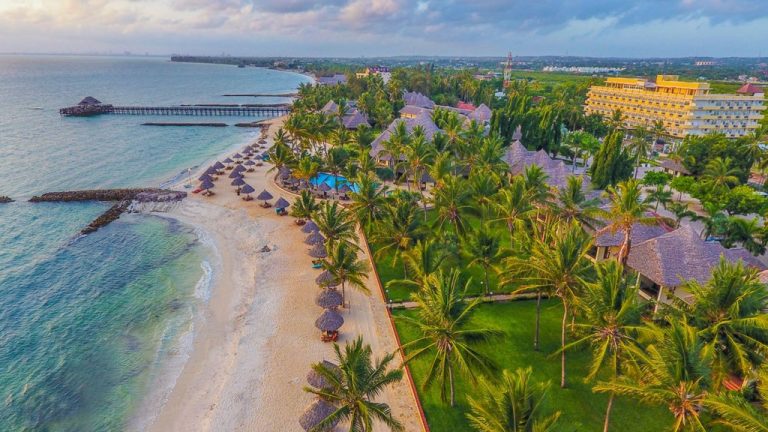
Zanzibar and the Swahili Coast: Tanzania’s Other Great Adventure
Zanzibar and the Swahili Coast: Tanzania’s Other Great Adventure Flying forty-five minutes east from Dar es Salaam, the landscape below shifts dramatically from mainland green to a scatter of turquoise and coral, signaling the arrival of Zanzibar. This iconic island has spent two thousand years evolving into one of the most contested, cosmopolitan, and quietly extraordinary places along the entire East African coast. If the Serengeti and the Ngorongoro Crater represent the Tanzania of classic wildlife documentaries, Zanzibar and the broader Swahili Coast represent a completely different world filled with spice traders, ancient sultans, stone alleyways, and water so clear it looks retouched even in unedited photographs. For a huge number of travelers who have just completed a dusty, high-energy week of safari game drives across the northern circuit, Zanzibar provides the perfect, deliberate contrast. It offers an entirely different register of travel that blends deep historical texture with world-class beach relaxation. Zanzibar’s Stone City Stone Town: A UNESCO Maze of Carved Doors and Coral-Stone Alleys Stone Town serves as the historic heart of Zanzibar City, functioning as a destination that actively resists being photographed properly. This is because so much of its authentic character lives in the heavy scent of the air and the sounds bouncing off centuries-old walls rather than anything a single camera frame can capture. This historic core is a genuine maze of narrow streets, barely wide enough for two people to pass, winding between coral-stone buildings standing three and four stories high. Their upper floors nearly touch overhead, blocking out enough harsh sun to keep the winding alleys pleasantly cool even at midday. Getting lost here is not a risk to be avoided; rather, it is the actual intended activity. The town is compact enough that wanderers will eventually pop out at the seafront or a recognizable landmark, making the aimless wandering the entire point of the visit. Architecture and Centuries of Cultural Layering What makes Stone Town’s architecture so remarkably distinctive is the accumulated layering of cultures that built it over centuries. Swahili, Arab, Persian, Indian, and European influences are stacked directly on top of each other through a long history of trade, conquest, and migration. This synthesis is most visibly expressed in the famous carved wooden doors that front many of the older residences. These doors are heavy and elaborately carved with geometric patterns, Quranic calligraphy, or floral motifs depending on the cultural tradition of the family that commissioned them. Historically, they served as a definitive status symbol, giving rise to a genuine trade of master carvers dedicated to producing them. Studded brass doors, a classic style introduced by Indian merchants, can still be found throughout the town today. Taking a slow walk with a knowledgeable guide who can point out these different regional styles transforms what initially looks like simple decoration into a legible history of who lived where and traded with whom. Confronting History: The Former Slave Market The town’s history is not solely defined by charming aesthetics, and a responsible visit requires reckoning with its darker chapters directly. For centuries, Zanzibar operated as one of the most significant slave trading ports on the entire East African coast. The former slave market site, which is now home to the Anglican Cathedral Church of Christ, preserves the grim underground holding chambers where human captives were kept prior to sale. The site’s museum and the cathedral—built partly in atonement directly on top of the old market square—make for a sober, essential stop. Most thoughtful visitors intentionally build this into their first day in town, as it powerfully recontextualizes Zanzibar’s wealth and cosmopolitan history in much the same way the Kigali Genocide Memorial recontextualizes modern Rwanda. Confronting these harder parts of history helps travelers understand the place better, not worse, and offers a deeper appreciation of its evolution. Landmarks and the Forodhani Gardens Night Market Other major historic sites round out the urban landscape, including the House of Wonders—once the tallest building in East Africa and the former ceremonial palace of the Sultan of Zanzibar—and the nearby Old Fort, which now houses a small crafts market and occasional live music performances in its central courtyard. Additionally, the Forodhani Gardens waterfront night market has evolved into a true Stone Town institution. Every evening as the sun goes down, dozens of food stalls set up along the seafront, grilling Zanzibar pizza (a stuffed, folded street food that shares almost nothing with Italian pizza yet has everything to recommend it), fresh seafood skewers, and the famous Zanzibari sugar cane juice. Locals and international tourists mingle together over plastic tables with the harbor lights and passing wooden dhows forming a magnificent backdrop. A Spice Farm in Zanzibar Spice Tours in Zanzibar: Why They Call It the Spice Island Long before international tourism arrived, Zanzibar’s economy and global reputation were built firmly on the spice trade. At the height of the nineteenth-century trade, Zanzibar produced the vast majority of the entire world’s supply of cloves. That rich legacy remains visible today just outside Stone Town, where small family-run farms continue cultivating cloves, nutmeg, cinnamon, black pepper, cardamom, vanilla, and a striking variety of tropical fruits. Consequently, half-day spice tours have become one of the island’s defining and most popular experiences. A well-run spice tour offers an engaging journey along a slightly worn path. Expert guides walk visitors through active farms, plucking leaves, bark, and pods for them to smell and rub between their fingers. Guests are often challenged to identify various plants by scent alone before the correct answers are revealed. The sheer sensory density of the experience—such as cinnamon bark peeled fresh off a branch or a clove bud plucked straight from the tree—is far more vivid in person than the concept sounds on paper. Most tours conclude with a simple, home-cooked lunch prepared using the exact same spices learned about during the morning walk. Furthermore, many of these farms sell small packets of vacuum-sealed vanilla pods, cinnamon sticks, and ground spice blends that make for exceptional,
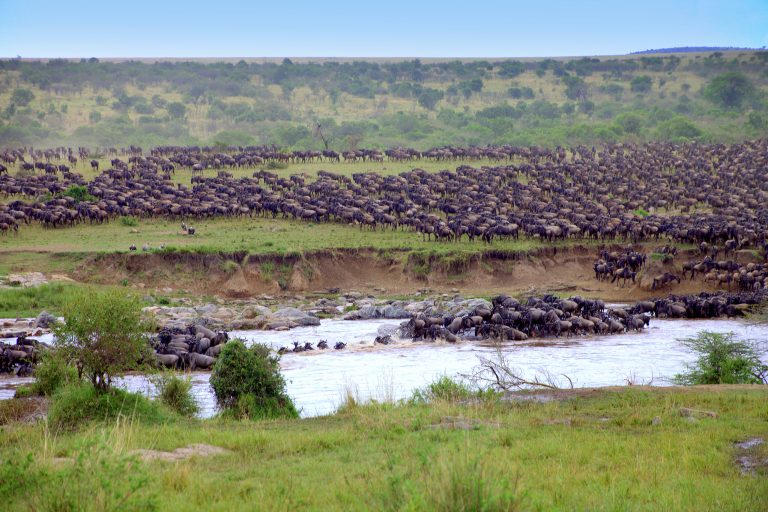
Tanzania’s In-Depth Northern Safari Circuit Expedition Guide
Tanzania’s In-Depth Northern Safari Circuit Expedition Guide There is an unmistakable, profound silence that settles over a safari vehicle at dawn on the open plains of the Serengeti, occurring right before a guide or traveler spots something stirring in the distance. The engine is switched off, the surrounding grasslands are turning a vibrant, sunlit gold, and every passenger stops talking mid-sentence because a subtle shape in the tall grass has just shifted. It is a rare, captivating quiet that cannot be experienced anywhere else in the world, and it is precisely why, decade after decade, Tanzania’s northern safari circuit remains the gold standard against which every other safari destination on Earth is measured. Tanzania is a genuinely vast nation that protects an outsized share of Africa’s most celebrated wilderness areas within its borders. Known widely as the Northern Circuit, this interconnected loop of national parks and game reserves radiates outward from the bustling safari hub of Arusha. It serves as the primary entry point for the vast majority of first-time safari-goers, and for exceptionally good reasons. Within a relatively compact and well-connected geographic region, travelers gain access to the mind-bending, endless scale of the Serengeti, the geological wonder and ancient caldera of the Ngorongoro Crater, the massive elephant herds of Tarangire National Park, and the flamingo-pink alkaline shallows of Lake Manyara, all while Africa’s tallest mountain looms majestically in the background. This comprehensive guide explores what that iconic circuit looks like on the ground and why it is well worth every hour of the long-haul journey required to reach it. Arusha—More Than Just a Gateway Arusha: More Than Just a Gateway to the Parks The vast majority of Northern Circuit expeditions officially commence in Arusha, a thriving mid-sized city positioned gracefully at the base of Mount Meru. Unlike transient airport towns, Arusha has built its entire modern identity around safari logistics, boasting professional outfitters, vibrant curio shops, sprawling coffee farms, and a genuinely delightful small-city energy. This atmosphere rewards travelers who choose to spend a day or two exploring before or after their park excursions, rather than treating the city merely as a brief airport transfer stop. Arusha sits at a comfortable middle altitude, which ensures noticeably cooler evenings than one might otherwise expect given its proximity to the equator. The surrounding rolling hills are blanketed in lush coffee plantations that offer engaging half-day tours. These experiences explain the intricate journey of coffee production from cherry to cup, typically concluding with a peaceful tasting session on a shaded veranda while the striking volcanic slopes of Mount Meru remain visible in the distance. Local Attractions and Arusha National Park Just outside the urban center lies the Arusha Cultural Heritage Centre, a destination well worth visiting even for travelers who typically consider themselves immune to souvenir shops. It functions as an expansive complex combining a serious fine art gallery featuring Tanzanian and Central African works, a dedicated Maasai jewelry and craft market, and an open-air sculpture garden, operating almost like a museum that visitors are permitted to purchase artwork from. For travelers seeking a gentler introduction to East African wildlife prior to experiencing the high-intensity ecosystems of the larger reserves, Arusha National Park offers a refreshing alternative. Uniquely, the park permits guided walking safaris—an activity rarely allowed in Tanzania, where most protected areas mandate remaining inside vehicles. Visitors can also enjoy peaceful canoeing excursions on the Momella Lakes amongst pods of hippos and flocks of flamingos, accompanied by clear-day views of Mount Kilimanjaro’s snowcap floating along the horizon like a dream. Tarangire National Park: Giant Elephant Herds Among Ancient Baobabs Tarangire frequently serves as the first major game-viewing park on a Northern Circuit itinerary, and it easily commands a reputation that extends far beyond being viewed merely as a warm-up act. The ecosystem centers around the Tarangire River, which functions as the sole permanent water source for miles around during the arid dry season. Consequently, from roughly June through October, the concentration of wildlife here becomes extraordinary. Massive elephant herds numbering in the hundreds converge upon the riverbanks, with several distinct family groups often visible from a single vantage point. These animals move with a deliberate, unhurried, and matriarchal purpose that fundamentally distinguishes observing elephants in the wild from viewing them in any other context. Landscape and Visual Identity What visually sets Tarangire apart from the rest of the circuit is its distinct, striking landscape. The park is heavily dotted with ancient baobab trees—some estimated to be well over a thousand years old—whose swollen grey trunks rise dramatically out of golden grasslands like illustrations rather than natural vegetation. Professional photographers who have captured images across every park on the circuit frequently note that Tarangire yields their favorite shots. This is attributed directly to the unique combination of sculptural baobabs framing large herds of elephants, graceful giraffes, and the fascinatingly named gerenuk—a long-necked antelope capable of standing on its hind legs to browse foliage from branches unreachable to other herbivores. Furthermore, Tarangire experiences only a fraction of the heavy vehicle traffic that routinely characterizes the Serengeti and Ngorongoro Crater. Game drives here offer a closer resemblance to genuine wilderness exploration rather than a polite, highly organized line of safari vehicles. It has consequently become an increasingly popular choice for travelers eager to incorporate night drives and walking safaris into their itineraries, both of which are legally permitted within the private wildlife concessions bordering the park, unlike most of Tanzania’s core national parks. Hippos, zebras and Nile crocodiles at Lake Manyara – Tanzania Lake Manyara: Flamingos, Tree-Climbing Lions, and an Underrated Stop Positioned directly between Tarangire and the majestic Ngorongoro Highlands, Lake Manyara National Park is compact and remarkably easy to underestimate on paper. However, it consistently surprises visitors who mistakenly treat it as a routine driving-day stopover instead of a destination worthy of dedicated exploration. The park consists of a narrow strip of dense groundwater forest, acacia woodlands, and open floodplains running alongside the base of the Great Rift Valley escarpment, directly