
Tanzania’s In-Depth Northern Safari Circuit Expedition Guide
There is an unmistakable, profound silence that settles over a safari vehicle at dawn on the open plains of the Serengeti, occurring right before a guide or traveler spots something stirring in the distance. The engine is switched off, the surrounding grasslands are turning a vibrant, sunlit gold, and every passenger stops talking mid-sentence because a subtle shape in the tall grass has just shifted. It is a rare, captivating quiet that cannot be experienced anywhere else in the world, and it is precisely why, decade after decade, Tanzania’s northern safari circuit remains the gold standard against which every other safari destination on Earth is measured.
Tanzania is a genuinely vast nation that protects an outsized share of Africa’s most celebrated wilderness areas within its borders. Known widely as the Northern Circuit, this interconnected loop of national parks and game reserves radiates outward from the bustling safari hub of Arusha. It serves as the primary entry point for the vast majority of first-time safari-goers, and for exceptionally good reasons. Within a relatively compact and well-connected geographic region, travelers gain access to the mind-bending, endless scale of the Serengeti, the geological wonder and ancient caldera of the Ngorongoro Crater, the massive elephant herds of Tarangire National Park, and the flamingo-pink alkaline shallows of Lake Manyara, all while Africa’s tallest mountain looms majestically in the background. This comprehensive guide explores what that iconic circuit looks like on the ground and why it is well worth every hour of the long-haul journey required to reach it.
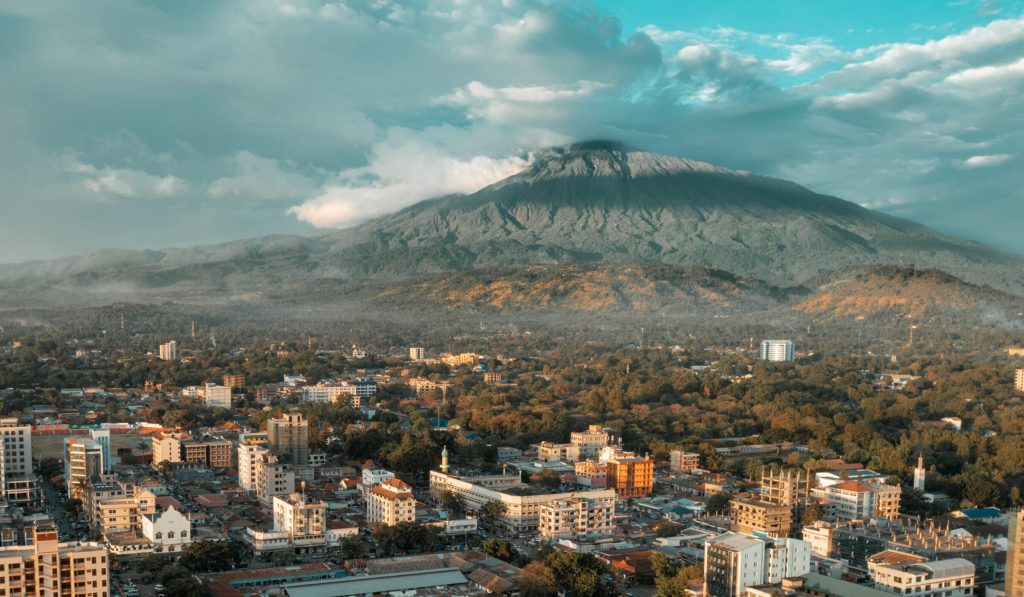
Arusha: More Than Just a Gateway to the Parks
The vast majority of Northern Circuit expeditions officially commence in Arusha, a thriving mid-sized city positioned gracefully at the base of Mount Meru. Unlike transient airport towns, Arusha has built its entire modern identity around safari logistics, boasting professional outfitters, vibrant curio shops, sprawling coffee farms, and a genuinely delightful small-city energy. This atmosphere rewards travelers who choose to spend a day or two exploring before or after their park excursions, rather than treating the city merely as a brief airport transfer stop.
Arusha sits at a comfortable middle altitude, which ensures noticeably cooler evenings than one might otherwise expect given its proximity to the equator. The surrounding rolling hills are blanketed in lush coffee plantations that offer engaging half-day tours. These experiences explain the intricate journey of coffee production from cherry to cup, typically concluding with a peaceful tasting session on a shaded veranda while the striking volcanic slopes of Mount Meru remain visible in the distance.
Local Attractions and Arusha National Park
Just outside the urban center lies the Arusha Cultural Heritage Centre, a destination well worth visiting even for travelers who typically consider themselves immune to souvenir shops. It functions as an expansive complex combining a serious fine art gallery featuring Tanzanian and Central African works, a dedicated Maasai jewelry and craft market, and an open-air sculpture garden, operating almost like a museum that visitors are permitted to purchase artwork from.
For travelers seeking a gentler introduction to East African wildlife prior to experiencing the high-intensity ecosystems of the larger reserves, Arusha National Park offers a refreshing alternative. Uniquely, the park permits guided walking safaris—an activity rarely allowed in Tanzania, where most protected areas mandate remaining inside vehicles. Visitors can also enjoy peaceful canoeing excursions on the Momella Lakes amongst pods of hippos and flocks of flamingos, accompanied by clear-day views of Mount Kilimanjaro’s snowcap floating along the horizon like a dream.
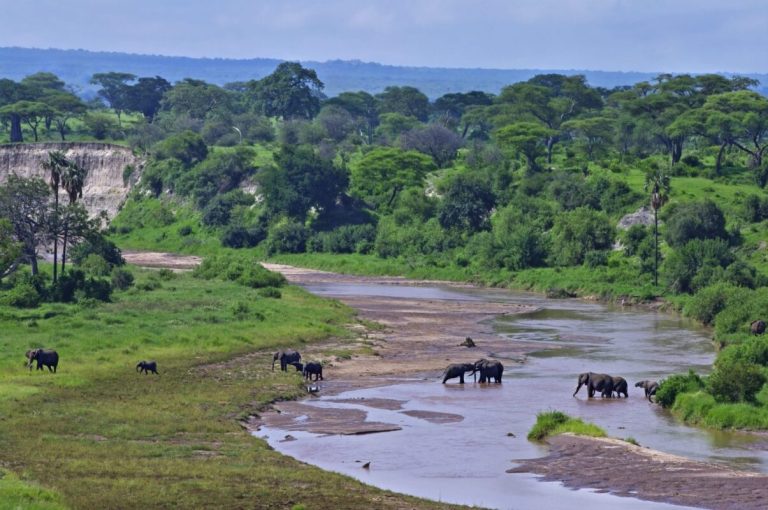
Tarangire National Park: Giant Elephant Herds Among Ancient Baobabs
Tarangire frequently serves as the first major game-viewing park on a Northern Circuit itinerary, and it easily commands a reputation that extends far beyond being viewed merely as a warm-up act. The ecosystem centers around the Tarangire River, which functions as the sole permanent water source for miles around during the arid dry season. Consequently, from roughly June through October, the concentration of wildlife here becomes extraordinary. Massive elephant herds numbering in the hundreds converge upon the riverbanks, with several distinct family groups often visible from a single vantage point. These animals move with a deliberate, unhurried, and matriarchal purpose that fundamentally distinguishes observing elephants in the wild from viewing them in any other context.
Landscape and Visual Identity
What visually sets Tarangire apart from the rest of the circuit is its distinct, striking landscape. The park is heavily dotted with ancient baobab trees—some estimated to be well over a thousand years old—whose swollen grey trunks rise dramatically out of golden grasslands like illustrations rather than natural vegetation. Professional photographers who have captured images across every park on the circuit frequently note that Tarangire yields their favorite shots. This is attributed directly to the unique combination of sculptural baobabs framing large herds of elephants, graceful giraffes, and the fascinatingly named gerenuk—a long-necked antelope capable of standing on its hind legs to browse foliage from branches unreachable to other herbivores.
Furthermore, Tarangire experiences only a fraction of the heavy vehicle traffic that routinely characterizes the Serengeti and Ngorongoro Crater. Game drives here offer a closer resemblance to genuine wilderness exploration rather than a polite, highly organized line of safari vehicles. It has consequently become an increasingly popular choice for travelers eager to incorporate night drives and walking safaris into their itineraries, both of which are legally permitted within the private wildlife concessions bordering the park, unlike most of Tanzania’s core national parks.
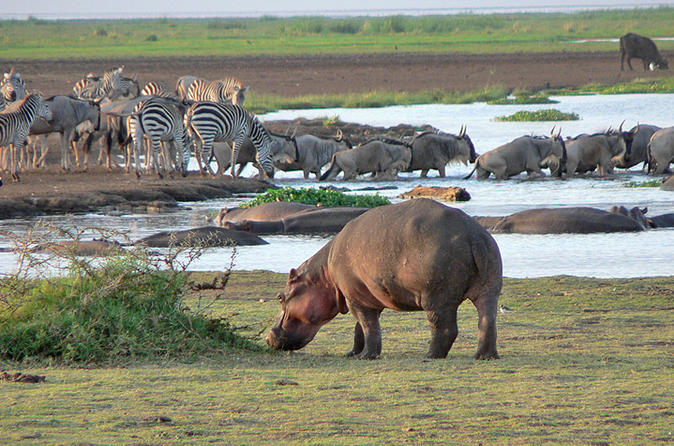
Lake Manyara: Flamingos, Tree-Climbing Lions, and an Underrated Stop
Positioned directly between Tarangire and the majestic Ngorongoro Highlands, Lake Manyara National Park is compact and remarkably easy to underestimate on paper. However, it consistently surprises visitors who mistakenly treat it as a routine driving-day stopover instead of a destination worthy of dedicated exploration. The park consists of a narrow strip of dense groundwater forest, acacia woodlands, and open floodplains running alongside the base of the Great Rift Valley escarpment, directly bordering the shallow, alkaline lake from which the park derives its name.
Avian Wonders and Unusual Lion Behavior
During periods when water levels are favorable, the lake transforms into a brilliant shade of pink driven by thousands of congregating flamingos feeding on shallow-water algae. The broader avian ecosystem here is exceptional, with over four hundred bird species recorded inside a park that visitors can comfortably drive across in a single morning.
Manyara is also celebrated as one of the few places across Africa where travelers stand a realistic chance of spotting tree-climing lions. This unusual behavioral trait occurs in only a handful of isolated lion populations globally, with cats hauling their heavy bodies up into the low, spreading branches of acacia and sausage trees to escape midday heat, biting flies, and ground-level disturbances. While scientists continue to debate why Manyara’s lions exhibit this behavior while other populations do not, witnessing it firsthand remains profoundly satisfying.
The groundwater forest sector, nourished by underground springs seeping out from the base of the escarpment, is remarkably lush compared to typical East African savannas. It serves as an optimal location for spotting troops of baboons and blue monkeys crashing through the overhead canopy
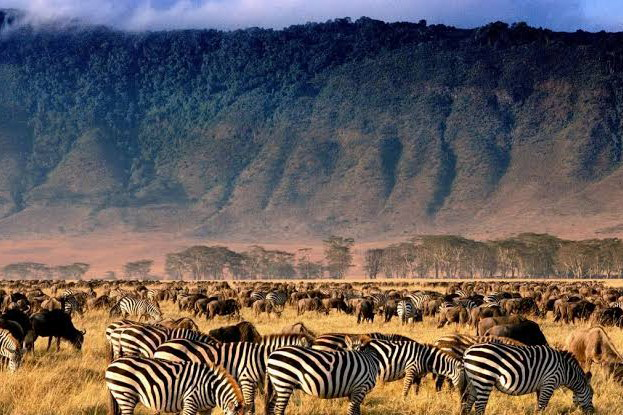
Ngorongoro Crater: Wildlife Packed into an Ancient Volcanic Bowl
If a single destination on the Northern Circuit delivers the most powerful and immediate first impression, it is the descent into the Ngorongoro Crater. This geological marvel is the collapsed cone of an ancient volcano that historical estimates suggest was once taller than Mount Kilimanjaro, prior to a massive eruption and implosion occurring roughly two to three million years ago. The event left behind an expansive caldera floor spanning approximately 260 square kilometers, encircled by steep walls rising over 600 meters on all sides.
Acting as a vast natural amphitheater, these enclosed walls maintain a semi-autonomous ecosystem. Consequently, the crater floor sustains one of the highest densities of resident wildlife anywhere on the African continent, packed tightly into a space that can be thoroughly explored during a single comprehensive day.
Predator-Prey Dynamics and Maasai Culture
Descending the crater wall in the pre-dawn darkness—with vehicle headlights cutting through the mist rising off forested slopes—provides an unforgettable beginning to the day. Once on the crater floor, the wildlife viewing becomes intensely dramatic. Ngorongoro stands as one of the most reliable locations in Africa to spot the critically endangered black rhino, alongside thriving populations of lions, spotted hyenas, elephants, Cape buffaloes, and wildebeest. Additionally, a resident population of flamingos transforms Lake Magadi—a shallow soda lake located directly on the crater floor—into an astonishing splash of pink against golden grasses.
Because resident prey species cannot easily migrate out of the crater walls in the manner observed on the open Serengeti plains, predator-prey encounters are uniquely frequent and visible. Watching a cheetah stalk its prey across open ground in full view, without hills or trees obstructing the sightline, is a realistic daily occurrence rather than a rare stroke of luck.
Surrounding the crater, the broader Ngorongoro Conservation Area remains one of the few regions in Tanzania where local Maasai communities continue to reside and graze cattle alongside protected wildlife populations. Operating under a unique multiple land-use framework, many itineraries incorporate respectful, community-led visits to traditional Maasai bomas, allowing visitors to understand a pastoralist lifestyle that has endured with remarkable resilience for centuries.
The Serengeti: The Great Migration and an Endless Horizon
The Serengeti represents the pinnacle of the circuit, a name that has become synonymous with the very concept of African wilderness. It remains one of the few places on Earth that genuinely surpasses expectations upon arrival. Enormous in scale—roughly comparable to the size of the state of Connecticut—the defining sensory experience of the Serengeti is the absolute, uninterrupted expanse of its plains. Grasslands roll outward toward a horizon that continuously recedes no matter the distance traveled, punctuated only by occasional granite rock formations known as kopjes, which rise out of the turf like ancient structures dropped from the sky.
The Dynamics of the Great Migration
The single most famous phenomenon associated with the Serengeti is the Great Migration, an annual circuit involving over a million and a half wildebeest accompanied by hundreds of thousands of zebras and gazelles. These animals move in a sweeping, roughly clockwise loop across the expansive Serengeti-Mara ecosystem, driven relentlessly by seasonal rains and fresh grazing lands.
Determining the ideal location to position oneself within the park depends heavily on the timing of the visit:
- Calving Season (February to March): Enormous herds concentrate on the short-grass plains of the southern Serengeti, attracting apex predators for one of nature’s most dramatic spectacles as newborn calves attempt to keep pace with the herd.
- Transition Period (June to July): Herds push actively northward and westward toward the Grumeti River.
- River Crossings (July to September): The legendary river crossings take place at the Mara River in the northern Serengeti, where massive herds gather in tense, hesitant masses before plunging across waters populated by giant crocodiles.
Beyond the migration, the Serengeti features exceptional year-round resident wildlife. The park supports some of the healthiest lion populations remaining on the continent, organized into thoroughly studied prides, while the central Seronera region is globally renowned for reliable leopard sightings. Cheetahs are also common daily sights, and dawn hot air balloon safaris offer a signature splurge, allowing travelers to drift quietly above herds of grazing wildlife before concluding with an unforgettable champagne breakfast served directly in the bush.
Planning It: Routes, Timing, and Logistics
Designing an optimal Northern Circuit itinerary requires careful consideration of timing, route mapping, and accommodation styles.
Itinerary Durations and Flight Logistics
Most comprehensive Northern Circuit trips span between five and ten days. A standard loop routes travelers from Arusha to Tarangire, onward to Lake Manyara, up to the Ngorongoro Crater rim, and deep into the Serengeti. Rather than enduring a lengthy return drive, most modern itineraries feature domestic bush flights departing from small Serengeti airstrips directly back to Arusha or Kilimanjaro International Airport.
Accommodation choices vary widely, ranging from comfortable tented camps featuring shared facilities to ultra-luxury lodges perched directly on the crater rim or seamlessly integrated into Serengeti kopjes. Selection is usually dictated by seasonal migration paths and specific scenic preferences rather than budget alone.
Entry Requirements and Seasonal Windows
Kilimanjaro International Airport serves as the principal gateway for international visitors. Because Mount Kilimanjaro—the tallest freestanding mountain on Earth at 5,895 meters—is visible from parts of Tarangire and Arusha National Park on clear days, many travelers opt to combine their wildlife safari with a multi-day mountain climbing expedition. Most nationalities require a visa, which can be secured online prior to travel or directly upon arrival, alongside standard health checks like yellow fever vaccinations.
Regarding timing, the dry season spanning June through October remains the most popular window due to optimal wildlife viewing conditions as animals cluster around dwindling water sources. Conversely, the green season running from November through May attracts a dedicated following of travelers seeking newborn animals, brilliant post-rain skies, migratory birds in full breeding plumage, and significantly reduced vehicle congestion at major wildlife sightings.
Ultimately, what establishes the enduring appeal of Tanzania’s Northern Circuit is the remarkable concentration of iconic, diverse experiences packed into a manageable regional loop. Offering everything from volcanic calderas and massive river crossings to tree-climbing lions and Africa’s highest peak within hours of each other, the region continues to anchor African safari tourism with unmatched excellence.
Ready to Experience Tanzania's Northern Circuit?
Don't just read about the greatest wildlife show on Earth—experience it for yourself. Whether you want to witness the dramatic river crossings of the Great Migration in the Serengeti, stand beneath the ancient baobabs of Tarangire, or descend into the breathtaking depths of the Ngorongoro Crater, your ultimate East African adventure starts here.