
Maasai Mara Great Wildebeest Migration and Gorilla Trekking: 5 Self-Drive Overland Itineraries You Need to Experience
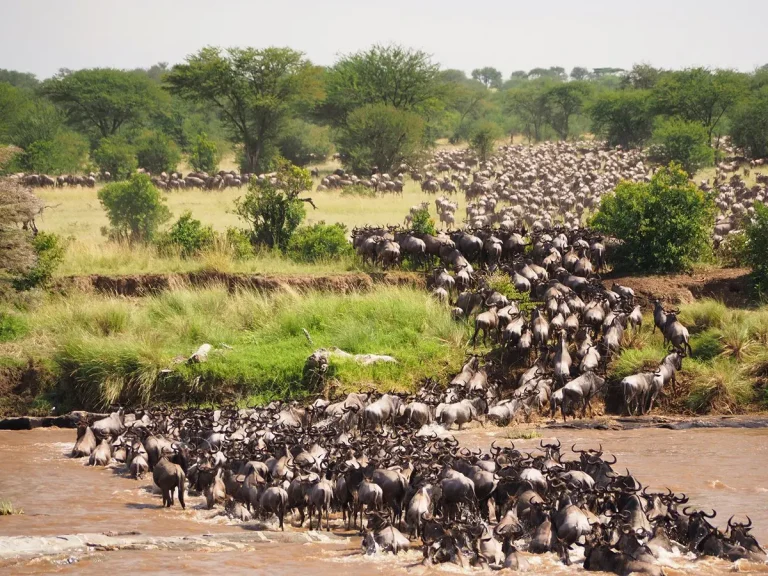
There are very few travel experiences on Earth that can rival standing on the banks of the Mara River as two million wildebeest, zebra, and gazelle thunder across crocodile-infested waters in a cloud of dust — and then, days later, locking eyes with a 400-pound silverback gorilla in the misty bamboo forests of Bwindi or the Virunga Volcanoes. Combine the two, do it entirely on your own terms behind the wheel of a rugged 4×4, and you have what is arguably the single greatest overland safari adventure available anywhere in Africa.
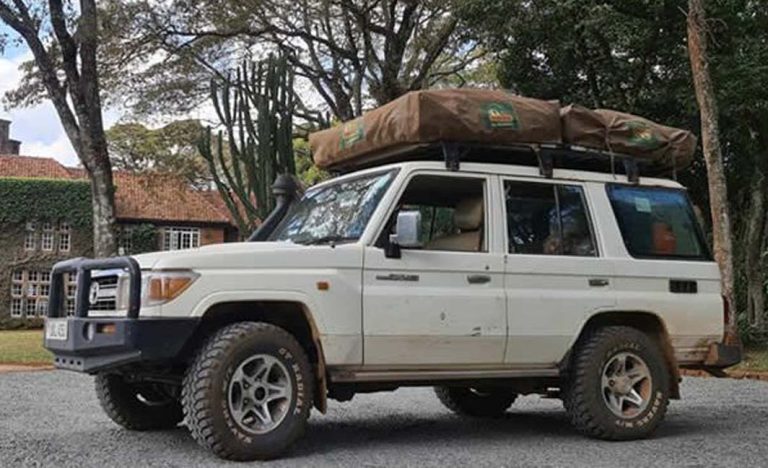
At 4x4Kenya, we specialize in exactly this: putting self-drive travelers into fully-equipped, safari-ready 4×4 vehicles (Toyota Land Cruisers, Prados, and Hiluxes fitted with pop-up roofs, long-range fuel tanks, rooftop tents, fridges, and GPS/satellite communication) and sending them out on some of the most spectacular overland routes in East Africa. This is not a scripted, minibus-and-guide safari where you’re herded from lodge to lodge on someone else’s schedule. This is freedom — your own vehicle, your own pace, your own playlist, and total control over when you linger at a river crossing or push on toward the Ugandan or Rwandan border.
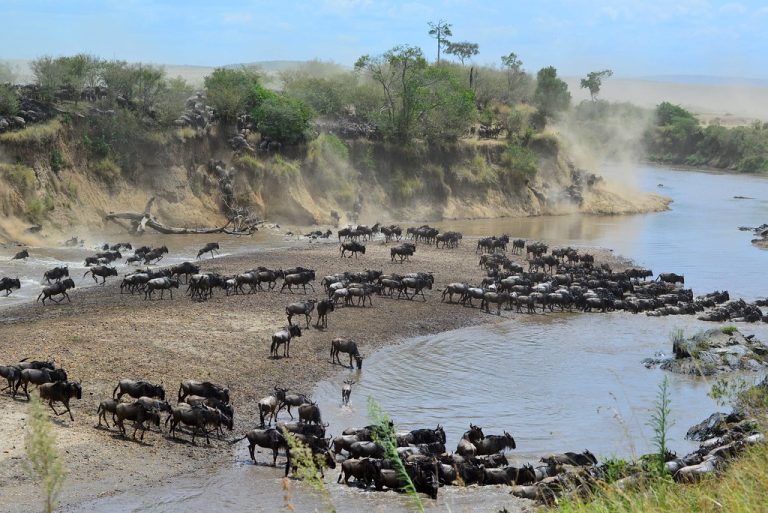
This guide is built for travelers who want to combine the Great Wildebeest Migration in the Maasai Mara with mountain gorilla trekking in Uganda’s Bwindi Impenetrable Forest or Rwanda’s Volcanoes National Park — all done overland, self-drive, in a rented 4×4. Below you’ll find five fully worked itinerary ideas ranging from a fast 9-day express trip to an epic 21-day double-gorilla-park expedition, plus everything you need to know about routes, border crossings, permits, vehicle choice, timing, and budgeting.
If you’ve been searching for “Maasai Mara self-drive safari,” “gorilla trekking self-drive itinerary,” “overland Kenya Uganda Rwanda safari,” or “4×4 rental for East Africa safari,” you are in exactly the right place.
2. Why Go Self-Drive and Overland Instead of Flying?
Flying between Nairobi, the Mara, Entebbe/Kigali, and Bwindi/Volcanoes is faster, no question. But self-drive overland travel offers something flying simply cannot:
- Total flexibility. Stop wherever you want, for as long as you want. See a herd of elephants crossing the road ahead of you? Pull over. Want an extra hour at a river crossing waiting for the migration to move? Stay.
- Cost efficiency for groups. A well-equipped 4×4 rental split between 3-4 people is almost always cheaper per person than flights plus a driver-guide package, especially over a 2-3 week trip.
- The journey is part of the experience. The drive from the Mara through western Kenya, along the shores of Lake Victoria, and into Uganda’s rolling green hills is genuinely spectacular — you’d miss all of it by flying.
- Independence and privacy. No shared vehicles, no fixed group schedules, no waiting on other travelers’ preferences.
- Photography control. Self-driving means you can position your own vehicle exactly where you want for that perfect river-crossing shot, and linger as long as the light is good.
The trade-off is that self-drive overland requires a properly equipped 4×4, decent trip planning, comfort with (or a good vehicle for) rough roads, and awareness of border-crossing procedures — all things this guide, and 4x4Kenya’s rental fleet, are built to handle.
3. Choosing the Right 4×4 for This Trip
This is not a trip for a compact SUV or a two-wheel-drive rental. You will be driving through the Maasai Mara’s black-cotton soil tracks (which turn into axle-deep mud in the rains), climbing through the Kenyan and Ugandan highlands, and potentially navigating the notoriously rough, switchback-heavy roads into Bwindi.
At 4x4Kenya, the vehicles we recommend most often for this specific combined itinerary are:
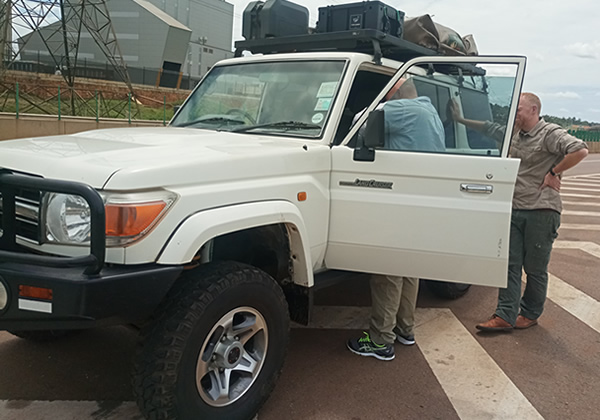
Toyota Land Cruiser 78/79 Series (Troop Carrier)
The gold standard for overland Africa. Bulletproof reliability, high ground clearance, long-range fuel tanks (essential for the remote stretches between the Mara and the Ugandan border), and enough room for rooftop tents and camping gear.
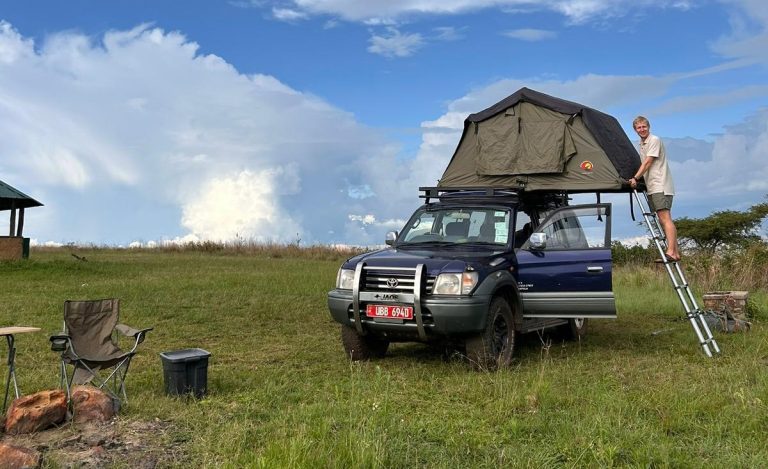
Toyota Land Cruiser Prado with Camping Equipment
A more comfortable choice for couples or families seeking serious off-road capability, while enjoying greater on-road comfort during long tarmac journeys across Uganda and Rwanda, making extended road trips more enjoyable.
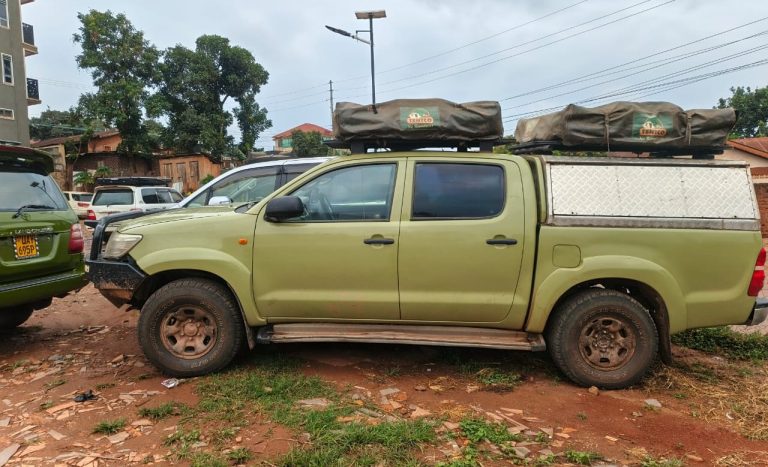
Toyota Hilux (Double Cab, 4×4) with Camping Gear
A strong choice for smaller groups seeking a rugged, dependable pickup equipped with a fitted canopy or camper unit, offering practical storage, shelter, and comfort for extended self-drive adventures.
Whichever vehicle you choose, for this route insist on:
- A long-range or auxiliary fuel tank (fuel stations thin out between the Mara and the Ugandan border)
- A roof tent or comfortable camping setup if you plan to camp in the Mara or at Lake Mburo
- A snorkel and good ground clearance for rainy-season mud
- A satellite communicator or reliable roaming SIM setup, since mobile signal disappears in parts of the Mara and along back roads in western Uganda
- A full spares kit (extra tire, tools, jack, tow rope) — non-negotiable for cross-border overland trips
4x4Kenya vehicles for this itinerary type come pre-fitted with most of this as standard, along with GPS units pre-loaded with Mara tracks and border-crossing routes.
4. When to Go: Migration Timing vs Gorilla Permit Availability
Timing this trip well is the single biggest factor in how good your experience will be, because the two headline events — the Mara river crossings and gorilla trekking — run on completely different calendars.
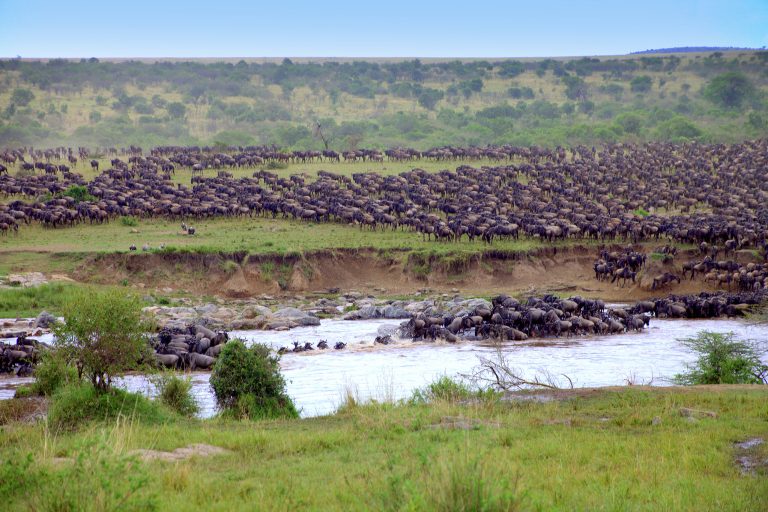
The Great Wildebeest Migration in the Maasai Mara typically peaks between late July and October, with the dramatic Mara River crossings most concentrated from August through September. The herds arrive from Tanzania’s Serengeti chasing fresh grass after the long rains, and river crossings can happen any day (or several times a day) during this window, though nothing in nature is guaranteed — the migration follows rainfall, not a calendar.
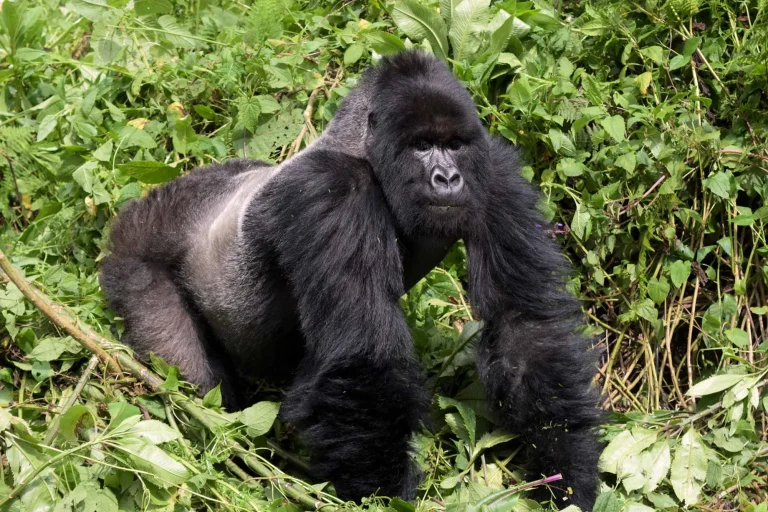
Gorilla trekking in both Bwindi (Uganda) and Volcanoes National Park (Rwanda) is available year-round, since the gorilla families are habituated and tracked daily regardless of season. That said:
- The driest trekking conditions (easier hiking, less mud) fall in June–September and December–February.
- Permits are limited — Uganda issues a capped number of permits per gorilla family per day, and Rwanda does the same at a higher price point. During the July–September overlap with the Mara migration, gorilla permits get booked out months in advance, so this is the detail that most often derails poorly-planned trips.
Our recommendation: if the Mara migration is your priority, build your trip around August or September, and book your gorilla permits at least 4–6 months ahead for that same window. If you have more flexibility, shifting gorilla trekking to just before or after the migration peak (late June or October) gives you slightly easier permit availability while still catching strong migration activity in the Mara.
5. Border Crossings You’ll Use (Kenya–Uganda–Rwanda)
Depending on which itinerary you choose below, you’ll cross one or more of these borders:
- Isebania/Sirari (Kenya–Tanzania) — only relevant if you extend into the Serengeti; not required for the Uganda/Rwanda gorilla routes.
- Malaba or Busia (Kenya–Uganda) — the two main road crossings from western Kenya into Uganda. Busia is generally the calmer, faster option for self-drive travelers; Malaba handles heavier truck traffic.
- Katuna/Gatuna or Cyanika (Uganda–Rwanda) — Katuna (also called Gatuna on the Rwandan side) is the main route if you’re coming from Kampala/Kigali directly; Cyanika is the smaller, more direct crossing if you’re driving from Bwindi straight into Volcanoes National Park in Rwanda, which is the route most gorilla-trekking overlanders use.
Documents and requirements to have ready at every crossing:
- Valid passport (6+ months validity)
- East Africa Tourist Visa (covers Kenya, Uganda, and Rwanda on a single visa — highly recommended for this trip, as it saves you from buying three separate visas)
- Vehicle logbook/registration and cross-border permit (4x4Kenya arranges the temporary cross-border road permit — often called a COMESA Yellow Card equivalent/road license — for our rental vehicles used on Uganda/Rwanda routes; confirm this is included when booking)
- Proof of vehicle insurance valid in all countries you’ll cross into
- Yellow fever vaccination certificate (required for entry into Uganda and Rwanda)
- International Driving Permit alongside your home license
Border posts open early (typically 6am) and self-drive travelers should aim to cross well before mid-afternoon to leave time for onward driving in daylight — driving after dark on rural Ugandan roads is best avoided.
Itinerary Idea #1: The Classic 15-Day Mara-to-Bwindi Overland Safari
- Best for: First-timers combining migration + gorillas without an overly rushed pace.
- Route: Nairobi → Maasai Mara → Lake Victoria (Kisumu/Jinja area) → Kampala → Queen Elizabeth NP → Bwindi Impenetrable Forest → return via Kampala/Nairobi (fly or drive back)
- Total driving distance: Approx. 1,600–1,900 km one-way

Day 1: Nairobi to Maasai Mara
Pick up your 4×4 in Nairobi early morning and head southwest via Narok, dropping down the dramatic Great Rift Valley escarpment en route. Expect roughly 5–6 hours of driving depending on your entry gate (Sekenani, Talek, or Oloolaimutia). Arrive at your Mara camp by early afternoon, giving you time for an evening game drive.
Day 2–4: Maasai Mara Migration Safari
Two full days dedicated to the Mara. Rise early both mornings to be at likely river-crossing points (Mara River near Lookout Hill and the Oloololo Escarpment, or Sand River in the south) by first light — crossings often happen in the cool morning hours. Spend the heat of midday at camp or exploring the Mara Triangle (Mara Conservancy side), and go back out for the golden-hour game drive. Big cats — lion prides, cheetah, and leopard — are active year-round here regardless of migration timing.
Day 5: Maasai Mara to Kisumu (Lake Victoria)
Depart the Mara and drive north through Kilgoris and Kisii toward Kisumu on the shores of Lake Victoria (roughly 5–6 hours). Overnight in Kisumu; consider a sunset boat trip on the lake to spot hippos and fish eagles.
Day 6: Kisumu to Jinja/Kampala, Uganda
Cross the border at Busia into Uganda (allow 1–2 hours for border formalities) and continue to Jinja, the adventure capital of Uganda at the source of the Nile — a good overnight stop if you want to add whitewater rafting or a Nile sunset cruise. Alternatively, push on to Kampala. Total driving time from Kisumu: 5–7 hours including the border.
Day 7: Kampala to Queen Elizabeth National Park
A long but scenic drive (7–8 hours) west through Mbarara toward Queen Elizabeth National Park. Arrive by late afternoon for an evening game drive in the Kasenyi plains, known for lion prides and large herds of Uganda kob.
Day 8-9: Queen Elizabeth National Park
2 Full days here. Morning game drive focused on the Ishasha sector’s famous tree-climbing lions (a worthwhile detour), followed by an afternoon boat cruise on the Kazinga Channel — one of the best wildlife-viewing boat trips in Africa, with massive hippo pods, buffalo, and elephants along the banks.
Day 10: Full day relaxation at Buffalo Lodge, or Mweya Campsite
Day 11: Queen Elizabeth to Bwindi Impenetrable Forest
A shorter but slow, winding drive (3–4 hours) south through the Ishasha sector into Bwindi. The roads here are steep and require genuine 4×4 capability, especially after rain. Arrive in the afternoon and settle in near your gorilla trekking sector (Buhoma, Ruhija, Rushaga, or Nkuringo).
Day 12: Gorilla Trekking in Bwindi
The centerpiece of the entire trip. Report to the park headquarters at 7am for briefing, then set off with rangers and trackers into the forest. Treks can last anywhere from 1 to 6 hours depending on where the gorilla family has moved, followed by one magical hour observing them at close range. Afternoon free to rest or add a community walk/Batwa cultural experience.
Day 13: Bwindi to Lake Mburo National Park
Head back east, stopping at Lake Mburo National Park — Uganda’s smallest savannah park but a great spot for zebra, eland, and impala, plus one of the few parks where walking safaris are permitted.
Day 14: Lake Mburo to Kampala/Entebbe
Continue to Kampala or Entebbe (3–4 hours), with time to explore Kampala city or relax by Lake Victoria near Entebbe.
Day 15: Fly Out or Drive Back to Nairobi
Depending on your rental arrangement, either drop the vehicle in Entebbe/Kampala and fly home (or back to Nairobi), or drive the full route back if your rental requires return to Nairobi. Confirm one-way drop-off options with 4x4Kenya when booking.
Itinerary Idea #2: The 9-Day Migration & Gorilla Express
Best for: Travelers with limited time who still refuse to compromise on either headline experience.
Route: Nairobi → Maasai Mara → Kisumu → Kampala → Bwindi (direct) → fly out from Kigali or Entebbe
This is the compressed version for people who cannot take three weeks off work but still want the full migration-plus-gorillas combo, entirely self-drive.
Day 1: Nairobi to Maasai Mara
Same as Itinerary #1 — early departure, arrive by afternoon, evening game drive.
Day 2–3: Maasai Mara
Two full days focused entirely on migration river crossings and predator action. This is a non-negotiable minimum — one day in the Mara is not enough to reliably witness a crossing.
Day 4: Maasai Mara to Kisumu
Drive north to Kisumu (5-6 hours), overnight on the lake.
Day 5: Kisumu to Bwindi (long drive day)
This is the toughest day of the trip: cross into Uganda at Busia, then drive directly toward Bwindi via Mbarara, a full 9-10 hour driving day. Break it up with a stop in Kampala or Mbarara for lunch and fuel. This itinerary sacrifices Queen Elizabeth National Park to save time — if you can spare even one extra day, inserting it back in (making this a 10-day trip) is well worth it.
Day 6: Rest day / buffer day in Bwindi
Arrive the previous evening tired from the long drive, so use this day to recover, settle in, and do a short forest walk or visit the Bwindi/Batwa community trail near your lodge.
Day 7: Gorilla Trekking
The big day. Full gorilla trekking experience as described in Itinerary #1.
Day 8: Bwindi to Kigali, Rwanda (or Entebbe)
If flying out of Kigali, cross the Cyanika border into Rwanda (roughly 3-4 hours from Bwindi) and continue to Kigali (another 2-3 hours) — a full but manageable day, with the bonus of seeing Rwanda’s spectacular hill-country scenery. Alternatively, retrace your route back toward Kampala/Entebbe.
Day 9: Depart from Kigali or Entebbe
Return the vehicle (if a one-way drop-off has been arranged) and fly out, or continue the return drive to Nairobi if required.
Note: This itinerary is intense. It suits fit, flexible travelers comfortable with long driving days. Anyone prone to travel fatigue should look at Itinerary #1 or add the buffer days back in.
Itinerary Idea #3: The 16-Day Kenya–Uganda–Rwanda Grand Overland Circuit
Best for: Travelers who want the full East African overland experience — migration, gorillas, and the best of both Uganda and Rwanda — without rushing.
Route: Nairobi → Maasai Mara → Lake Nakuru → Kisumu → Jinja → Kampala → Queen Elizabeth NP → Bwindi → Lake Bunyonyi → Volcanoes NP (Rwanda) → Kigali → return
Day 1: Nairobi to Lake Nakuru National Park
Rather than heading straight to the Mara, start with a shorter drive (2.5–3 hours) to Lake Nakuru, famous for rhino sightings (both black and white) and prolific birdlife. A gentle first day to ease into the trip.
Day 2: Lake Nakuru to Maasai Mara
Drive south (roughly 5-6 hours via Narok) into the Mara, arriving for an evening game drive.
Day 3–5: Maasai Mara Migration Safari
Three full days in the Mara — enough time to explore both the main reserve and the Mara Triangle conservancy side, chase river crossings at multiple points, and still have downtime for a hot-air balloon safari at sunrise if desired (highly recommended, though booked separately from your self-drive vehicle).
Day 6: Maasai Mara to Kisumu
Drive north to Lake Victoria’s shores (5-6 hours), overnight in Kisumu.
Day 7: Kisumu to Jinja, Uganda
Cross into Uganda at Busia and continue to Jinja, source of the Nile. Consider an afternoon Nile cruise or, for the adventurous, Grade 5 whitewater rafting.
Day 8: Jinja to Kampala/Entebbe
A short driving day (2 hours), leaving time to explore Kampala’s markets, the Uganda Museum, or Entebbe’s botanical gardens.
Day 9: Kampala to Queen Elizabeth National Park
Long scenic drive west (7-8 hours) to Queen Elizabeth NP.
Day 10: Queen Elizabeth National Park
Full day: Kasenyi game drive, Ishasha tree-climbing lions, and the Kazinga Channel boat cruise.
Day 11: Queen Elizabeth to Bwindi
Short, winding drive (3-4 hours) into Bwindi.
Day 12: Gorilla Trekking in Bwindi
The first of two gorilla treks on this itinerary.
Day 13: Bwindi to Lake Bunyonyi
A scenic, relatively short drive (2-3 hours) to Lake Bunyonyi, one of the most beautiful lakes in Africa, dotted with 29 islands and free of bilharzia and crocodiles — safe for swimming and canoeing. A well-earned rest day.
Day 14: Lake Bunyonyi to Volcanoes National Park, Rwanda
Cross the Cyanika border into Rwanda (a short, dramatic drive through terraced hillsides) and continue to Volcanoes National Park in the shadow of the Virunga volcanoes (roughly 3-4 hours total).
Day 15: Gorilla Trekking in Volcanoes National Park
Your second gorilla trek — this time in Rwanda, tracking different families in a strikingly different volcanic, bamboo-forest landscape. Many travelers say experiencing both Bwindi and Volcanoes back-to-back reveals just how different each park’s terrain and gorilla families feel. Golden monkey tracking is also available here as an add-on the same or following day.
Day 16: Volcanoes NP to Kigali, Departure
Short drive to Kigali (2-2.5 hours). Time permitting, visit the sobering but essential Kigali Genocide Memorial before your flight out or return drive.
Itinerary Idea #4: The 21-Day Ultimate Double-Gorilla-Park Expedition
Best for: The serious overlander who wants to see it all — maximum migration time, both gorilla-trekking countries, and the full breadth of parks in between.
Route: Nairobi → Maasai Mara → Lake Naivasha → Lake Nakuru → Kisumu → Jinja → Murchison Falls NP → Kampala → Queen Elizabeth NP → Kibale Forest (chimp trekking) → Bwindi → Lake Bunyonyi → Volcanoes NP (Rwanda) → Lake Kivu → Kigali
This itinerary adds two major detours that the shorter versions skip: Murchison Falls National Park (Uganda’s largest park, famous for its dramatic waterfall where the Nile forces through a 7-meter gorge, plus tree-climbing lions and huge elephant herds) and Kibale Forest National Park (the best chimpanzee trekking destination in Africa, and a wonderful complement to gorilla trekking since you get both great ape experiences in one trip).
Days 1–2: Nairobi to Lake Naivasha to Lake Nakuru
Ease into the trip with two shorter, scenic legs through the Rift Valley lakes, spotting flamingos, rhino, and giraffe.
Days 3–6: Maasai Mara Migration Safari
Four full days is genuinely the sweet spot for reliably witnessing multiple river crossings, exploring both the reserve and conservancies, and adding a hot-air balloon safari.
Day 7: Maasai Mara to Kisumu
Standard transfer day north to Lake Victoria.
Day 8: Kisumu to Jinja
Cross into Uganda, overnight in Jinja.
Days 9–10: Jinja to Murchison Falls National Park
Drive north (a long day, 6-7 hours) to Murchison Falls. Spend a full day here: a game drive on the northern bank for lion, elephant, and giraffe, plus a boat cruise to the base of the falls themselves — one of the most dramatic sights in Africa.
Day 11: Murchison Falls to Kampala
Return south toward the capital.
Day 12: Kampala to Kibale Forest National Park
Drive southwest (5-6 hours) to Kibale, Africa’s chimpanzee capital.
Day 13: Chimpanzee Trekking in Kibale Forest
A full morning tracking wild chimpanzees, with an optional afternoon “Habituation Experience” that allows a longer, less rushed encounter than standard gorilla-style permits.
Day 14: Kibale to Queen Elizabeth National Park
Short drive (2 hours) to Queen Elizabeth NP.
Day 15: Queen Elizabeth National Park
Kasenyi game drive, Ishasha tree-climbing lions, Kazinga Channel cruise.
Day 16: Queen Elizabeth to Bwindi
Short winding drive into gorilla country.
Day 17: Gorilla Trekking in Bwindi
Day 18: Bwindi to Lake Bunyonyi
Rest and recovery day on Uganda’s most beautiful lake.
Day 19: Lake Bunyonyi to Volcanoes National Park, Rwanda
Cross the border and continue into Rwanda’s volcanic highlands.
Day 20: Gorilla Trekking in Volcanoes National Park (second trek) or Golden Monkey Tracking
Choose a second gorilla trek for direct comparison with Bwindi, or opt for golden monkey tracking for a different primate experience in the same park.
Day 21: Volcanoes NP to Kigali, Departure
Final drive to Kigali via Lake Kivu’s shoreline if time allows, visit the Genocide Memorial, and depart.
This is, without question, the definitive East African overland safari — three countries, five national parks, both great apes of the region, and the full Great Migration experience, all self-driven.
Itinerary Idea #5: The 10-Day Budget Overlander Special (Camping Edition)
Best for: Adventurous travelers and couples wanting the full migration-and-gorilla combo at a genuinely affordable price point, camping in rooftop tents rather than staying in lodges.
Route: Nairobi → Maasai Mara (camping) → Kisumu → Kampala → Lake Mburo (camping) → Bwindi (budget guesthouse near park, since camping directly at the gorilla sector is limited) → return
The single biggest cost in any Mara-plus-gorilla trip is accommodation — high-end Mara camps and Bwindi lodges can run into hundreds of dollars a night. This itinerary keeps costs down by using public campsites inside/near the Maasai Mara and Lake Mburo National Park with your 4×4’s rooftop tent, saving lodge costs for the two nights that matter most (the night before your gorilla trek, when a good night’s sleep is worth paying for).
Day 1: Nairobi to Maasai Mara
Standard drive down; set up camp at a public campsite near Talek Gate for an authentic bush experience (falling asleep to distant lion calls is part of the charm — and part of why a solid rooftop tent and proper camp routine matter here).
Day 2–3: Maasai Mara Migration Safari
Two full days of self-driven game viewing. Budget travelers can substitute a couple of professionally guided game drives (bookable locally) for a day or two if they want expert spotting help, while keeping the rest self-guided.
Day 4: Maasai Mara to Kisumu
Drive to Kisumu; budget guesthouse or lakeside campsite overnight.
Day 5: Kisumu to Kampala
Cross into Uganda, continue to Kampala; budget hostel or guesthouse.
Day 6: Kampala to Lake Mburo National Park
Drive to Lake Mburo (3-4 hours) and camp at one of the park’s public campsites, with the chance of zebra and buffalo wandering near camp overnight (rangers will brief you on safety precautions).
Day 7: Lake Mburo to Bwindi
Continue to Bwindi (4-5 hours); switch to a budget guesthouse near the park for your final night before trekking, prioritizing sleep quality ahead of the physically demanding trek.
Day 8: Gorilla Trekking in Bwindi
The full trekking experience — this is the one splurge item on the trip (the permit itself), and worth every dollar.
Day 9: Bwindi to Kampala/Entebbe
Return drive.
Day 10: Depart
Fly out or return the vehicle in Nairobi depending on your rental arrangement.
Budget tip: Camping fees at Kenyan and Ugandan national park public campsites are a fraction of lodge costs, and cooking your own meals with a vehicle-mounted fridge and camp kitchen (standard equipment on most 4x4Kenya overland rentals) cuts food costs dramatically compared to lodge dining.

11. What to Pack for a Self-Drive Migration & Gorilla Trekking Safari
- Neutral-colored clothing (khaki, olive, brown) for game drives and trekking — avoid bright colors and all-black/all-blue clothing, which attracts tsetse flies in some areas.
- Sturdy, ankle-supporting hiking boots — non-negotiable for gorilla trekking, where trails are steep, muddy, and uneven.
- Waterproof, breathable rain jacket — Bwindi is literally named “impenetrable” for its dense, often wet vegetation.
- Gardening-style gloves for gorilla trekking — the forest is full of stinging nettles and thorny vines.
- Long trousers and long-sleeved shirts even in warm weather, for both sun and nettle protection during trekking.
- A good camera with zoom lens for the Mara, plus a spare battery — you won’t want to miss a river crossing because you’re changing batteries.
- Binoculars — essential for spotting distant migration action and birdlife.
- Insect repellent with DEET and anti-malarial medication (consult a travel clinic before departure; this entire route sits in a malaria zone).
- Yellow fever vaccination certificate — required at the Uganda and Rwanda borders.
- A dry bag or waterproof cover for electronics during river crossings on foot near camp or during rain in Bwindi.
- Cash in US dollars (post-2009 bills) and local currency — gorilla permits and border fees often require USD cash, and rural fuel stations and campsites may not take cards.
- A basic vehicle recovery kit — even with 4x4Kenya providing full recovery gear standard, it pays to know how to use a tow strap, sand ladders, and a hi-lift jack before you’re stuck axle-deep in Mara mud.
12. Gorilla Permits: Costs, Booking, and Rules
Gorilla permits are the single most important thing to book early on any of these itineraries, because supply is capped and demand — especially in the July-September migration overlap window — is very high.
- Uganda (Bwindi Impenetrable Forest): Permits are issued through the Uganda Wildlife Authority. Prices differ for foreign non-residents, foreign residents, and East African citizens, and have changed over the years, so always confirm current pricing directly with the Uganda Wildlife Authority or a licensed booking agent before finalizing your trip — do not rely on older published figures.
- Rwanda (Volcanoes National Park): Permits are issued through the Rwanda Development Board and are priced notably higher than Uganda’s, reflecting Rwanda’s premium, lower-volume tourism model. Again, confirm current rates directly, as Rwanda has adjusted pricing before.
- Booking lead time: For July–September travel, book gorilla permits 4-6+ months in advance. For quieter months, 2-3 months is often sufficient, but earlier is always safer.
- Age limit: Both countries require trekkers to be 15 years or older.
- Trek difficulty: Treks range from a gentle 30-minute walk to a grueling 6-8 hour hike depending on where the gorilla family has moved that morning — porters are available and strongly recommended (a small fee that also supports the local community).
- Group size and time limit: Each gorilla family is visited by a maximum of 8 trekkers per day, for a strict one-hour viewing window once the gorillas are located.
13. Self-Drive Safety Tips for the Mara, Uganda, and Rwanda
- Stay in your vehicle around predators. In the Mara, never exit your vehicle except at designated, ranger-approved spots.
- Respect river-crossing etiquette. Don’t crowd the riverbank with your vehicle in a way that could spook the herds away from a crossing point — patience is rewarded.
- Fuel up whenever you can. Between the Mara and the Ugandan border, and in remote stretches of western Uganda, fuel stations can be sparse — never let your tank drop below half.
- Avoid night driving outside of towns, especially in Uganda and Rwanda, where roads can be poorly lit and shared with pedestrians, cyclists, and livestock after dark.
- Carry small denominations of local currency and USD for border fees, park fees, and informal tolls.
- Register your route with 4x4Kenya or your rental provider before crossing borders, so recovery and support services know where you are.
- Watch black-cotton soil warnings in the Mara — after rain, these roads become nearly impassable even for 4x4s; local camp staff and rangers usually know current road conditions.
15. Frequently Asked Questions
- Can I really self-drive from Kenya to Uganda or Rwanda for gorilla trekking? This is a well-established overland route used by independent travelers every year. With the correct documentation (East Africa Tourist Visa, vehicle cross-border permit, insurance, and yellow fever certificate), a self-drive 4×4 rental from a company like 4x4Kenya can legally cross into Uganda and Rwanda.
- Do I need a 4×4, or would a regular car work? A 4×4 is essential. The Maasai Mara’s tracks include deep black-cotton soil sections that become impassable for two-wheel-drive vehicles after rain, and the roads into Bwindi are steep, rutted, and require genuine ground clearance and low-range gearing.
- How many days minimum do I need to see a river crossing in the Mara? We recommend a minimum of two full days in the Mara during peak season (August–September) to maximize your chances, since crossings depend on the herd’s daily movement and aren’t guaranteed on any single day.
- Is it better to trek gorillas in Uganda (Bwindi) or Rwanda (Volcanoes)? Both offer outstanding, comparable gorilla encounters. Uganda’s Bwindi is generally more affordable and offers a denser, more classic rainforest trekking experience, often with steeper terrain. Rwanda’s Volcanoes National Park is pricier but offers easier road access from Kigali, a more premium overall tourism experience, and dramatic volcanic scenery. Doing both, as in Itineraries #3 and #4, lets you compare directly.
- Is this trip safe? Kenya, Uganda, and Rwanda are all well-established, popular safari and gorilla-trekking destinations with millions of visitors collectively each year. As with any international travel, check current government travel advisories before departure, stick to established routes, avoid night driving outside towns, and travel with a reputable, experienced 4×4 rental provider.
- Do I need to be very fit for gorilla trekking? A reasonable level of fitness helps, since treks can be steep and long, but porters are available to carry bags and offer a supporting hand on difficult terrain, making the trek accessible to a wide range of fitness levels.
- What’s the best month to do this whole combined trip? August and September offer the strongest overlap between peak Mara river-crossing activity and (with early booking) available gorilla permits, making this the single best window for most travelers.
- Can 4x4Kenya arrange one-way rentals so I don’t have to drive all the way back to Nairobi? One-way drop-offs in Kampala, Entebbe, or Kigali can often be arranged depending on vehicle availability and season — confirm this directly with 4x4Kenya when planning your itinerary, as it affects vehicle logistics and pricing.
16. Final Thoughts & How 4x4Kenya Can Help
Combining the Great Wildebeest Migration with mountain gorilla trekking is, without exaggeration, one of the greatest overland journeys left on the planet — and doing it self-drive, in your own fully equipped 4×4, turns it from a scripted tour into a genuine adventure defined by your own choices, your own pace, and your own eye for the perfect moment.
Whether you choose the classic 12-day route, the intense 9-day express version, the well-rounded 16-day grand circuit, the ultimate 21-day double-gorilla-park expedition, or the budget-friendly 10-day camping special, the fundamentals stay the same: a properly prepared 4×4, careful timing around migration and permit seasons, and the right documentation for smooth border crossings.
At 4x4Kenya, we build fully-equipped, safari-ready Land Cruisers, Prados, and Hiluxes specifically for this kind of cross-border overland adventure — complete with rooftop tents, long-range fuel tanks, camping kits, GPS route-loading, and full support for cross-border permits and documentation. Get in touch with our team to design your own version of this itinerary, lock in your gorilla permits before they sell out, and get behind the wheel of the trip of a lifetime.
Ready to plan your Maasai Mara migration and gorilla trekking self-drive safari? Contact 4x4Kenya today to book your fully-equipped 4×4 and start mapping your route.