
Masai Mara Triangle Self Drive Guide: The Great Wildebeest Migration, Lodges, Camping & Best River Crossing Spots
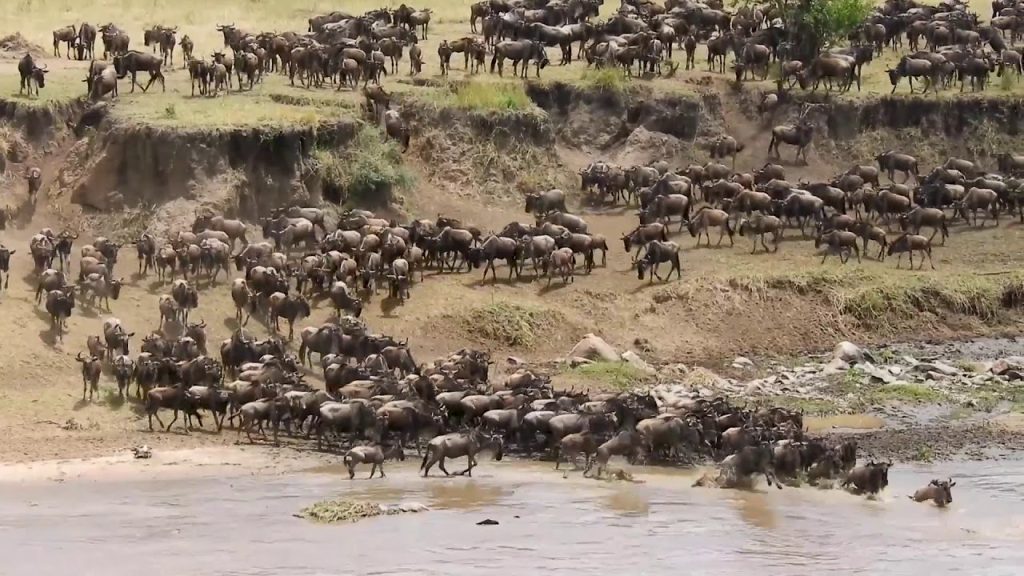
If you’ve ever watched footage of a thousand wildebeest launching themselves off a riverbank into crocodile-infested water and thought “I need to see that with my own eyes, from my own vehicle, on my own schedule” — this guide is for you.
The Masai Mara Triangle is, without argument, the single best stretch of savannah in Kenya to watch the Great Wildebeest Migration, and it is one of the very few premier migration zones in East Africa that genuinely rewards a self drive safari. Unlike the main Mara reserve on the eastern side, the Triangle is managed by the Mara Conservancy, which keeps vehicle numbers capped, maintains its own network of graded roads, and enforces off-roading rules that most tour operators quietly ignore elsewhere. The result is a landscape that still feels wild, uncrowded, and entirely navigable in a well-prepared 4×4 — no guide required, though a good one never hurts.
This guide walks you through everything a self-driving traveler actually needs to plan the trip properly: how to get there, when to go, exactly where the migration action happens month by month, which lodges and camps to book, where the public and special campsites are, what your vehicle needs to survive the black cotton soil, and the practical logistics — fuel, permits, gate fees, cell signal, and safety — that separate a great self drive from a stuck-in-the-mud disaster story.
At the bottom, you’ll find a sample 4-day self drive itinerary and answers to the questions we get asked most often at 4x4Kenya.com by travelers renting a vehicle for exactly this trip.
Masai Mara National Reserve & The Mara Triangle
Hover over areas to explore geographic features and neighboring zones
What Is the Masai Mara Triangle — And Why It’s Better for Self Drivers
The Masai Mara National Reserve is split into two administrative zones. The larger eastern section is managed by Narok County and sees the bulk of Kenya’s safari traffic — big lodges, big vehicle numbers, and at peak migration season, genuinely congested river crossing sites with dozens of vehicles jockeying for a view.
The Mara Triangle is the western wedge of the reserve, bordered by the Oloololo (Siria) Escarpment to the west, the Mara River to the east, and the Tanzanian border to the south. It’s managed independently by the Mara Conservancy, a not-for-profit trust that reinvests park fees directly into anti-poaching, road maintenance, and habitat protection. That single difference in management structure is why the Triangle has become the destination of choice for self-drive travelers and photographers:
- Fewer vehicles per sighting. The Conservancy enforces a strict vehicle limit at wildlife sightings, particularly river crossings. You won’t find fifty vehicles boxing in one another the way you sometimes do on the eastern side.
- Better maintained roads. The Triangle’s murram (graded gravel) road network is kept in noticeably better condition, which matters enormously when you’re self-driving rather than being chauffeured in a purpose-built safari Land Cruiser.
- Stricter off-road rules. Off-roading is banned except in designated circumstances, which protects the grassland and keeps game viewing sustainable — and also means the roads you do have are actually used, and therefore graded and passable.
- Iconic scenery. The escarpment backdrop, the Mara River snaking through open plains, and the sheer density of resident wildlife (this is prime lion, leopard and cheetah territory year-round, migration or not) make the Triangle worth visiting even outside migration season.
- Closer to Nairobi via the western route, and directly accessible through its own dedicated gates, meaning you don’t have to funnel through the busier eastern entry points.
For a self driver, the Triangle strikes the balance every independent traveler wants: wild enough to be a genuine adventure, structured enough that a 4×4 with decent ground clearance and a confident driver can handle it without a professional guide.
The Great Wildebeest Migration Explained
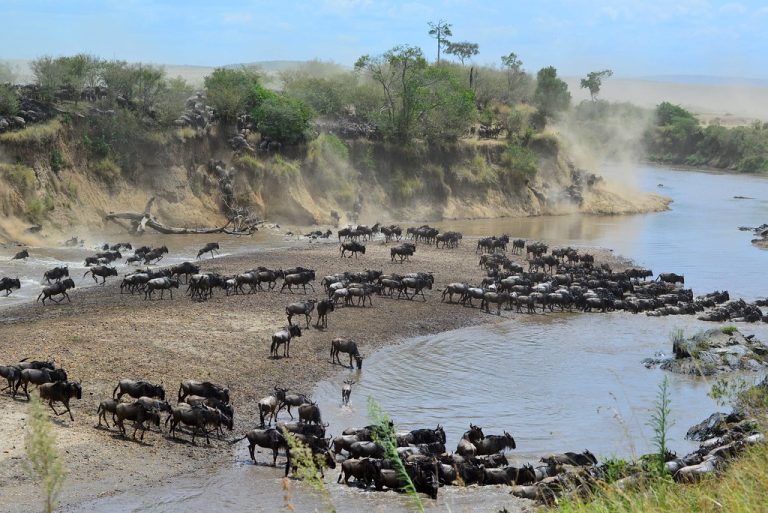
The Great Migration is not a single event — it’s a continuous, circular movement of roughly 1.5 to 2 million wildebeest, accompanied by hundreds of thousands of zebra and gazelle, following the rains between the Serengeti in Tanzania and the Masai Mara in Kenya. It has no fixed start or finish; it is a loop the herds have walked for hundreds of thousands of years, driven purely by where the grass is greenest.
For a Kenya-based self drive traveler, the part of the migration that matters most is the period the herds spend north of the border, in and around the Mara Triangle, which typically runs from late June/early July through to October, sometimes bleeding into November depending on rainfall patterns that season.
During this window, the herds cross and re-cross the Mara River multiple times as they graze their way through the Triangle and the wider Mara ecosystem, searching for fresh pasture and occasionally doubling back on themselves. These crossings are the single most dramatic wildlife spectacle in Africa: thousands of animals building up courage at the riverbank, a tipping point where the first few plunge in, and then a chaotic, adrenaline-charged scramble across water that often holds large, well-fed Nile crocodiles.
A few honest things worth knowing before you plan around this:
- Crossings are not scheduled. No one — not the rangers, not the lodges, not the most experienced guides — can tell you with certainty that a crossing will happen at a specific point at a specific hour. What experienced trackers can do is read the herd’s behavior (agitation at the riverbank, dust clouds building on the plains, movement patterns over preceding days) to estimate probability.
- Patience is the price of admission. Serious migration photographers and self drivers often wait for hours, sometimes across multiple days, at a promising crossing point before the herd actually commits.
- It’s still worth it outside “peak” crossing weeks. Even without a river crossing, the sheer density of wildebeest and zebra grazing across the Triangle’s plains during migration season is a spectacle in itself — endless columns of animals stretching to the horizon, predators shadowing the herds, and a soundscape of grunting wildebeest that you genuinely have to experience to understand.
Migration Calendar: Where to Be, Month by Month
Rainfall varies year to year, so treat this as a strong general pattern rather than a guarantee — but it’s the pattern serious Mara operators plan around.
January – March Herds are in the southern Serengeti (Tanzania), calving season is underway. Not a Mara Triangle migration month, but resident wildlife viewing in the Triangle is still excellent and lodge rates are noticeably lower.
April – May The long rains. Herds begin moving north through the central and western Serengeti. Mara Triangle is quiet, green, and beautiful, but the migration herds themselves are still mostly in Tanzania. Some self drivers use this window for a low-traffic, budget-friendly Mara trip and skip the migration entirely.
June The herds push into the northern Serengeti and start approaching the Kenya border. Late June often brings the first river crossings at the southern points of the Mara Triangle near the Tanzania boundary. This is when serious migration-watchers start positioning themselves in the Triangle.
July Peak arrival month. Large numbers of wildebeest cross into the Mara Triangle from the Serengeti’s Lamai Wedge, and the first big Mara River crossings become a near-daily possibility. This is when the Triangle’s reputation as the premier crossing-viewing zone is earned.
August Widely considered the single best month for river crossing action in the Triangle. Herds are fully established across the plains, moving back and forth across the river as they graze, and crossings can happen multiple times a day at different points. Expect the highest lodge and camp rates and the most demand for vehicles — book early.
September Still excellent. Herds continue circulating through the Triangle and the wider Mara, with crossings remaining frequent. Slightly less crowded than August, arguably the sweet spot for self drivers who want great odds without peak-season chaos.
October Migration action tapers as the herds begin their gradual move back south, though crossings can still occur, particularly early in the month. Grass in the Triangle is heavily grazed by now, and the resident predator population is often at its most active because prey is concentrated.
November – December The short rains push the herds back south toward the Serengeti. By late November the bulk of the migration has typically left the Mara ecosystem. December brings green plains, newborn resident wildlife, and low-season pricing — a good option for travelers who prioritize a quieter, more affordable trip over migration crossings specifically.
Bottom line for planning: if watching an actual river crossing is your top priority, target late July through September, with August as the statistically strongest single month. If you want the Triangle’s scenery, resident wildlife and lower costs without the crossing spectacle, April–June or November–December are excellent, far less crowded alternatives.
Best Spots to View the Action
The Mara River winds through the Triangle for roughly 40km, and not all of it is equal for viewing. These are the stretches and features experienced Mara Conservancy rangers and photographers consistently point to:
Lookout Hill (Kaburu)
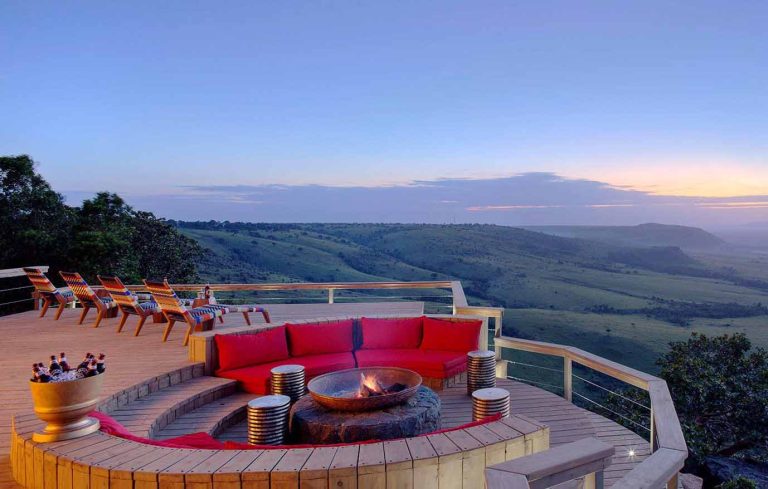
Looking for the ultimate vantage point in the Masai Mara Triangle? Lookout Hill (Kaburu) is an essential stop for self-drive safaris and wildlife photographers. Situated on the eastern edge of the Mara Triangle, this elevated ground provides panoramic views over a wide, sweeping bend of the Mara River.
Because of its commanding elevation, Lookout Hill serves as a natural scouting station. Every morning, visitors and safari guides park here to scan the riverbanks with binoculars, watching for crocodile activity, herd agitation, or rising dust clouds that signal an imminent wildebeest river crossing. Once the action starts, drivers navigate down to the crossings.
Key Features for Safari Travelers:
Elevated Vantage: Unobstructed sightlines across the Mara River basin.
Scouting Hub: Ideal for spotting wildlife behavior before committing to river tracks.
Photography: Excellent backdrop for capturing savannah landscapes.
Plan your Masai Mara itinerary today to experience the drama of the great migration from its best viewpoints.
Paradise Plain and Paradise Crossing
Experience the iconic Paradise Crossing in the Maasai Mara, one of the most photographed and dramatic wildlife spectacles in the ecosystem. Famous for its wide riverbanks and steep cliffs, this premier crossing site captures the breathtaking action of wildebeest plunging into the water. Set against expansive open plains, herds congregate visibly before making their daring leap. Perfect for self-drive safaris and wildlife photographers seeking thrilling river crossings during the Great Migration.
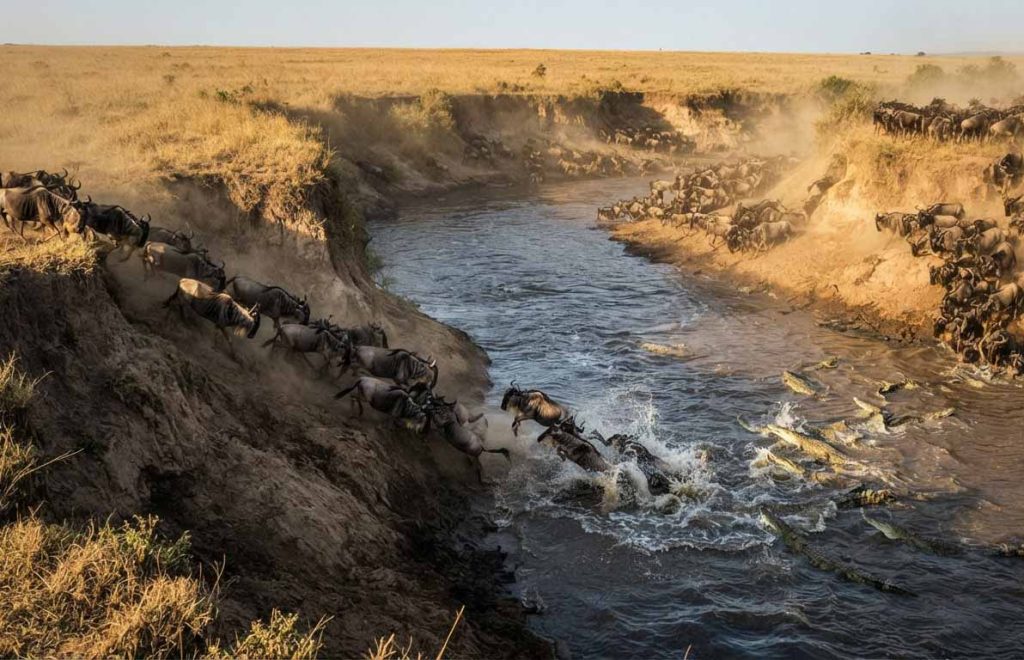
Cul-de-Sac
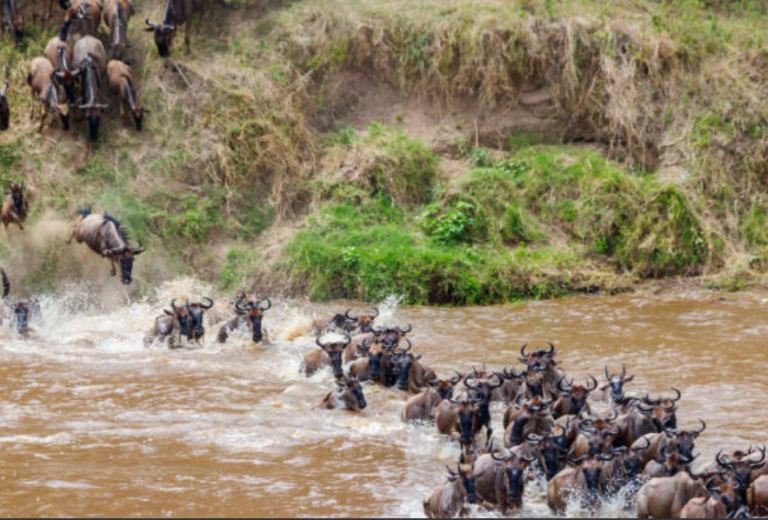
The Cul-de-Sac Crossing, located south of Paradise, is the ultimate test for migrating wildebeest and a premier location for wildlife photography in the Maasai Mara. This dramatic U-shaped bend features extremely steep banks and a swift, powerful current, creating intense and chaotic crossing events. It is not for the faint of heart, as the perilous conditions attract a high concentration of Nile crocodiles during peak migration months, resulting in frequent, high-stakes predation. This location offers unparalleled opportunities to capture raw, unfiltered nature.
Kabatanga / Serena Crossing Area
Closer to Mara Serena Safari Lodge, this stretch is more accessible via the Triangle’s main north-south roads and tends to see a good mix of grazing herds and periodic crossings without requiring the longer drive south toward the border.
Purungat Bridge Area
Near the bridge that connects the Triangle to the eastern side of the reserve. Crossings here are visible from both banks, meaning you’ll often see vehicles from the eastern Mara reserve mirroring your position across the water — useful context for gauging where the action is building.
Rhino Ridge and the Oloololo Escarpment Road
Not a crossing point, but the escarpment road running along the western edge of the Triangle gives sweeping views down onto the plains below, useful for spotting distant herd movement and photographing the sheer scale of the migration against the escarpment backdrop, especially at sunrise and sunset.
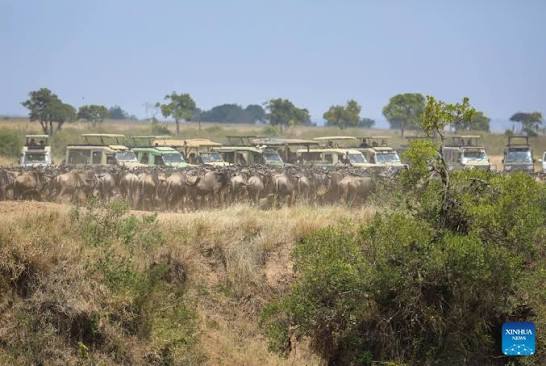
How to actually find the crossings on the day
Ask at your lodge or camp reception each morning — most keep a radio/WhatsApp network with Conservancy rangers and other camps’ guides sharing real-time crossing intel, and reception staff are usually happy to pass along the general area (not exact GPS pins, out of respect for guided guests, but enough to point a self driver in the right direction). Rangers stationed at key junctions will also often wave down vehicles or point toward gathering herds. Build your own routine: scout from Lookout Hill or the escarpment road mid-morning, then commit to the most promising point and be patient.
Getting There: Routes, Gates & Drive Times
From Nairobi via the Mara Triangle (Western Route)
This is the route most self drivers heading specifically for the Triangle should take, since it brings you in directly through the Triangle’s own gates rather than requiring a long transit through the busier eastern reserve.
Nairobi → Narok → Mai Mahiu / Suswa escarpment → Ololoolo Gate Total driving distance is roughly 270–290km, and realistic drive time in a self-driven 4×4 (accounting for the tarmac-to-murram transition, fuel stops, and the final stretch of unpaved road) is 5.5 to 7 hours, depending on road conditions and how many stops you make. The tarmac runs most of the way to Narok and continues in reasonable condition toward Lolgorien/Kilgoris, after which you’ll join Conservancy-maintained murram roads for the final approach to the gate.
Gates serving the Mara Triangle:
- Oloololo Gate — the main western entry point, most commonly used by self drivers approaching from Nairobi via the Mai Mahiu/Narok corridor and continuing toward Lolgorien.
- Purungat Gate — on the southeastern side of the Triangle near the bridge, useful if you’re connecting from the eastern Mara reserve.
- Serena/Iseiya Gate — closer to Mara Serena Safari Lodge, convenient if that’s your base.
Alternative: Fly-drive combination
Some self drivers choose to fly into one of the Mara’s airstrips (Musiara, Mara Serena, or Kichwa Tembo) and pick up a rental 4×4 locally for the duration of their stay rather than driving from Nairobi both ways. This is worth considering if you’re short on time — talk to us about vehicle positioning if this fits your plan.
Road conditions to expect
The tarmac sections are generally in good condition. The final unpaved stretch into the Triangle can range from smooth graded murram in dry season to genuinely challenging, deeply rutted black cotton soil after rain — this is where a properly equipped, high-clearance 4×4 stops being a nice-to-have and becomes essential. More on vehicle choice below.
Self Drive Logistics: Permits, Fees & Fuel
Park Entry Fees
The Mara Triangle is managed separately from the eastern reserve and sets its own conservation fees, which are typically charged per person, per 24-hour period (non-resident, resident, and Kenyan citizen rates differ substantially). Fees are usually payable by card or via the Conservancy’s electronic payment system at the gate — carrying a card that works internationally is strongly advised, as cash acceptance policies change and vehicle-holding delays for payment issues are common. Confirm current rates directly with the Mara Conservancy before you travel, as these are revised periodically.
Vehicle Fees
Expect a separate, smaller per-vehicle entry fee in addition to per-person conservation fees for self-driven vehicles.
Fuel
There is no fuel station inside the reserve. The last reliable fuel stop heading in from Nairobi is typically in Narok town, roughly 2–2.5 hours before the gate — fill up fully here regardless of how much fuel you think you have. Some travelers also top up in Sekenani or nearby trading centers if approaching from the eastern side, but don’t count on availability or fuel quality matching Narok. A self drive itinerary covering multiple days of game drives inside the Triangle can easily use significantly more fuel than a straight highway trip of the same distance, thanks to low-range driving through soft or muddy terrain — always carry a spare jerry can if your itinerary includes several full days inside the park without an exit.
Cell Signal
Patchy at best once inside the Triangle. Some high ground and areas near lodges get intermittent signal (useful for the informal crossing-intel network mentioned above), but don’t rely on your phone for navigation or emergency contact throughout the park. Download offline maps before you go, and let your accommodation know your planned game drive route each day.
Road Rules Inside the Reserve
- Stick to designated roads — off-roading is prohibited except in specific, ranger-permitted circumstances.
- Speed limits inside the reserve are low (typically around 20-25km/h) and enforced.
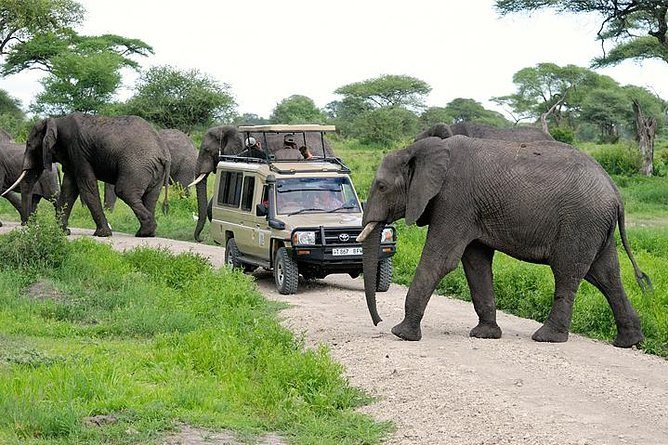
- Maintain a respectful distance from wildlife and from other vehicles at sightings; the Conservancy’s vehicle-limit rules at crossings exist precisely so self drivers and lodge guests alike get a clear, uncrowded view — don’t be the vehicle that ruins it for everyone by pushing in.
- Night driving inside the reserve is generally not permitted for self-drive/day visitors — plan your game drives to end before gate closing time, which is typically around 6:00–6:30pm.
Choosing the Right 4×4 for the Mara Triangle
This is the section that determines whether your trip is a triumphant story or a very expensive lesson in soil mechanics.
The Triangle’s terrain includes stretches of black cotton soil — a clay-rich soil that turns into some of the most treacherous driving surface in East Africa when wet. Dry, it’s rock-hard and easy. After rain, it becomes a slick, sucking, tire-swallowing hazard that has stranded plenty of overconfident drivers in vehicles that were never built for it. Combine that with river crossings within the park, rutted tracks, and long distances between fuel and mechanical help, and your vehicle choice is not a place to cut corners.
What you actually need:
- True 4-wheel drive with low range, not just all-wheel drive or “4×4” badging on a soft-roader. You need a transfer case and locking capability.
- High ground clearance — a minimum of roughly 200mm, ideally more, to clear ruts and rocky sections without grounding out.
- All-terrain or mud-terrain tires, properly inflated for the conditions you’ll actually face, not highway tread.
- A reliable jack, tow rope/strap, and basic recovery kit — sand ladders or traction boards are a smart addition in wet season.
- A roof hatch or pop-top if photography is a priority — being able to stand and shoot from a stable, elevated position without leaving the vehicle (mandatory inside the reserve) makes an enormous difference to your crossing photos and general game viewing.
- Enough fuel range to comfortably cover multi-day game drives plus the return leg to the nearest fuel stop, with margin.
At 4x4Kenya.com, our self-drive fleet for Mara Triangle trips is built around exactly this spec — properly prepared Land Cruisers and equivalent 4x4s with low-range transfer cases, all-terrain tires, roof hatches, full recovery kits, and long-range fuel capacity, fully briefed and checked before you leave Nairobi. If you’re planning a migration self drive, talk to us about vehicle spec before you book anything else — the wrong vehicle is the single most common reason self-drive Mara trips go wrong.
Conquer the Mara Triangle Safely
Don't let treacherous black cotton soil or river tracks ruin your wildlife adventure. Explore our fully equipped, expedition-ready Land Cruisers built specifically for East African terrain.
Lodges & Accommodation in the Mara Triangle
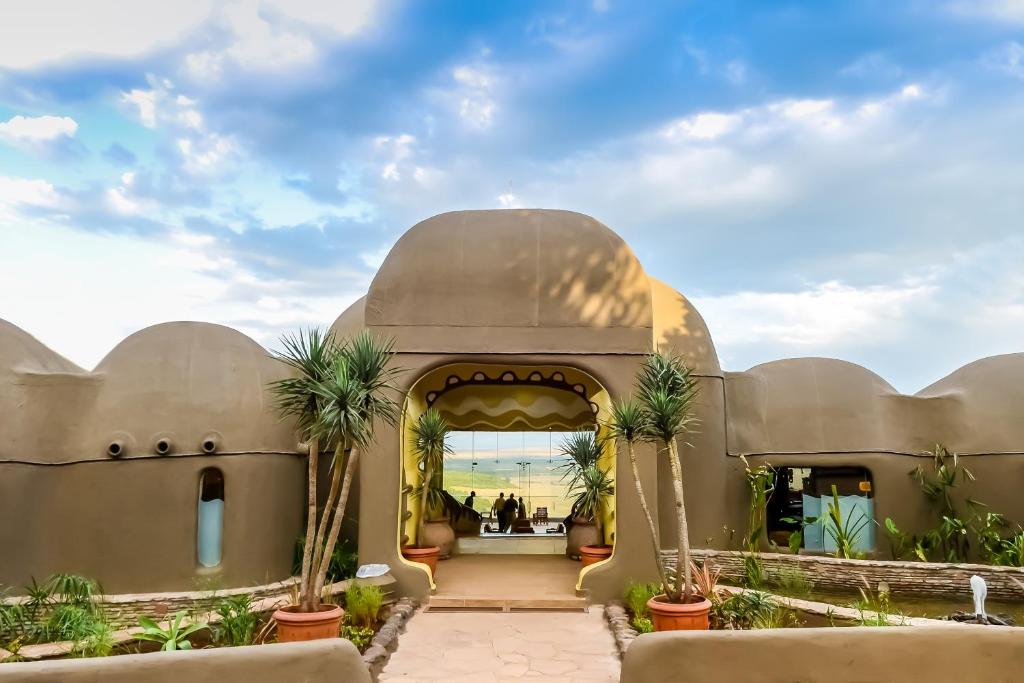
Accommodation inside and immediately bordering the Mara Triangle spans the full range from ultra-luxury to comfortable mid-range, and the good news for self drivers is that most properties happily accommodate guests arriving in their own vehicle — you don’t need to be on a fly-in or guided package to book a room. Always confirm current rates and self-drive arrival policy directly with each property, as these change seasonally.
Luxury Lodges & Camps
Mara Serena Safari Lodge Perched on a hilltop in the heart of the Triangle with sweeping views over the plains and river below, Mara Serena is one of the most established and recognizable properties in the reserve. Its elevated position makes it genuinely useful as a base for scouting herd movement, and its central location cuts down drive time to most crossing points.
Governors’ Camp / Little Governors’ Camp Sitting right on the Mara River near a well-known hippo pool, the Governors’ properties are classic tented luxury camps with a long-standing reputation for being positioned close to prime migration territory. Little Governors’ is reached by a short boat crossing of a river channel, which adds a nice touch of arrival theater.
Kicheche Mara Camp A smaller, owner-run luxury tented camp known for a more intimate, personalized feel and strong guiding reputation, situated to take advantage of both resident wildlife density and migration season crossings.
Mara Explorer / Mara Intrepids Riverside tented luxury camps with a strong focus on proximity to the Mara River and crossing points, offering the classic “canvas walls, hardwood floors, plunge pool” luxury tented experience.
Mid-Range Lodges & Camps
Sarova Mara Game Camp A well-established mid-to-upper-range property with a large, comfortable tented camp footprint, good facilities, and a reputation for reliable service — a solid choice for self drivers who want comfort without ultra-luxury pricing.
Mara Fig Tree Camp Set along the Talek River with tents shaded by fig trees, offering a good balance of comfort, wildlife proximity and value, along with a swimming pool and solid restaurant — popular with independent travelers.
Basecamp Masai Mara Known for a genuine eco-tourism ethos alongside comfortable tented accommodation, with strong community and conservation credentials that appeal to self drivers who want their trip to have a lighter footprint.
Enkorok Mara Camp A comfortable, straightforward tented camp offering good value within reach of the Triangle’s key game drive circuits.
Budget-Friendly Options
Several smaller tented camps and guesthouses operate on the fringes of the reserve near Talek, Sekenani, and along the approach roads, offering simple rooms or tents at a fraction of in-park luxury pricing — a practical choice if you’re prioritizing multiple game drive days over accommodation luxury, and happy to add 20–40 minutes of drive time each way to reach the Triangle’s core.
A note on booking for self drivers: always confirm directly with the property (a) that they accept self-drive arrivals without requiring a pre-booked transfer, (b) their exact GPS coordinates and gate-access instructions, and (c) whether secure parking is provided. Most established lodges handle self-drive guests routinely, but it’s worth a two-minute email to avoid any confusion at the gate.
Camping Sites in the Mara Triangle
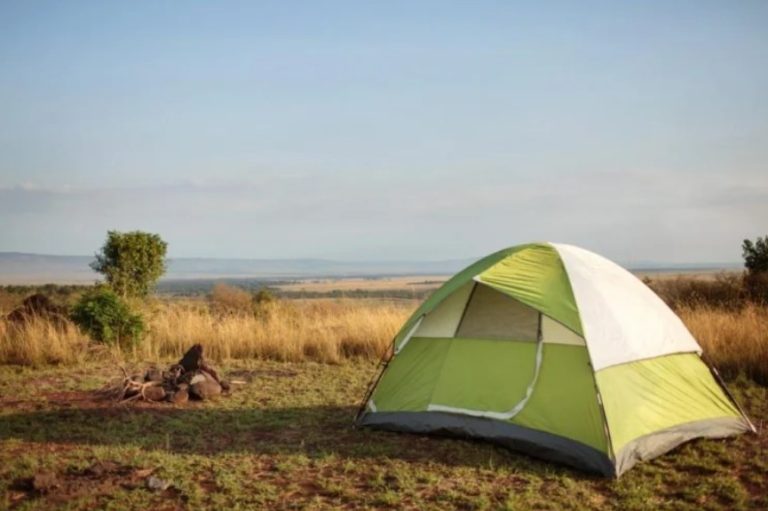
For self drivers who want the ultimate adventure—falling asleep to the sound of hippos grunting in the river and lions calling across the plains—camping inside the Triangle is genuinely one of the best budget-to-mid-range experiences in Kenyan safari tourism, and it’s specifically set up to be self-drive friendly.
Public Campsites The Mara Conservancy maintains several public campsites within the Triangle, generally located near the main gates and along the escarpment. These are basic, unfenced sites with simple facilities (typically a pit latrine and water points)—you bring your own tent, bedding, cooking equipment, and food, camping in genuinely open bush where wildlife can and does wander through at night. Standard safety practice applies: no walking around after dark without a torch, secure food storage, and respect for an unfenced wilderness.
- Actual Public Campsites: Oloololo Public Campsite (situated near the Oloololo Escarpment and gate) and Mara River Public Campsite (positioned closer to the riverbanks for prime hippo and wildlife viewing).
Public campsite fees are charged per person per night in addition to standard park conservation fees, allocated through the Mara Conservancy.
Special (Exclusive) Campsites For a more private experience, the Conservancy designates special campsites that can be booked exclusively for a single group, ensuring you won’t share the site with strangers. Ideal for families or groups wanting their own patch of the Mara, these require advance booking directly with the Mara Conservancy. Peak migration months (July–September) fill up early.
- Actual Special Campsites: Eluai Special Campsite (famed for shaded acacia trees and frequent wildlife activity) and Ildikir Special Campsite (offering quiet isolation along the river networks).
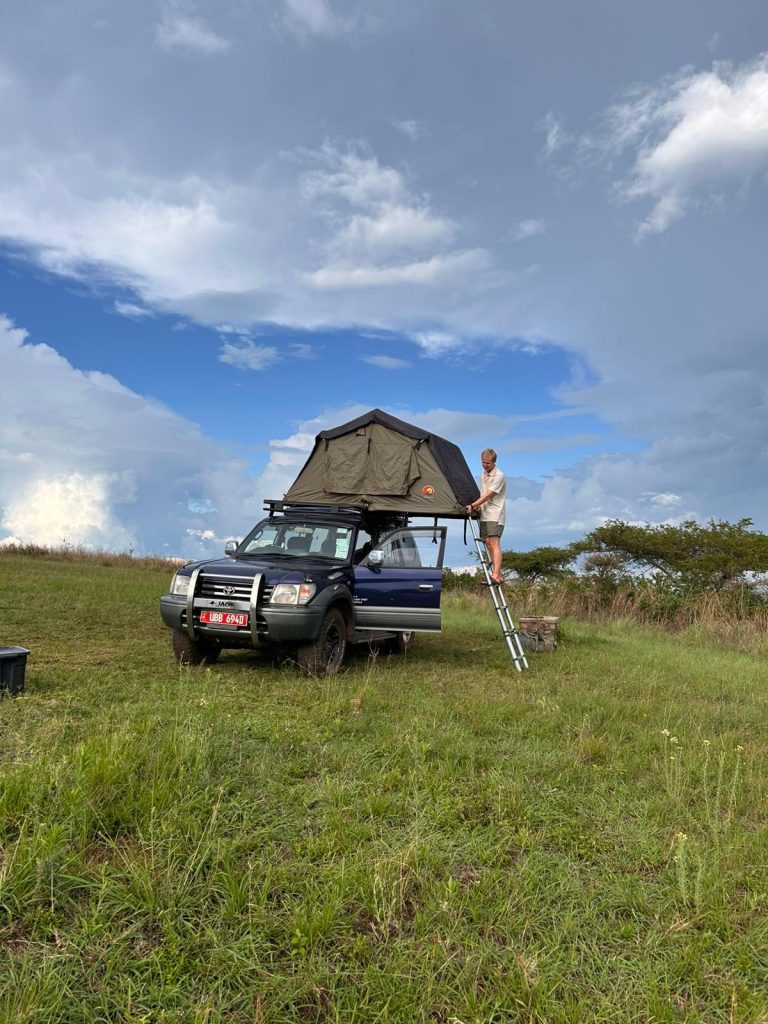
Mobile / Fully-Serviced Tented Camping If you like the idea of camping without the logistics of hauling gear, operators offer fully-serviced mobile camping where a crew sets up proper walk-in tents, camp beds, a mess tent, and a cook before you arrive. This is an excellent middle ground for self drivers to enjoy an authentic under-canvas experience without owning a full camping kit. Talk to us at 4x4Kenya.com to coordinate camp setups alongside your vehicle rental.
What to Bring for a Self-Drive Camping Trip
- A sturdy tent rated for the conditions (nighttime temperatures in the Mara can drop noticeably, even in dry season)
- A proper sleeping bag/bedding — nights are cold, days are hot
- Cooking equipment, fuel, and enough food and water for your full stay (there is no shop inside the Triangle)
- A reliable torch/headlamp and spare batteries
- A cooler box, since there’s no refrigeration at public sites
- Basic first aid kit
Cash in small denominations for camp fees where card payment isn’t available
Sample 14-Day Mara Triangle Self-Drive Safari Itinerary, Serengeti included
Day 1 — Nairobi to Narok & Mara Triangle
Depart Nairobi by 6:30 AM to beat heavy city traffic and congestion through Mai Mahiu. Stop for a full fuel top-up in Narok town, verify tire pressures, and check essential supplies before taking the western route via Oloololo Gate. Arrive by early afternoon to complete park entry formalities, check in, and set up your campsite at Oloololo Public Campsite. Take a short, relaxed late-afternoon orientation game drive along the escarpment rim as the sun starts dropping, allowing you to acclimatize to the rugged terrain, dust, and lighting conditions before the intensive game-viewing days begin. Enjoy your first evening under canvas listening to the sounds of the African bush.
Day 2 — Full Day: Mara Triangle Escarpment & Oloololo Sector.
Hit the track at first light to capture the crisp morning air and active wildlife. Spend the morning exploring the upper northwest sector of the Triangle, tracking resident game and scanning the open plains for early leopard and lion activity. Return to camp for a mandatory midday rest during the peak heat when wildlife behavior slows down significantly. In the afternoon, descend closer to the river systems and transit toward the Mara River banks to scout potential entry points and monitor herd behavior closely. Observe large groups of wildebeest and zebras congregating near the steep banks, testing crossing routes as scouts assess the river conditions for the days ahead.
Day 3 — Full Day: Mara River Crossing Stakes
Dedicate the entire day to tracking wildebeest migration movements along the Mara River within the Triangle. Position your vehicle early near active crossing points such as major sand banks or established pathways where herds frequently gather. Pack a full cooler, lunch, and a warm thermos to comfortably wait out the cautious herds. If the morning is quiet at your chosen spot, use the mid-morning lull to drive the predator circuit around the open grass plains, where lion prides and cheetahs are frequently found shadowing the migrating columns. Return to the riverbanks in the late afternoon for a second crossing attempt, as animals often make their final push toward water before dusk falls.
Day 4 — Full Day: Mara Triangle Extended Exploration & Predator Circuit
Use this extra day within the Mara Triangle to venture deep into the southern reaches near the Tanzanian border, an area that is often quieter and offers exceptional, uncrowded predator sightings. Track cheetah coalitions hunting across the expansive grasslands and monitor spotted hyena clans patrolling their territories. Spend hours observing giraffe families, massive elephant bulls, and vast herds of Thomson’s gazelles interacting across the savannah. Return to your base at Oloololo for a comfortable evening around the campfire, reviewing your wildlife photographs, checking your vehicle components, and preparing for the upcoming cross-border expedition into northern Tanzania.
Day 5 — Mara Triangle to Serengeti National Park (via Isebania)
Break camp early and head southwest toward the Isebania border crossing to transition from Kenya into Tanzania. Handle customs, immigration, and temporary vehicle import permits, ensuring all your cross-border documentation is thoroughly organized. Enter the northern sector of the Serengeti National Park and drive toward the rugged Ikoma or Bologonja regions, transitioning your camp setup to a wilderness site like Eluai Special Campsite. Enjoy an introductory late-afternoon game drive across the northern Serengeti plains, spotting iconic kopjes and diverse wildlife species as the golden hour light illuminates the remote wilderness landscape.
Day 6 — Full Day: Northern Serengeti (Mara River / Lamai Wedge)
Explore the remote Lamai Wedge and northern Serengeti river corridors, an area that sees intense migration crossing action mirroring the Mara Triangle. Spend hours posted near prime river bends where massive herds congregate and hesitate before plunging into the rushing waters. Watch for dramatic river crossings fraught with crocodile interactions and steep bank exits. Return to Eluai Special Campsite by dusk for dinner under canvas, sharing stories of the day’s river drama around the campfire while listening to the distant roars of lions echoing across the vast northern wilderness.
Day 7 — Full Day: Lobo & Grumeti River Corridor
Drive south through the striking Lobo valley, renowned for its dramatic granite kopjes, rocky outcroppings, and high concentrations of leopards and resident lion prides. Spend the midday hours navigating wooded acacia patches and looking for leopards draped over high tree branches. Scout the upper watercourses in the afternoon where elephants and buffalo herds gather to drink. The diverse landscapes transition from dense woodlands to open plains, offering incredible photographic opportunities and a stark contrast to the northern river zones you explored over the previous days.
Day 8 — Serengeti Central (Seronera Valley)
Migrate your base southward toward the Seronera Valley, widely recognized as the ecological heart of the Serengeti. Visit the Serengeti Visitor Centre to learn about the park’s rich conservation history and local ecology. Check active acacia trees for resting leopards, and track the immense spotted hyena clans and active cheetah coalitions that constantly patrol the central plains. Set up your new camp in the central region and enjoy a sunset game drive across the valley floor, taking in the sheer density of wildlife that permanently inhabits this nutrient-rich river basin.
Day 9 — Full Day: Central Serengeti Plains
Dedicate a full day to exploring the endless grass surrounding Seronera. Focus your efforts on early morning predator hunts when the temperature is low and big cats are most active on the plains. Spend the afternoon tracking general wildlife species, including towering giraffes browsing on acacia trees, breeding herds of elephants, and large flocks of ostriches striding across the short grass. Utilize offline maps and your vehicle’s capability to navigate minor loops and lesser-known tracks away from the main tourist routes, ensuring a more immersive and intimate wildlife viewing experience.
Day 10 — Central Serengeti to Ngorongoro Conservation Area
Depart Seronera in the morning, driving east across the sweeping plains toward the Ngorongoro Conservation Area. Take in the dramatic shifting vegetation zones as you climb from open savanna into lush montane forest along the crater highlands. Stop at designated viewpoints to admire the breathtaking panoramic vistas of the massive caldera below. Set up camp near the crater rim or along the descent road approach, prepping your cameras, lenses, and warm clothing for an early morning descent into the crater floor the following day.
Day 11 — Full Day: Ngorongoro Crater Floor
Descend onto the crater floor at 6:00 AM sharp to secure the quietest early hours inside the enclosed caldera. Spend the day traversing the soda lake, Lerai Forest, and open marshlands. Keep your binoculars ready to spot endangered black rhinos, massive bull elephants with impressive tusks, and dense lion prides inhabiting this unique ecosystem. Enjoy a picnic lunch near the hippo pool while watching waterfowl and wading birds. Ascend out of the crater walls in the late afternoon, taking in the steep winding roads and dramatic geological formations as you head to your evening campsite.
Day 12 — Ngorongoro to Tarangire National Park
Drive east down the dramatic Rift Valley escarpment toward Tarangire National Park, passing through vibrant local villages and agricultural lands. Enter the park by midday, navigating through ancient baobab trees, dry riverbed networks, and massive family herds of elephants digging in the sand for subsurface water. Set up camp inside or just outside the park boundaries. Spend the late afternoon tracking fringe-eared oryx, gerenuk, and tree-climbing lions that make Tarangire distinct from other parks on your multi-week itinerary.
Day 13 — Tarangire to Arusha & Cross-Border Return to Kenya
Break camp early and drive north via Arusha, managing your gear packing efficiently. Handle border exit formalities at Namanga, transitioning smoothly back into Kenya. Continue driving north toward Nairobi, stopping for a hearty roadside lunch and quick vehicle checks en route to ensure tires and mechanical systems remain optimal after thousands of kilometers of rough terrain driving across two countries.
Day 14 — Arrival in Nairobi
Complete the final leg of your epic cross-border journey into Nairobi by midday. Drop off your rental 4×4 vehicle with your provider, unpack your gear, review your comprehensive trip notes, and debrief on vehicle performance, fuel economy, and mechanical resilience with your rental team. Celebrate the completion of an unforgettable 14-day self-drive safari covering the best wildlife havens in East Africa.
Frequently Asked Questions
- Is self driving in the Masai Mara Triangle actually allowed? The Mara Triangle is one of the most self-drive-friendly reserves in Kenya, with graded roads, clear signage at key junctions, and a management structure (the Mara Conservancy) that actively supports independent visitors alongside guided lodge guests. You do need a properly equipped 4×4 and a driver comfortable with off-highway conditions.
- Do I need a guide, or can I really navigate it myself? You don’t legally need a guide to self drive the Triangle, and many experienced travelers do it entirely independently using offline maps, lodge-shared crossing intel, and ranger guidance at junctions. That said, if it’s your first Africa self drive or you want the best odds of catching a river crossing at the right moment, a local guide for even one or two of your days can significantly sharpen your timing.
- What’s the best month to see a river crossing? Statistically, August offers the highest concentration of crossing activity, with strong odds also in late July and September. No month guarantees a crossing on any specific day — it’s a wildlife event, not a scheduled show.
- How much does it cost to self drive the Mara Triangle? Costs break down into: park conservation fees (per person, per day, varying by residency status), a per-vehicle entry fee, fuel, accommodation or camping fees, and your 4×4 rental if you don’t own a suitable vehicle. Confirm current park fee rates directly with the Mara Conservancy before travel, as they’re periodically revised.
- Can I camp inside the Mara Triangle with my own tent? Yes — public campsites are available for exactly this, charged per person per night in addition to standard park fees. Special (exclusive) campsites are also bookable in advance for groups wanting full privacy.
- What vehicle do I need? A genuine 4×4 with low-range gearing, strong ground clearance, and all-terrain tires. Black cotton soil sections become extremely difficult in a vehicle without true off-road capability, particularly after rain.
- Is there fuel inside the reserve?The last reliable fuel stop coming from Nairobi is Narok, roughly 2–2.5 hours before the gate. Fill up fully there and carry a spare jerry can if your itinerary involves several consecutive days of game driving inside the park.
- How far in advance should I book accommodation for migration season? For July–September, especially August, book 3–6 months ahead where possible — luxury camps and special campsites in particular sell out early for peak migration weeks.
- Is the Mara Triangle safer or better than the eastern Mara reserve for self drivers? Both halves of the reserve are safe for properly prepared self drivers. The Triangle’s advantage is road quality, lower vehicle density at sightings, and stricter enforcement of off-roading and crowding rules — which many independent travelers and photographers find makes for a noticeably better experience during peak migration weeks specifically.
- Do I need travel insurance and a specific type of driving license? Comprehensive travel insurance covering off-road vehicle use is strongly recommended. A valid driving license from your home country combined with an International Driving Permit is the safest documentation combination for Kenyan self drive rentals.
Book Your Self Drive 4x4 for the Mara Triangle with 4x4Kenya.com
A migration self drive trip is only as good as the vehicle underneath you. At 4x4Kenya.com, we specialize in preparing 4x4s specifically for exactly the conditions described in this guide — low-range capable, high-clearance, all-terrain-shod vehicles with roof hatches for photography, full recovery kits, and long-range fuel capacity, briefed and road-tested before they leave our yard in Nairobi.
Whether you’re planning a lean 4-day migration dash to catch peak August crossings, a full week combining the Triangle with camping under canvas, or a longer cross-Mara itinerary linking the Triangle with the eastern reserve, we’ll help you match the right vehicle, route and season to what you actually want to see.
Get in touch with us to check vehicle availability for your travel dates, discuss route planning around current migration positioning, and lock in your self drive Mara Triangle trip.