
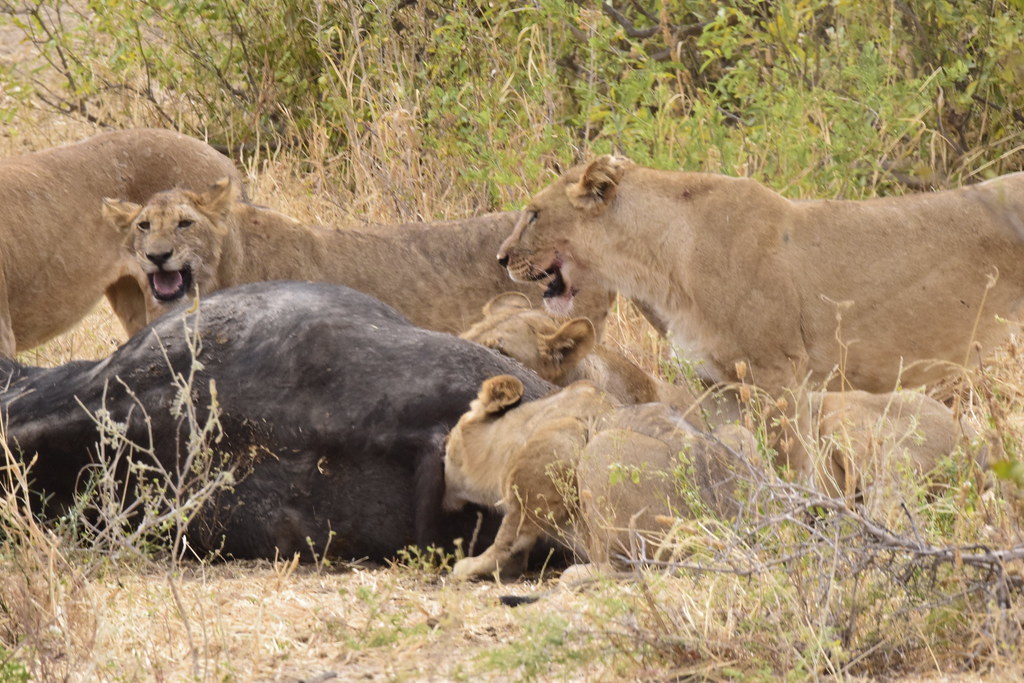
Lions Hunting Buffalo in Masai Mara: A Self-Drive Safari To Spot The Action
The golden grasses of the Masai Mara National Reserve do not merely whisper in the wind; they hold the echoes of an ancient, unrelenting war. It is a theater of raw survival where Africa’s most formidable apex predator, the lion (Panthera leo), collides head-on with its most dangerous, resilient, and vindictive prey: the African cape buffalo (Syncerus caffer).
For wildlife enthusiasts, photographers, and overlanding purists, there is no greater holy grail than witnessing lions hunting buffalo in Masai Mara. This is not a quick, clean predatory strike like a cheetah chasing a thong-gaited gazelle. It is a brutal, tactical, and deeply exhausting clash of titans that can drag on for hours, shifting back and forth between terrifying offensive maneuvers and desperate, bone-crushing counter-attacks.
If you want to experience this primeval struggle firsthand, you cannot rely on blind luck. You need to understand the geography of the conflict, the psychology of both species, the precise tools required to witness it safely, and a slow-paced, deliberate approach to navigating the Mara’s terrain.

The Anatomy of the War: Why Buffalo Are a Lion’s Ultimate Test
To understand why witnessing lions hunting buffalo in Masai Mara is so profoundly rare and dramatic, you must appreciate the sheer stakes of the encounter.
The African cape buffalo is affectionately known by hunters and rangers as “The Black Death” or “The Widowmaker.” They are built like armored tanks out of solid muscle, tipped with fused horn-bosses that can deflect bullets and impale an adult male lion with a single upward thrust. A mature bull buffalo can weigh up to 900 kilograms (nearly 2,000 pounds)—roughly four to five times the weight of an adult lioness.
Lions do not hunt buffalo out of a casual preference. They hunt them because a single buffalo carcass represents an immense, nutrient-dense prize capable of feeding a massive pride of twenty or more individuals for days. However, the cost of entry to this feast is incredibly high. Almost every mature lion pride in the Masai Mara carries the physical scars of this war: broken canine teeth, torn ears, deep puncture wounds, and limps caused by desperate buffalo hooves.
Tactical Dispersal
│
▼
The Isolation Phase
│
▼
The Anchor Strike
│
▼
[The Battle of Attrition] ─> (Wear down the beast over hours
The Strategy of the Pride
When lions target a buffalo herd, they execute a highly coordinated, militaristic strategy. Because a direct frontal assault against a synchronized wall of protective buffalo horns is suicide, the pride relies on stealth, positioning, and psychological warfare.
- The Stalk and Dispersal: Lionesses utilize the deep, golden oat grass of the Mara to encircle a grazing herd. They look for vulnerabilities—an old bull trailing behind, a pregnant cow, or a young calf. Once positioned, a few lions will intentionally break cover to cause a stampede, forcing the herd into motion.
- The Isolation Phase: In the chaos of the panic, the pride works together to cut off a specific individual from the protective mass of the herd. Once a buffalo is isolated, its chances of survival drop dramatically.
- The Anchor Strike: The heaviest lionesses or a dominant pride male will launch themselves onto the buffalo’s hindquarters, using their massive dewclaws to anchor into the flesh and act as deadweight to slow the animal down.
- The Suffocation Clamp: While one group slows the back, another daring lion will go for the throat or the muzzle, clamping its jaws shut over the buffalo’s nose and mouth to cut off its oxygen supply.
This leads to a grueling battle of attrition. A buffalo can fight for two, three, or even four hours with five lions hanging onto its back, dragging its attackers across the savanna as it bellows for help.
The Buffalo Counter-Strike: Mobbing the Enemy
What makes this interaction uniquely thrilling is that the buffalo are rarely passive victims. They possess an intense herd mentality and a collective memory that breeds a deep, burning hatred for lions.
If a bellowing, trapped buffalo can hold out long enough, its cries will often summon the entire herd back to the scene. In a spectacular display of animal solidarity known as “mobbing,” dozens of massive bulls will form a defensive line and charge the lions, aggressively goring and trampling anything in their path to rescue their fallen comrade. It is a true war, and the lions are frequently forced to abandon their hard-earned prize and flee up into the branches of nearby trees.

Tactical Geography: Best Battlegrounds in the Masai Mara
You cannot find this specific predator action by driving aimlessly along the main tourist tracks. Lions hunting buffalo in Masai Mara requires a deep understanding of territory, water access, and pride dynamics.
The following two-column table details the precise hotspots within the greater Mara ecosystem where the structural geography forces these two titans into daily, violent contact.
Hotspots for the Battle of Titans
| Best Strategic Spot in the Mara | Why It's a Combat Zone (Geographical Advantage) |
| The Musiara Swamp & Marsh Sector | This is the ancestral heartland of the famous Marsh Pride. The deep, muddy reeds of the swamp act as a permanent sanctuary for immense resident herds of cape buffalo. The mud slows the buffalo down, removing their weight advantage and allowing coordinated lionesses to trap them along the muddy fringes where traction is poor. |
| The Paradise Plains | A sweeping, wide-open grassland bounded by the loops of the Mara River. Large, migratory bachelor herds of buffalo cross these plains constantly. Because cover is sparse, lions here have adapted to hunting under the absolute blanket of darkness, using the slight depressions in the terrain to orchestrate massive ambush rings. |
| The Mara Triangle (Base of Oloololo Escarpment) | The rich alluvial soils at the base of the escarpment provide highly nutritious grazing, drawing massive herds of up to 500 buffalo at a time. The local prides utilize the thick riverine forests and the drainage ditches running down the escarpment to launch surprise downhill charges into the herds. |
| The Talek River Convergence | Where the Talek River winds through the central plains, it creates steep, sandy embankments and narrow wildlife funnels. Lions lie in wait inside the dense whistling thorn bushes along the riverbanks, ambushing buffalo as they descend the treacherous, slippery paths to drink. |
| The Olare Motorogi Conservancy Border | The high grass density along this northern buffer zone provides perfect tactical camouflage. Prides here are exceptionally large and robust, giving them the raw numbers and physical mass required to successfully bring down massive, healthy adult buffalo bulls that smaller prides would actively avoid. |
Timings: The Circadian Rhythm of the Hunt
A major mistake made by casual safari-goers is assuming that this type of intense predatory behavior occurs during standard daytime driving hours. To see lions hunting buffalo in Masai Mara, you must adjust your biological clock to match the rhythm of the African night.- Daytime: 06:00 – 18:00 ──> Rest, shade seeking, passive monitoring of buffalo locations
- Twilight: 18:00 – 20:00 ──> Pride assembly, vocalization, tactical positioning
- Night: 20:00 – 04:00 ──> THE COMBAT WINDOW (Peak tactical advantage for lions)
Daytime Dynamics (The Passive Wait)
During the heat of the day (09:00 to 16:00), lions are highly disinclined to hunt buffalo. The blistering heat makes the immense physical exertion of tackling a 900-kilogram animal deadly due to rapid overheating. Daytime buffalo encounters are usually passive; you will see lions resting under an acacia tree while a herd of buffalo stares at them from 100 meters away, both sides fully aware of the temporary truce.
The only daytime exception occurs during cold, overcast, or rainy days, or if an elderly buffalo bull inadvertently wanders directly into a sleeping pride’s ambush zone within a river thicket.
Nighttime Dynamics (The True Combat Window)
The absolute best timing to witness lions hunting buffalo is between 20:00 and 04:00.
Lions possess a specialized white reflective layer behind their retina called the tapetum lucidum, giving them night vision that is roughly six times more powerful than a human’s and significantly superior to a buffalo’s. Under the cover of total darkness, the pride’s confidence surges. They use the cool night air to sustain long, agonizing chases without overheating.
If you are staying inside a conservancy or a camp that permits controlled night drives, navigating the plains after dark is your single highest-probability window to hear the blood-chilling death bellows of a buffalo undergoing a midnight ambush.

The Expedition Gear List: Tools for Darkness and Distance
Tracking a midnight or low-light battle between apex predators requires highly specialized equipment. If you show up with just a smartphone or standard binoculars, you will miss the entire tactical nuance of the hunt.
Here is the essential, uncompromising packing list for an overlanding journey focused squarely on predator combat:
1. Advanced Night Vision and Thermal Optics
Because the premier action occurs after the sun sets, standard optics become obsolete.
- Digital Night Vision Binoculars: Look for devices with built-in infrared (IR) illuminators (such as the Sionyx Aurora or Bushnell Equinox series). These allow you to watch the entire tactical setup of a hunt in dark conditions without emitting bright white spotlights that disrupt the animals’ natural behavior.
- Handheld Thermal Monocular: A thermal imaging camera (such as a FLIR Scout or Pulsar Axion) is the ultimate tracking tool. It detects body heat signatures through dense whistling thorn bushes and high grass, allowing you to locate a stalk long before it manifests in the open.
2. Camera Gear for Ultra-Low Light
- Fast Lenses ($f/2.8$ or wider): If you are shooting with a DSLR or mirrorless camera, a $300\text{mm}$ or $400\text{mm}$ telephoto lens with a wide aperture of $f/2.8$ is crucial for capturing crisp action shots during the blue hour or under the glow of a red-filtered searchlight.
- Beanbag Mount / Window Mount: You cannot shoot a dynamic, multi-hour wildlife battle using a rigid tripod inside a vehicle. A heavy-duty, sand-filled beanbag placed on your 4×4’s window sill or roof hatch provides instant, fluid stability for heavy lenses.
3. Vehicle & Personal Field Gear
- Red-Filtered Spotlight: If your self-drive vehicle is equipped with high-powered searchlights, ensure you use a removable red filter. White light blinds the lions and disorients the buffalo, which can inadvertently ruin the hunt or cause a buffalo to stampede directly into your vehicle. Red light is significantly less intrusive to their nocturnal vision.
- High-Quality Headlamps: Essential for managing your gear inside the cabin during long, silent midnight stakes. Always choose a model with a dedicated low-intensity red LED mode.
- Off-Line Navigation System: A robust tablet pre-loaded with satellite imagery via Tracks4Africa or Gaia GPS to track your location through the Mara’s labyrinth of unmarked dirt tracks when cellular towers are down.
See The Live Action: A Master Slow-Travel Self-Drive Itinerary & A Buffalo Hunters’ Trail
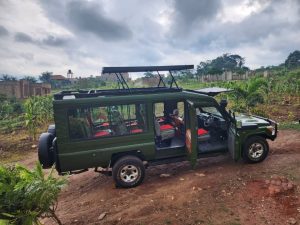
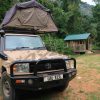
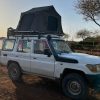
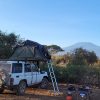
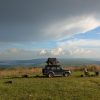
This 9-day overlanding itinerary is designed specifically for an independent traveler driving a rugged, fully capable 4×4 vehicle (such as a customized Toyota Land Cruiser with a rooftop tent).
The pace is intentionally slow, allowing you to settle into the landscape, read the tracks, monitor specific prides, and maximize your chances of witnessing the ultimate encounter.
[Nairobi]
│
▼
(Smooth Tarmac – 3 Hours)
[Lake Naivasha]
│
▼
(Loita Plains Transition – 4 Hours)
[Narok Town]
│
▼
(Rough Corrugations – 3.5 Hours)
[Mara Triangle / Oloololo]
│
▼
(Black-Cotton Tracks – 2 Hours)
[Musiara Swamp & Central Mara]
Day 1: Nairobi to Lake Naivasha (The Shake-Down Run)
- Distance: 100 km
- Driving Time: 3 hours
- The Journey: Leave Nairobi early via the A104 highway. As you crest the ridge at Limuru, the breathtaking panorama of the Great Rift Valley opens up before you. Take your time descending the steep, winding escarpment road. This day is your vehicle “shake-down” run. It allows you to get comfortable with your vehicle’s dimensions, braking response, and equipment storage before hitting the demanding dirt tracks of the south.
- The Focus: Arrive in Naivasha by midday. Spend the afternoon taking a slow drive around the southern lakeshore road, watching for any shifting weight in your vehicle configuration.
- Accommodation:
- Luxury: Chui Lodge (Set within a private sanctuary with excellent tracking options).
- Mid-Range: Lake Naivasha Sopa Resort (Large, peaceful grounds where hippos clear the lawns at night).
- Budget/Overlander: Camp Carnelley’s (The iconic pit stop for overlanders, featuring beautiful lakeside campsites and a superb rustic restaurant).
Day 2: Naivasha to Narok (The Transition to Predator Country)
- Distance: 150 km
- Driving Time: 3.5 hours
- The Journey: Turn southwest onto the B3 highway heading toward Narok. The lush, volcanic landscape of Naivasha fades into the vast, dry, and wind-swept Loita Plains. The road is good tarmac but features abrupt, unmarked speed bumps as you approach rural settlements. Take it slow and preserve your tires.
- The Focus: This day is about cultural and tactical immersion. Stop in Narok Town, the bustling hub of the Maasai region. Fill your main and auxiliary fuel tanks to maximum capacity, purchase extra drinking water, and secure fresh firewood.
- Accommodation:
- Mid-Range/Budget: Maasai Mara Sopa Lodge (Perfectly located near the eastern park boundaries, serving as an ideal staging point before hitting the deep bush).
Day 3 & 4: The Wild Frontier (Entering the Mara Triangle via Oloololo)
- Distance: 110 km
- Driving Time: 4 hours of slow, corrugated tracks
- The Journey: From Narok, navigate toward the western sector of the Mara ecosystem. The tarmac ends completely, transitioning into rough, corrugated stone and dirt tracks that will test your vehicle’s suspension. Drop your tire pressures slightly to absorb the vibrations. As you descend toward the Oloololo Gate, the vast plains of the Mara Triangle unfold beneath the towering escarpment wall.
[Tire Pressure: 35 PSI Tarmac] ───> [Drop to 25-28 PSI for Mara Corrugations]
- The Strategy: Spend these two days patrolling the base of the Oloololo Escarpment and the loops along the western bank of the Mara River. This area is home to massive resident buffalo herds that graze on the rich alluvial soils.
Field Tip: Look for the local River Pride and Oloololo Pride. Position your 4×4 near the thickets along the water courses between 16:00 and 18:30. Watch the lionesses as they wake up from their daytime torpor, stretch, yawn, and begin climbing onto fallen logs to locate the dust clouds raised by the returning buffalo herds.
- Accommodation:
- Luxury: Angama Mara (Perched dramatically on the very lip of the escarpment, offering unparalleled visibility of predator movements below).
- Mid-Range: Mara Serena Safari Lodge (Perfectly situated in the geographical center of the Triangle, offering immediate access to the river loops).
- Budget/Overlander: Oloololo Public Campsite (A raw, completely unfenced campsite directly at the base of the escarpment. Listen for the distinct nighttime roars of lions patrolling the valley).
Day 5 & 6: The Epic Center of Conflict (The Musiara Swamp & Marsh Sector)
- Distance: 45 km
- Driving Time: 2–3 hours of technical game-driving
- The Journey: Cross the Mara River and navigate into the legendary Musiara sector in the northern reserve. This area features challenging black-cotton soil tracks. If it rains, this terrain transforms into slick, sticky clay that requires low-range 4WD ($4\text{L}$), steady momentum, and careful route selection. Take it exceptionally slow.
[Black-Cotton Soil Encounter] ───> Engage Low Range (4L) ───> Maintain Steady Momentum
- The Strategy: This is the heart of the conflict. The Musiara Swamp is a massive reedbed that holds water year-round, making it the premier habitat for the Mara’s largest, most aggressive buffalo herds. It is also the home turf of the world-famous Marsh Pride—a group of lions that have spent generations specializing in the complex physics of bringing down adult buffalo.
- The Routine: Park your vehicle near the fringes of the swamp at dawn and dusk. Do not move your vehicle constantly. Settle in and use your thermal optics to scan the reed lines. Watch for lone old bulls (“Dagga Boys”) that separate from the main herd to rest in the mud; these individuals are the primary targets for the Marsh Pride’s scouts.
- Accommodation:
- Luxury: Governors’ Camp (An iconic canvas luxury camp tucked directly into the riverine forest along the Mara River, completely unfenced).
- Mid-Range: Ashnil Mara Camp (Strategically located right at the confluence of the Mara and Talek rivers, a notorious wildlife crossing and ambush point).
- Budget/Overlander: Musiara Public Campsite (Wild, authentic overlanding at its absolute finest. You must be completely self-sufficient here with a rooftop tent and integrated water storage).
Day 7 & 8: Night Stalks & Open Plains Tactics (Paradise & Central Mara)
- Distance: 30 km internal loops
- The Journey: Move south toward the expansive Paradise Plains. The tracks here are wide, flat dirt paths interspersed with seasonal luggas (dry riverbeds) that require careful entry and departure angles.
- The Strategy: Focus on nighttime or late-evening operations. If your itinerary includes a stay in a private conservancy bordering this zone (such as Olare Motorogi), make full use of their permitted night drives.
- The Protocol: Turn on your digital night vision binoculars. Follow a pride as they begin their silent, single-file march across the open plains under the stars. When they encounter a herd of buffalo, switch off your main headlights completely. Rely entirely on your infrared or thermal optics to watch the pride coordinate their flankers and drivers, creating an invisible web around the herd. Listen for the explosive snorts of the buffalo detecting the trap and the subsequent thunder of hooves.
- Accommodation:
- Luxury: Mara Plains Camp (An exquisite, low-impact luxury property located inside the Olare Motorogi Conservancy, allowing for highly private night driving).
- Mid-Range: Basecamp Masai Mara (Located right on the Talek River border, offering an authentic eco-safari experience).
- Budget/Overlander: Talek Public Campsite (Located near the Talek Gate, providing basic facilities and excellent proximity to the central plains prides).
Day 9: The Long, Reflective Trek Back (Mara to Nairobi)
- Distance: 270 km
- Driving Time: 6–7 hours
- The Journey: Break camp at dawn. Take one final, slow, deliberate drive through the central plains as the morning sun casts elongated shadows across the oat grass. Pay your respects to the ancient battlefields of the Mara before exiting through the main gates.
- The Conclusion: Re-inflate your tires to standard highway pressures once you hit the tarmac at Narok. Climb the western wall of the Great Rift Valley at a relaxed pace, arriving back in Nairobi by late afternoon to return your vehicle, concluding an unforgettable journey into the heart of wild Africa.
[Exit Mara Gates] ───> [Arrive Narok Town] ───> [Re-inflate Tires to 35 PSI] ───> [Nairobi Return]

Code of Conduct for Witnessing the Hunt
A lion hunt involving cape buffalo is an intense, volatile, and highly stressful event for the animals involved. As a self-drive overlander, you bear a profound responsibility to ensure your presence does not alter the outcome of the battle.
- Maintain an Absolute Distance Buffer: Never park closer than 30 meters to a stalked buffalo or an active pride configuration. If a buffalo herd panics, a 900-kilogram animal can easily smash into a stationary vehicle, causing severe structural damage and personal injury.
- Absolute Silence is Mandatory: When lions are tracking a herd, switch off your engine immediately. The sound of a running diesel engine or a clicking door latch can alert the buffalo, ruining a multi-hour stalk that the pride requires for sustenance.
- Never Block Flight Paths: When positioning your vehicle, ensure you always leave a clear escape route for both the buffalo herd and the hunting lions. Never position your 4×4 directly between an isolated buffalo and the rest of its protective herd.
- Respect the Night Vision of the Prey: If you are using a spotlight during an approved night drive, never shine a white beam directly into the eyes of the buffalo or the lions. This temporarily blinds them, tipping the balance of nature artificially. Always use a red filter or rely strictly on your digital infrared night vision equipment.
The Verdict: The Spirit of the Mara
To witness lions hunting buffalo in Masai Mara is to peel back the polished veneer of modern travel and look directly into the raw, unblinking eyes of creation. It is an experience that demands patience, a capable 4×4, proper nocturnal optics, and an appreciation for the slower, more deliberate rhythms of the African bush.
As you sit quietly in your vehicle on the edge of the Musiara Swamp, watching the dark shapes of the buffalo emerge from the mist while the golden eyes of the Marsh Pride flash in the darkness, you will realize that you are not merely a tourist watching a show—you are an eyewitness to the grand, eternal cycle of life and death that has ruled the African continent since the dawn of time.
Conquer the Mara Mud & Track the Giants
Navigating treacherous black-cotton soil and tracking a midnight buffalo hunt requires serious machinery. Don't leave your safari to chance—choose a rugged, fully equipped vehicle from our specialized 4x4 Kenya fleet today.
Essential Tips for Your Masai Mara Self-Drive Safari
Taking on a self-drive expedition into predator country is incredibly rewarding, but it requires a strategic balance of independence and local expertise.
1. When to Hire a Local Guide (And When to Let Them Go)
Navigating the Masai Mara’s unmarked tracks while simultaneously trying to read predator behavior can be overwhelming. Incorporating a local Maasai guide into your self-drive plan can completely transform your success rate.
- When to Hire One: Hire a local guide at the gate (or through your camp) for your first 2 to 3 days in the reserve, and specifically for any night drives if you are staying in a conservancy. A guide will instantly teach you the local topography, identify high-risk black-cotton mud holes, point out hidden territorial markers, and decipher subtle alarm calls from baboons and birds that indicate a hidden pride.
- The Logistical Trick: Because you are driving your own 4×4, the guide will sit in the front passenger seat. Ensure your vehicle provider has a designated spot or that your gear configuration allows for this.
- When to Let Them Go: Once you have learned the layout of the primary hunting zones (like the Musiara swamp loops or Paradise Plains) and feel confident reading the track conditions, let your guide go for the final 3 to 4 days of your trip. This gives you the ultimate satisfaction of applying your newly acquired tracking skills completely independently, allowing for total solitude during your slow-travel journey.
2. Master the “Golden Hour” Stakeout
- The Mistake: Many self-drivers make the mistake of driving constantly, burning fuel and missing subtle action hidden in the brush.
- The Tip: Lions hunting buffalo require immense preparation. Find a strategic vantage point near a water source or swamp edge by 15:30 (3:30 PM). Switch off your engine, open your windows, and just sit still for two hours. Watch the buffalo herds moving down to drink, and look for the sudden, synchronized heads of lionesses popping up out of the grass as the afternoon heat breaks.
3. Tire Pressure and Track Maintenance
- The Mistake: Running highway tire pressures on rugged, corrugated dirt tracks.
- The Tip: As soon as you leave the tarmac at Narok, drop your tire pressure by roughly 15% to 20% (down to about 25–28 PSI depending on your load). This widens your tire’s footprint, drastically increasing traction over loose rocks and sandy riverbeds, while significantly softening the ride inside the cabin to protect your camera gear. Keep a high-quality 12V air compressor in your recovery kit to reinflate before heading back onto the main highway.
4. Never Underestimate Black-Cotton Soil
- The Mistake: Assuming a 4×4 can drive through any muddy patch in the Mara.
- The Tip: The black-cotton soil near the Musiara sector is notorious for swallowing even the most heavily modified overlanding rigs. If a track looks suspiciously dark, spongy, or wet, stop your vehicle, get out, and walk the track first (ensuring there are no predators nearby) or find an alternative route. If you do get stuck, remember to engage your differential locks before you spin your wheels and dig the chassis into the clay.
5. Radio Etiquette and Listening In
- The Tip: If your rental 4×4 comes equipped with a VHF safari radio, keep it turned on but at a low volume. While the safari guides often speak in a mix of Swahili and local dialects to share sightings, listening for words like “Simba” (Lion), “Nyati” (Buffalo), or “Mwindo” (Hunt/Chasing) will give you a major tactical advantage on where the immediate action is unfolding.
Conquer the Mara Mud & Track the Giants
Navigating treacherous black-cotton soil and tracking a midnight buffalo hunt requires serious machinery. Don't leave your safari to chance—choose a rugged, fully equipped vehicle from our specialized 4x4 Kenya fleet today.

No responses yet