
Explore Rwanda’s Wildlife, Gorillas and Hidden Wonders
There is a distinct moment that occurs for almost every traveler who flies into Kigali for the very first time. The aircraft banks low over a landscape that resembles less of a standard country and more of a rumpled, vibrant green blanket that has been shaken out and left to settle across rolling hills stretching as far as the eye can see. These hills are meticulously terraced with tea fields and banana groves, threaded seamlessly with rich red dirt roads, and dotted with corrugated tin roofs that catch the brilliant afternoon light. Visitors invariably find themselves pressing their foreheads against the cabin window, only for a seasoned seatmate to smile and offer the classic greeting: “Welcome to the land of a thousand hills”.
This phrase is not merely a marketing exaggeration; Rwanda genuinely possesses over a thousand hills—and likely considerably more. However, what consistently surprises newcomers is not the topography itself, but everything else. The extraordinary cleanliness of the streets, the quiet efficiency of the capital city, and the immediate sense that this nation has thought deeply about its identity and is intentionally building toward a prosperous future. Rwanda does not fit the outdated narratives that outsiders sometimes picture upon hearing its name, and that profound gap between reputation and reality is precisely why it has emerged as one of Africa’s most compelling travel stories. This is a country that can easily be fallen in love with over the course of a week, and one that generously rewards a slower, more immersive two-week stay.
Kigali: The Cleanest Capital in Africa and a City That Faces Its History
Most comprehensive itineraries begin and end in Kigali, and rightfully so, because this urban center deserves far more than a routine one-night layover. Sprawling across several hills, every neighborhood in Kigali possesses its own microclimate and distinct perspective. Traveling from one district to another frequently involves a satisfying downhill coast followed by a steady climb that serves as a reminder of the city’s high elevation of approximately 1,500 meters.
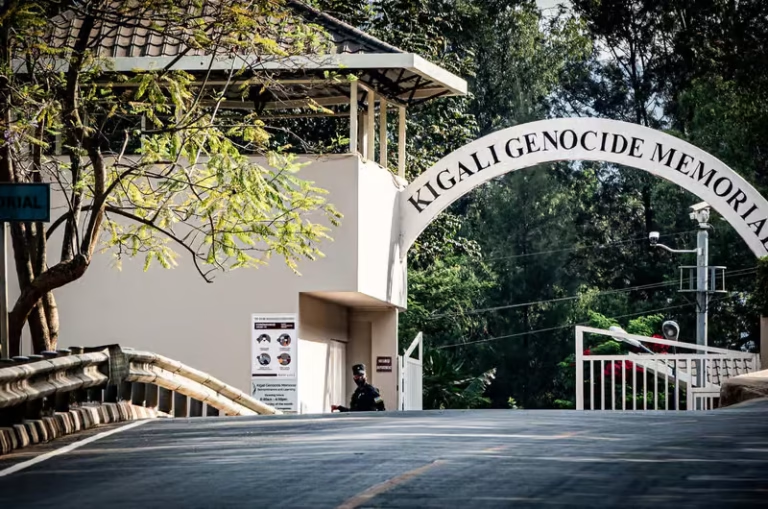
The Kigali Genocide Memorial
The single most essential stop in Kigali—and arguably throughout the entire nation—is the Kigali Genocide Memorial located in Gisozi. This is not a destination visited for light entertainment, and any honest travel guide must acknowledge that reality. The memorial safeguards the physical remains of more than 250,000 victims who perished during the 1994 genocide against the Tutsi. It narrates this dark chapter with a profound clarity and emotional honesty that fundamentally transforms almost every visitor.
Exhibits trace events chronologically, moving from the origins of ethnic division sown under colonial rule through the harrowing days of the genocide and onward into the nation’s ongoing reconciliation journey. A dedicated wing focuses specifically on children, displaying photographs and intimate biographical sketches that are deeply moving. Visitors are advised to allocate at least two hours for this experience and to allow themselves quiet time afterward to process the heavy emotional impact before engaging in conversation.
Contextualizing Modern Rwanda
Visiting the memorial is vital because it recontextualizes everything a traveler observes afterward in Rwanda. The pristine cleanliness of the streets, the strict nationwide ban on single-use plastic bags enforced since 2008, the mandatory community service days known as umuganda held on the final Saturday of every month, and the extraordinary representation of women in Parliament—giving Rwanda one of the highest percentages of female legislators globally—are not incidental features. They represent the visible outcomes of a collective national endeavor to rebuild trust, civic institutions, and identity from the ground up. Walking through Kigali with this historical and cultural context creates an entirely different appreciation of the city.
Modern Design, Arts, and Dining
On a lighter note, Kigali has evolved into a thriving design and culinary destination. The Inema Arts Center in Kacyiru operates as an active studio and gallery space established by two local brothers, standing out as one of the premier locations across the African continent to purchase contemporary art directly from the creators. Kimironko Market offers a vibrant sensory experience filled with textiles, fresh produce, and colorful energy. First-time visitors benefit greatly from exploring the market with a local guide, both for easy navigation and fair pricing. Additionally, the city’s restaurant scene has matured significantly, offering everything from traditional Rwandan comfort food featuring cassava, beans, and grilled goat to exceptional Ethiopian, Indian, and ambitious fine-dining establishments run by internationally trained chefs.
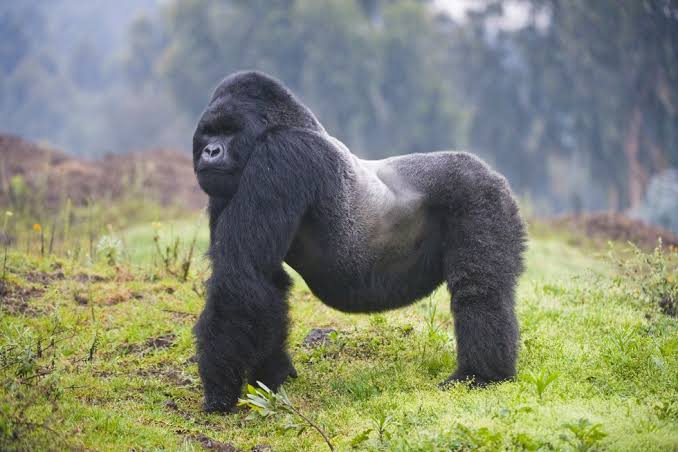
Volcanoes National Park: One Hour with the Mountain Gorillas
The primary draw for many travelers booking a ticket to Rwanda is the opportunity to encounter mountain gorillas. Situated in the nation’s northwestern region, Volcanoes National Park forms an integral part of the Virunga Massif—a chain of volcanic peaks, several of which remain active, blanketed by dense montane forests and bamboo thickets spanning the borders of Rwanda, Uganda, and the Democratic Republic of Congo. This protected habitat is one of only two places on Earth where mountain gorillas survive in the wild, with Rwanda supporting more than a dozen habituated families open for trekking.
Trekking Logistics and Conservation Impact
Understanding the logistical framework of gorilla trekking is essential. International visitor permits cost $1,500 per person, a fee that functions far beyond a standard park entrance ticket. These funds directly support anti-poaching patrols, continuous veterinary monitoring of the gorilla population, and vital community development projects in villages bordering the park. This robust funding model is a primary reason why mountain gorillas are among the few great ape populations globally experiencing population growth rather than decline.
To protect the animals, Rwanda strictly limits trekking groups to a maximum of eight people per gorilla family per day. Because permits sell out months in advance during the peak dry seasons from June through September and December through February, securing bookings three to six months ahead through a licensed operator or the Rwanda Development Board is strongly recommended. Furthermore, periodic promotional pricing structures are occasionally introduced for East African Community citizens and other African nationals, making the experience more accessible regionally.
The Trekking Experience
The journey begins early with a mandatory briefing at the park headquarters in Kinigi, where rangers assign groups based on fitness levels and the current location of specific gorilla families. Treks can range from a manageable ninety-minute walk along farmland edges to a strenuous three-to-four-hour uphill climb through stinging nettles and volcanic mud. Hiring local porters at the trailhead is highly recommended, as the terrain is unpredictable and hiring them directly supports the surrounding community.
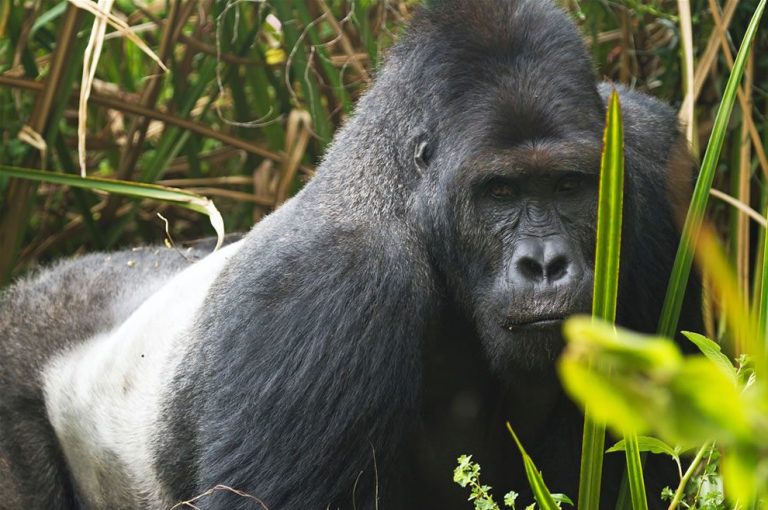
Eventually, the guide signals a quiet pause, and the gorillas come into view. A massive silverback, entirely unbothered by human presence, might sit nearby calmly eating bamboo shoots. Juveniles tumble playfully around him, while mothers tend to infants that gaze out with remarkably human expressions. Strict regulations limit visits to exactly one hour to minimize stress and disease transmission risks for the animals. For most visitors, locking eyes with an animal sharing 98 percent of human DNA in its natural habitat is an unforgettable, profound experience. Beyond gorillas, Volcanoes National Park also offers golden monkey tracking and challenging summit hikes up Mount Bisoke.
Nyungwe Forest: Chimpanzees and a Canopy Walk 60 Meters Up
While Volcanoes National Park captures prominent headlines, Nyungwe National Park in the southwest offers a deeply atmospheric and underrated adventure for seasoned travelers. As one of Africa’s oldest rainforests, this vast expanse of montane jungle has remained intact for millions of years. It serves as a sanctuary for chimpanzees, thirteen additional primate species including the striking black-and-white colobus monkey, and over three hundred bird species that attract international ornithologists.
The Canopy Walkway and Primate Tracking
The signature attraction in Nyungwe is the famous canopy walkway—a suspended bridge system strung securely between towering trees that positions visitors sixty meters above the forest floor. Representing the only canopy walk of its kind in East Africa, it provides sweeping views across an unbroken sea of rainforest canopy framed by morning mists curling through deep valleys. Chimpanzee trekking is also available, offering an exhilarating window
Journeying to Nyungwe is an experience in itself, as the road winds past lush terraced tea estates that glow an intense green following rainfall, offering perfect opportunities to stop for estate tours and fresh tea.
Lake Kivu: Rwanda’s Freshwater Beach Escape
Following the physical exertion of gorilla trekking and the humid exploration of Nyungwe, travelers frequently retreat to the serene shores of Lake Kivu. As one of Africa’s Great Lakes, Kivu features an expansive shoreline scalloped with peaceful bays, tiny islands, and charming towns ranging from the sleepy fishing atmosphere of Kibuye to the polished resort environment of Rubavu near the Congolese border.
Activities on the Water
Free of significant tides and salt, the warm freshwater provides an inviting environment for swimming after days of strenuous hiking. Visitors can kayak between small emerald islands or join sunset boat cruises to witness local fishermen practicing traditional night-fishing methods illuminated by suspended lanterns. For adventurous explorers, the Congo Nile Trail offers a multi-day hiking and mountain biking route along the lake’s western edge, passing through rural villages supported by community guesthouses.
Akagera National Park: Rwanda’s Big Five Comeback Story
A common misconception is that Rwanda lacks traditional savanna safaris, but Akagera National Park in the east disproves this notion. Devastated by poaching and agricultural encroachment following the 1994 genocide, the park underwent a remarkable ecological revival through a partnership between the Rwanda Development Board and African Parks. Lions were successfully reintroduced in 2015, followed by black rhinos in 2017 and 2019, restoring the complete Big Five to Rwandan soil.
Akagera offers a refreshing contrast to more crowded parks, providing game drives that emphasize authentic exploration across open savannas and papyrus wetlands with minimal vehicle congestion. It serves as a logical conclusion to an itinerary encompassing volcanic rainforests and mid-altitude jungles, allowing visitors to experience three distinct ecosystems within a remarkably compact country.
Culture and Travel Practicalities
Rwanda extends far beyond wildlife, offering deep cultural immersion through sites like the King’s Palace Museum in Nyanza, traditional Intore dance performances, and renowned coffee and tea estate tours. Navigating the country is exceptionally straightforward due to widespread English proficiency, well-maintained infrastructure, and outstanding safety standards. Most international visitors can easily obtain e-visas or visas upon arrival. While the dry seasons remain peak windows for trekking, Rwanda’s elevation ensures mild, pleasant weather year-round.
Ready to Explore Rwanda's Thousand Hills?
Don't just read about Rwanda's remarkable transformation—experience its wonders firsthand. Whether you want to lock eyes with a mountain gorilla in Volcanoes National Park, walk high above the jungle canopy in Nyungwe, or relax along the shores of Lake Kivu, your ultimate East African journey awaits.