
Zanzibar and the Swahili Coast: Tanzania's Other Great Adventure
Flying forty-five minutes east from Dar es Salaam, the landscape below shifts dramatically from mainland green to a scatter of turquoise and coral, signaling the arrival of Zanzibar. This iconic island has spent two thousand years evolving into one of the most contested, cosmopolitan, and quietly extraordinary places along the entire East African coast. If the Serengeti and the Ngorongoro Crater represent the Tanzania of classic wildlife documentaries, Zanzibar and the broader Swahili Coast represent a completely different world filled with spice traders, ancient sultans, stone alleyways, and water so clear it looks retouched even in unedited photographs.
For a huge number of travelers who have just completed a dusty, high-energy week of safari game drives across the northern circuit, Zanzibar provides the perfect, deliberate contrast. It offers an entirely different register of travel that blends deep historical texture with world-class beach relaxation.
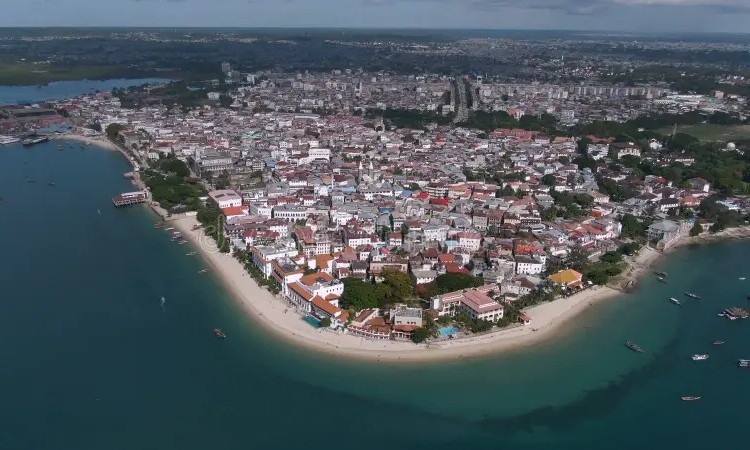
Stone Town: A UNESCO Maze of Carved Doors and Coral-Stone Alleys
Stone Town serves as the historic heart of Zanzibar City, functioning as a destination that actively resists being photographed properly. This is because so much of its authentic character lives in the heavy scent of the air and the sounds bouncing off centuries-old walls rather than anything a single camera frame can capture. This historic core is a genuine maze of narrow streets, barely wide enough for two people to pass, winding between coral-stone buildings standing three and four stories high. Their upper floors nearly touch overhead, blocking out enough harsh sun to keep the winding alleys pleasantly cool even at midday.
Getting lost here is not a risk to be avoided; rather, it is the actual intended activity. The town is compact enough that wanderers will eventually pop out at the seafront or a recognizable landmark, making the aimless wandering the entire point of the visit.
Architecture and Centuries of Cultural Layering
What makes Stone Town’s architecture so remarkably distinctive is the accumulated layering of cultures that built it over centuries. Swahili, Arab, Persian, Indian, and European influences are stacked directly on top of each other through a long history of trade, conquest, and migration. This synthesis is most visibly expressed in the famous carved wooden doors that front many of the older residences.
These doors are heavy and elaborately carved with geometric patterns, Quranic calligraphy, or floral motifs depending on the cultural tradition of the family that commissioned them. Historically, they served as a definitive status symbol, giving rise to a genuine trade of master carvers dedicated to producing them. Studded brass doors, a classic style introduced by Indian merchants, can still be found throughout the town today. Taking a slow walk with a knowledgeable guide who can point out these different regional styles transforms what initially looks like simple decoration into a legible history of who lived where and traded with whom.
Confronting History: The Former Slave Market
The town’s history is not solely defined by charming aesthetics, and a responsible visit requires reckoning with its darker chapters directly. For centuries, Zanzibar operated as one of the most significant slave trading ports on the entire East African coast. The former slave market site, which is now home to the Anglican Cathedral Church of Christ, preserves the grim underground holding chambers where human captives were kept prior to sale.
The site’s museum and the cathedral—built partly in atonement directly on top of the old market square—make for a sober, essential stop. Most thoughtful visitors intentionally build this into their first day in town, as it powerfully recontextualizes Zanzibar’s wealth and cosmopolitan history in much the same way the Kigali Genocide Memorial recontextualizes modern Rwanda. Confronting these harder parts of history helps travelers understand the place better, not worse, and offers a deeper appreciation of its evolution.
Landmarks and the Forodhani Gardens Night Market
Other major historic sites round out the urban landscape, including the House of Wonders—once the tallest building in East Africa and the former ceremonial palace of the Sultan of Zanzibar—and the nearby Old Fort, which now houses a small crafts market and occasional live music performances in its central courtyard.
Additionally, the Forodhani Gardens waterfront night market has evolved into a true Stone Town institution. Every evening as the sun goes down, dozens of food stalls set up along the seafront, grilling Zanzibar pizza (a stuffed, folded street food that shares almost nothing with Italian pizza yet has everything to recommend it), fresh seafood skewers, and the famous Zanzibari sugar cane juice. Locals and international tourists mingle together over plastic tables with the harbor lights and passing wooden dhows forming a magnificent backdrop.
Spice Tours in Zanzibar: Why They Call It the Spice Island
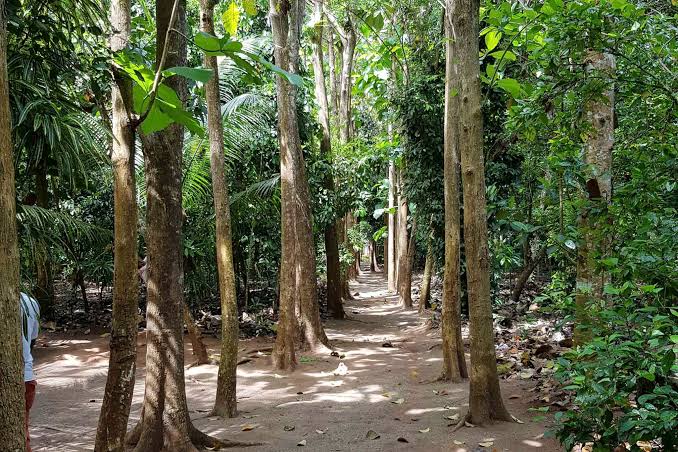
Long before international tourism arrived, Zanzibar’s economy and global reputation were built firmly on the spice trade. At the height of the nineteenth-century trade, Zanzibar produced the vast majority of the entire world’s supply of cloves. That rich legacy remains visible today just outside Stone Town, where small family-run farms continue cultivating cloves, nutmeg, cinnamon, black pepper, cardamom, vanilla, and a striking variety of tropical fruits. Consequently, half-day spice tours have become one of the island’s defining and most popular experiences.
A well-run spice tour offers an engaging journey along a slightly worn path. Expert guides walk visitors through active farms, plucking leaves, bark, and pods for them to smell and rub between their fingers. Guests are often challenged to identify various plants by scent alone before the correct answers are revealed. The sheer sensory density of the experience—such as cinnamon bark peeled fresh off a branch or a clove bud plucked straight from the tree—is far more vivid in person than the concept sounds on paper.
Most tours conclude with a simple, home-cooked lunch prepared using the exact same spices learned about during the morning walk. Furthermore, many of these farms sell small packets of vacuum-sealed vanilla pods, cinnamon sticks, and ground spice blends that make for exceptional, lightweight souvenirs that will not break or fall apart in a suitcase the way wooden carvings occasionally can.
The Beaches: Kitesurfing, Tides, and a Coastline with Real Range
If Stone Town represents Zanzibar’s intellectual brain and historical soul, the coastline is unambiguously its physical body. It is along these shores that the island firmly earns its reputation as one of the finest beach destinations anywhere in the Indian Ocean. Zanzibar’s various coastal regions each maintain a distinctly different character, a factor that matters significantly more than most first-time visitors realize when deciding where to base their stay.
The Northern Tip: Nungwi and Kendwa
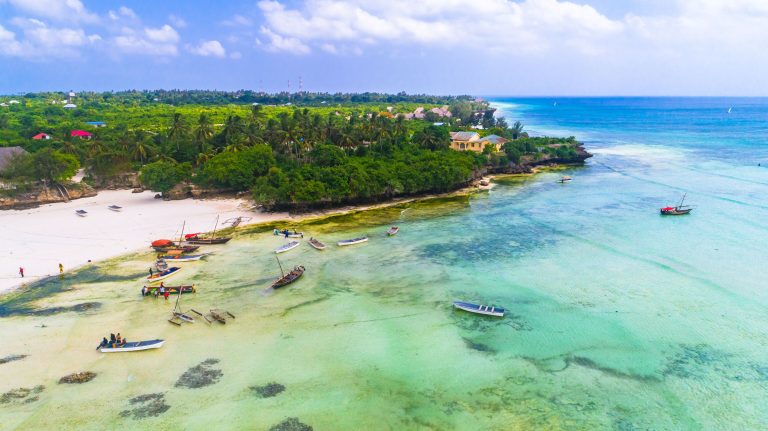
The northern tip of the island, centered around Nungwi and Kendwa, features calm, highly swimmable water that remains largely unaffected by the dramatic tidal swings defining much of the rest of the island. This region boasts a lively, sociable atmosphere with the highest concentration of beachfront bars, professional dive shops, and sunset gathering spots. Kendwa’s full moon parties have developed a strong international reputation among younger travelers and backpackers. Meanwhile, Nungwi proudly retains an active dhow-building tradition directly on its beach, where local craftsmen continue to construct traditional wooden sailing vessels by hand using techniques passed down across generations, remaining largely unchanged since well before European contact.
The East Coast: Paje, Jambiani, and Bwejuu
The east coast—stretching through Paje, Jambiani, and Bwejuu—is where Zanzibar’s dramatic tides become most visible and defining. During low tide, the Indian Ocean water retreats outward for what feels like half a mile across exposed sandbars and shallow seagrass flats, allowing visitors to walk all the way out to the barrier reef line. Along the way, travelers pass local seaweed farmers, almost exclusively women, wading out to tend neat rows of seaweed lines that have become a vital source of independent local income. Paje, in particular, has emerged as East Africa’s premier kitesurfing capital. Its wide, shallow lagoon and reliable trade winds draw a vibrant international kitesurfing community, complete with professional schools lining the beach offering lessons for total beginners right alongside experienced athletes running practice sessions.
The Southeast: Kizimkazi
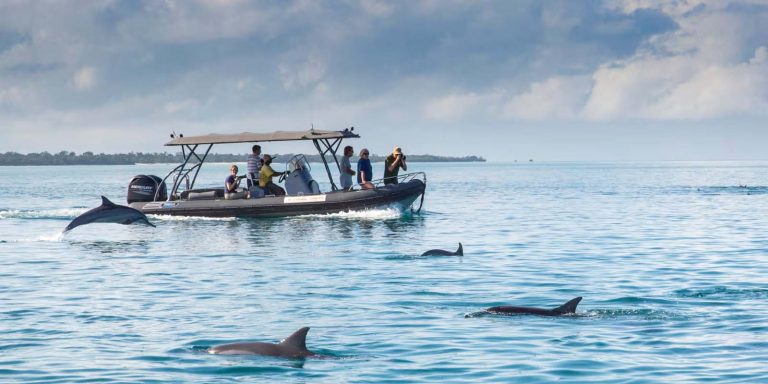
Further down the southeast coast, the quiet fishing village of Kizimkazi serves as the primary departure point for boat tours heading out into the channel. Pods of bottlenose and humpback dolphins are frequently spotted here. However, travelers should carefully select operators that adhere to responsible distance guidelines and strict no-swim-with-wild-dolphins protocols. Because the tour’s immense popularity has occasionally outpaced industry self-regulation, pressuring wild dolphins is something conscientious travelers actively avoid, regardless of how tempting a photograph might be.
Pemba and Mafia: The Quieter Islands Worth the Extra Boat Ride
Technically speaking, Zanzibar refers to an entire archipelago rather than a single standalone island. Travelers with extended itineraries increasingly push beyond Unguja—the main island most people refer to when saying “Zanzibar”—to explore its quieter, less-traveled neighbors.
Pemba Island
Located to the north, Pemba Island remains dramatically less developed and far more agricultural than Unguja. Its hilly, clove-scented interior offers some of the absolute best scuba diving in the entire Indian Ocean. Divers explore steep coral walls that plunge into the deep blue, supported largely by a deliberate choice to keep local tourism infrastructure minimal. Instead of massive resort strips, visitors find a small collection of boutique dive lodges that cater directly to serious diving enthusiasts rather than casual beach crowds.
Mafia Island
Situated south of Zanzibar and closer to the mainland coast of Dar es Salaam, Mafia Island has built its modern reputation around one specific, spectacular natural phenomenon: a resident population of whale sharks. These gentle giants gather in the plankton-rich waters of Mafia’s channel for much of the year, offering snorkelers a realistic and responsibly managed opportunity to swim alongside the largest fish in the ocean. These magnificent creatures can stretch beyond twelve meters in length, yet they feed exclusively on tiny plankton and pose zero danger to swimmers who maintain a respectful distance. Additionally, Mafia’s protected marine park encompasses some of the healthiest coral reef systems remaining off the Tanzanian coast, serving as a major draw for divers who want to experience marine habitats that are still thriving despite global ocean warming trends.
Planning It: Pairing the Coast with a Safari
For most international visitors, the ideal holiday combines Zanzibar seamlessly with a Northern Circuit wildlife safari. Frequent short domestic flights operate directly between Kilimanjaro or Arusha and Zanzibar’s Abeid Amani Karume International Airport. This smooth routing makes the safari-to-beach transition one of the most popular and logistically painless itinerary pairings in all of African travel. Arriving dusty and safari-worn after ten days of early-morning game drives and floating in warm turquoise Indian Ocean water within just a few hours provides the ultimate travel reward. Alternatively, a standalone Zanzibar trip remains equally viable for travelers seeking a dedicated beach holiday infused with rich historical and cultural depth.
Weather Patterns and Practical Travel Tips
- Best Weather Windows: The most reliable weather conditions occur during the dry months running from June through October, and again from December through February. These periods help travelers avoid the long rainy season that typically spans from March through May, when travel can be cheaper but afternoon downpours require flexible daily planning.
- Immigration Procedures: Zanzibar operates under its own semi-autonomous government within Tanzania, issuing its own immigration stamp upon arrival even for travelers arriving directly from the mainland. Keeping passports handy for this quick secondary processing step ensures a smooth arrival.
- Cultural Etiquette: The island is predominantly Muslim and maintains a considerably more conservative daily dress code and cultural standard compared to mainland Tanzania’s primary tourist circuits. Modest attire is genuinely appreciated—and often expected—once visitors step outside the gated resort beach zones and enter Stone Town or local village centers. Packing a lightweight cover-up easily resolves this without sacrificing personal comfort.
Conclusion: A Coastline with Deep History
What makes Zanzibar and the wider Swahili Coast such a compelling second act to a mainland Tanzania expedition is how little it resembles the safari experience that likely brought travelers to the country in the first place, while still feeling unmistakably and specifically Tanzanian rather than like a generic tropical add-on.
Listening to the call to prayer drift across Stone Town’s rooftops at dusk, catching the aromatic scent of cloves drying on woven mats by the roadside, and watching wooden dhows with patched cotton sails move unhurriedly across the horizon exactly as they have through a thousand years of trade winds and monsoon seasons reveals a coastline defined by deep, specific history. Most travelers arrive expecting a few days of pure physical relaxation after their safari adventures, only to leave having discovered an entirely separate reason to fall in love with the country.
Ready to Experience the Swahili Coast?
Don't just read about the magic of Zanzibar—experience the spice island and its pristine beaches for yourself. Whether you want to wander the ancient alleys of Stone Town, dive along the coral walls of Pemba, or unwind on the white sands of Nungwi, your ultimate coastal getaway starts here.
To start planning your dream tropical escape!