
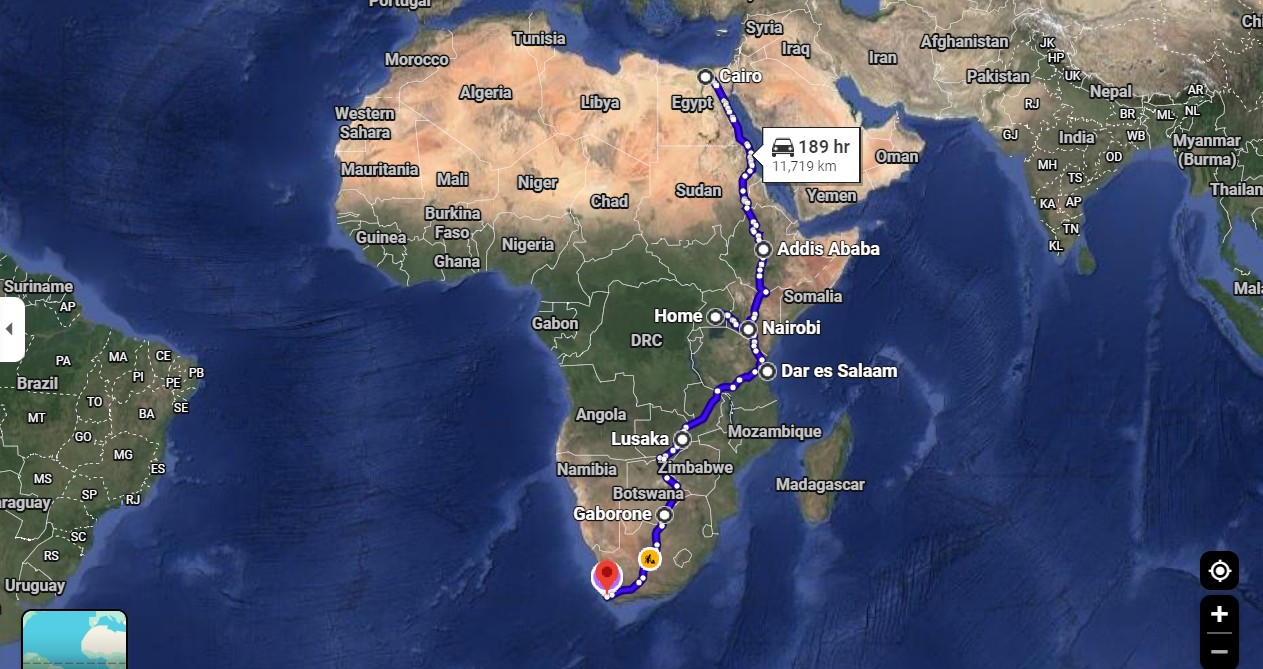
How Long Does It Take to Drive Across Africa? This is the ultimate overlanding pilgrimage—an extraordinary expedition that profoundly reshapes your understanding of geography, time, and human resilience. Far from a standard holiday road trip or a casual weekend drive, this undertaking challenges you to navigate diverse ecological biomes, intricate geopolitical borders, and infrastructure that shifts drastically from flawless, multi-lane highways to completely washed-out mud tracks.
If you are looking for a definitive timeline, the brief answer is that a trans-continental drive typically requires between 2 and 6 months. However, the exact duration hinges on a variety of nuanced factors, including your specific route corridor, vehicle capabilities, and regional weather seasons. This comprehensive, data-backed guide details every crucial planning variable, border crossing protocol, vehicle configuration, and safety measure necessary to successfully conquer the African continent by road.

How Long Does It Take to Drive Across Africa? This is the ultimate overlanding pilgrimage—an extraordinary expedition that profoundly reshapes your understanding of geography, time, and human resilience. Far from a standard holiday road trip or a casual weekend drive, this undertaking challenges you to navigate diverse ecological biomes, intricate geopolitical borders, and infrastructure that shifts drastically from flawless, multi-lane highways to completely washed-out mud tracks.
If you are looking for a definitive timeline, the brief answer is that a trans-continental drive typically requires between 2 and 6 months. However, the exact duration hinges on a variety of nuanced factors, including your specific route corridor, vehicle capabilities, and regional weather seasons. This comprehensive, data-backed guide details every crucial planning variable, border crossing protocol, vehicle configuration, and safety measure necessary to successfully conquer the African continent by road.
1. Planning Your African Overland Expedition
How long does it take to drive across Africa?
The time required to cross Africa depends strictly on your route axis and how much time you allocate for border friction, mechanical delays, and national park exploration.
- The Trans-African Highway 4 (Cairo to Cape Town via East Africa): Covering roughly 10,000 to 12,000 kilometers depending on detours, a fast-paced transit can be completed in 8 to 10 weeks. However, a realistic, sustainable overland pace that accounts for vehicle maintenance, border crossings, and wildlife viewing requires 3 to 5 months.
- The West African Corridor (Morocco to South Africa via the Atlantic Coast): This route spans between 15,000 and 18,000 kilometers. Due to extreme bureaucratic delays, visa complexities, and highly volatile road infrastructure in Central Africa, this route demands 5 to 8 months.
What is the best route for an Africa road trip?
The undisputed king of African road trips is the Cairo-to-Cape Town (or vice versa) route via East and Southern Africa. It offers the most reliable infrastructure, the highest concentration of world-class wildlife reserves, and established overlanding support networks.
A classic, highly optimized itinerary follows this trajectory: Egypt → Sudan (if geopolitically stable, otherwise bypassed via shipping or flight routes to Kenya/Ethiopia borders) → Ethiopia → Kenya → Uganda → Tanzania → Malawi → Zambia → Zimbabwe → Botswana → Namibia → South Africa.
Which countries are the safest to drive through?
For self-drive travelers, safety correlates with infrastructure stability, low violent crime indices, and straightforward traffic enforcement.
- Southern Africa: Namibia and Botswana are globally recognized as two of the safest self-drive destinations on earth. They feature low population densities, exceptional national park management, and clear signage. South Africa features excellent roads but requires high situational awareness in urban centers.
- East Africa: Rwanda, Uganda, and Tanzania are highly welcoming, safe, and stable for foreign overlanders, with visible traffic police and well-policed highways.
What is the best time of year for an Africa road trip?
Because you will cross both the Northern and Southern Hemispheres, you will encounter opposite weather patterns. The golden rule of African overlanding is to avoid the peak of the rainy seasons, which turn dirt roads into impassable clay traps (known as “black cotton” soil) and wash out vital bridges.
- East & East-Central Africa: The long dry season runs from June to October. This is ideal for wildlife viewing and road transit. Avoid April and May (long rains).
- Southern Africa: The dry winter months from May to October offer moderate daytime temperatures and excellent road conditions.
Aim to start a north-to-south crossing from Cairo around September/October to hit East and Southern Africa during their optimal dry, cooler windows.
Toyotal Hilux Double Cabin
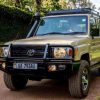
Toyota Land Cruiser 80 Series
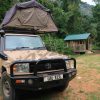
Lancruiser 4 Seater 80 Series
Land Cruiser 200 Series
Land cruiser v8
Land cruise v8 100 Series
How much does an Africa road trip cost?
A realistic baseline budget for a solo traveler or couple in a single vehicle ranges from $80 to $200 USD per day. This variance depends entirely on your choice of accommodation (wild camping vs. luxury safari lodges) and how many expensive national park vehicle entry permits you purchase.
Do I need a 4×4 vehicle?
While eccentric travelers have crossed the continent in two-wheel-drive hatchbacks, a high-clearance 4×4 vehicle with a low-range transfer case is highly recommended, and functionally mandatory for specific regions.
Without a proper four-wheel-drive system with high ground clearance, you will be barred from entering major national parks (like Serengeti or Ngorongoro), unable to navigate the deep desert sands of the Namib or Sahara, and completely stranded during unexpected flash downpours on unpaved dirt highways.
Can I rent a car for a cross-border trip?
Yes, but with strict geographical boundaries. Most reputable 4×4 rental agencies based in South Africa, Namibia, or East Africa (such as Uganda and Tanzania) permit cross-border travel into neighboring countries, provided they supply you with an official Letter of Authority and cross-border insurance certificates (like the COMESA Yellow Card).
However, very few agencies will allow a single vehicle to be driven across the entire continent from Cairo to Cape Town due to recovery logistics and insurance limitations. Most overlanders either buy a vehicle and sell it at the end of the trip, or rent regional 4x4s for distinct legs of the journey.
Visas and Border Crossings: Navigating the Bureaucracy
Crossing an international border in Africa with a foreign-registered vehicle can be a rigorous test of patience. Success requires flawless documentation and an understanding of regional customs unions.
Essential Border Documents
- Passport (Valid for more than 6 Months, 2+ Blank Pages per Country)
- Carnet de Passages en Douane (CPD) for the Vehicle
- Original Vehicle Registration Logbook (Proof of Ownership)
- COMESA Yellow Card / Regional Third-Party Insurance
- International Driving Permit (IDP)
- Yellow Fever Vaccination Certificate
Which visas do I need?
Visa protocols fluctuate constantly.
- East Africa: The East Africa Tourist Visa (EATV) is an exceptional option, allowing multi-entry travel through Kenya, Uganda, and Rwanda for $100 USD.
- Southern Africa: Citizens of the US, UK, EU, and Canada receive free or cheap visas-on-arrival for tourism in South Africa, Namibia, Botswana, and Zambia.
- Pre-Arranged Visas: Countries like Egypt, Sudan, and several West African nations strictly require you to secure visas at embassies in your home country or capital cities along the route before arriving at the land border.
How difficult are African border crossings?
Border crossings can range from a smooth 30-minute process to an agonizing multi-day ordeal full of chaotic administrative steps. The main difficulties stem from unorganized queues, language barriers (French in West Africa, Portuguese in Angola/Mozambique, English in East/Southern Africa), and aggressive unofficial border fixers (“runners”).
The strategy: Arrive at the border early in the morning, stay calm, refuse unofficial assistance firmly, and make sure every stamp is clearly placed in your passport and vehicle log before driving away.
What documents are required for my vehicle?
To prevent international vehicle trafficking, customs officials require extensive proof of ownership. If the vehicle is registered in your name, you must carry the original registration logbook. If the vehicle is financed or rented, you must present a notarized letter from the bank or rental agency authorizing the specific driver to take the vehicle into the exact target country.
Do I need a Carnet de Passages?
The Carnet de Passages en Douane (CPD) is a customs document that acts as a financial guarantee that you will import and subsequently export your vehicle from each country you enter. If you do not export the vehicle, the host country can claim the import duties from the issuing automobile association.
- Mandatory: Egypt, Sudan, and South Africa strictly require a CPD.
- Alternative: In East African nations like Kenya, Uganda, and Tanzania, you can often bypass a Carnet by purchasing a Temporary Import Permit (TIP) at the border for a small fee (typically $20 to $50 USD), though a Carnet simplifies the process immensely.
Can I buy vehicle insurance at the border?
Yes. Third-party liability insurance is mandatory. In East and parts of Southern Africa, the COMESA Yellow Card is a highly efficient regional insurance scheme that covers multiple participating countries (including regional hubs like Uganda, Kenya, Tanzania, and Zambia) under a single policy, saving you from buying individual policies at every single land border.

3. Driving Dynamics: Road Conditions, Rules, and Logistics
Is it safe to drive across Africa?
Yes, provided you understand that the single greatest hazard on the continent is not wildlife or crime—it is traffic accidents. Erratic driving habits, poorly maintained heavy freight trucks, lack of street lighting, and pedestrians or livestock walking on unlit asphalt make defensive driving an absolute priority.
Which side of the road do African countries drive on?
Africa is divided by historical colonial design:
- Left-Hand Side: Most of Southern and East Africa (South Africa, Namibia, Botswana, Zimbabwe, Zambia, Malawi, Tanzania, Kenya, Uganda) drive on the left.
- Right-Hand Side: North Africa (Egypt) and West/Central Africa (Morocco, Senegal, Cameroon, DRC) drive on the right.
What are the road conditions like?
Expect extreme variety. The main toll roads in South Africa and the primary highways in Namibia, Botswana, and Rwanda feature excellent tarmac.
Conversely, major transit routes in northern Kenya (like the historic Marsabit road, though now largely paved) or Central Africa can feature severe corrugated dirt roads, deep potholes, and thick sand tracks that limit your average speed to less than 30 km/h.
Typical Road Matrix & Speed Expectations
| Terrain Type | Average Practical Speed |
| Southern African Tar Highways | 100 - 120 km/h |
| Corrugated Dirt Roads (Dry) | 40 - 60 km/h |
| Deep Sand / Mud Tracks (Low Range) | 10 - 20 km/h |
Can I drive at night?
No. Under no circumstances should you drive outside of major cities after dark. Potholes become invisible, broken-down trucks park in the middle of live lanes without hazard lights, long-distance buses pass recklessly on blind corners, and unlit livestock sleep on the warm asphalt. Plan your day to ensure you are safely inside your campsite or lodge gates by 4:00 PM.
Are fuel stations easy to find?
On main corridors, fuel infrastructure is well-established. However, in remote areas like the Kunene region of Namibia, the Okavango delta fringes, or rural parts of East Africa, distances between functional fuel pumps can easily exceed 500 kilometers.
Furthermore, rural stations frequently run out of fuel deliveries or suffer power outages. Always carry at least 40 to 80 liters of spare fuel in high-quality jerry cans or a long-range fuel tank.
Is GPS reliable throughout Africa?
Satellite GPS tracking works everywhere, but the underlying mapping data can be highly inaccurate. Standard navigation apps may route you down an impassable riverbed or a non-existent foot track.
The overland gold standard is Tracks4Africa. This platform uses crowdsourced GPS tracks verified by real overlanders, providing accurate drive times, locations of functional water points, and detailed trail conditions specifically for 4×4 drivers.
4. Financial Planning and Budgeting
How much should I budget per day?
To ensure complete transparency, look at the budget breakdown based on an average overlanding profile:
| Expense Category | Daily Allocation (USD) | Strategic Notes |
| Fuel | $40 - $70 | The single biggest recurring variable expense. |
| Accommodation | $15 - $30 | Based on managed campsites ($10-$15 per person). |
| Food & Water | $15 - $25 | Sourced from local markets and supermarkets. |
| Visas & Permits | $10 - $20 | Amortized across the total trip duration. |
| Emergency Fund | $20 | For parts, mechanical labor, or fines. |
| TOTAL BUDGET | $100 - $165 / Day | Note: Excludes major safari park vehicle fees. |
What are the biggest expenses?
Fuel is your primary operational cost, followed closely by National Park Fees. Entering world-famous conservation zones like the Serengeti, Ngorongoro Crater, or Chobe National Park involves steep international conservation fees for both the passengers and the foreign-registered vehicle, often exceeding $150–$300 USD per day.
Is camping cheaper than hotels?
Yes, substantially. Established campsites across East and Southern Africa offer clean ablution blocks, hot showers, and secure perimeters for a fraction of the cost of a budget hotel or safari lodge. Wild camping (boondocking) reduces this cost to zero, though it should be practiced selectively for safety reasons.

5. Security, Crisis Management, and Scams
Is an Africa road trip safe for solo travelers?
Yes, thousands of solo overlanders cross Africa annually. The keys to safety are respect for local communities, avoiding political demonstrations, keeping your vehicle locked while driving through congested cities, and never driving at night.
How do I avoid scams?
The most frequent friction point is interaction with traffic police at regional checkpoints.
- The Approach: Always be exceptionally polite, smile, and address officers with respect.
- The Defense: Ensure your vehicle is perfectly compliant (reflective tape on bumpers, warning triangles, functional fire extinguisher, and active insurance). If fined for an alleged infraction (e.g., speeding), politely ask for an official written receipt and express a willingness to pay the fine at the nearest local police station rather than handing over unreceipted cash on the roadside.
What should I do if my car breaks down?
Mechanical failures are an inevitable part of overlanding.
- Pull clear of the road: Find a flat, stable surface away from blind corners.
- Utilize your community: African mechanics are world-famous for their ingenuity and ability to repair vehicles with limited resources. If you are driving a common platform (like a Toyota Land Cruiser or Hilux), parts and basic mechanical knowledge are available in almost every rural village.
- Satellite Communication: For remote track failures, a satellite messenger (like a Garmin inReach) allows you to summon vehicle recovery teams or contact emergency medical evacuation services even when completely out of cellular range.
7. Camping, Accommodation, and Wilderness Logistics
Can you camp anywhere?
Wild camping is highly feasible and legal in the vast desert expanses of Namibia or the open wilderness of Botswana. However, in densely populated agrarian nations like Uganda, Rwanda, and the Kenyan highlands, true wild camping is almost non-existent; you will be parking on someone’s private agricultural land or inside a protected reserve. Always seek local community permission before setting up camp in unmanaged areas.
Are campsites easy to find?
Yes, throughout the East and Southern African tourism tracks. Most lodges offer beautifully maintained campsites on their grounds, granting overlanders access to running water, electrical hookups, and swimming pools for a minimal fee.
Is it better to camp or stay in lodges?
A hybrid approach keeps you refreshed. Camping keeps your budget low and puts you closer to nature, while booking a stone lodge or permanent tented camp every few weeks provides a comfortable break to deep-clean gear, recharge auxiliary battery banks, and rest.
8. Health, Sanitation, and Medical Safety
Which vaccinations do I need?
Consult a travel medicine clinic at least two months prior to departure. You will typically require:
- Yellow Fever: A valid physical vaccination certificate is strictly inspected at land borders, particularly when transitioning between East Africa and neighboring zones.
- Hepatitis A & B, Typhoid, and Tetanus boosters.
- Rabies pre-exposure vaccination: Recommended if you will be spending long periods in remote villages far from medical facilities.
Do I need malaria medication?
Large portions of Sub-Saharan Africa are highly endemic for malaria, particularly low-lying, humid river basins and lake regions. While long-term overlanders often choose not to take daily prophylactic pills for months at a time due to side effects, you must practice strict preventative measures: apply high-concentration DEET insect repellent, sleep under treated mosquito nets, and always carry multiple reactive Malaria Rapid Diagnostic Test (RDT) kits and a full course of Coartem (artemether/lumefantrine) for immediate self-treatment if symptoms emerge in remote areas.
Is the tap water safe to drink?
With very few exceptions (like municipal areas in South Africa and Namibia), tap water across the continent carries risks of waterborne pathogens. Do not rely on single-use plastic bottles, which cause severe waste management issues in rural communities. Instead, outfit your 4×4 vehicle with a built-in inline water filtration system or carry a heavy-duty gravity-fed water purifier (like a Berkey or Lifesaver purification jerrycan) capable of eliminating bacteria, viruses, and cysts from well or river water.
9. Connectivity, Communications, and Banking
Will my phone work across Africa?
Yes, but international roaming packages from home carriers are far too expensive for long-term travel.
Which SIM cards are best?
The most cost-effective solution is to buy a local prepaid SIM card at the first town after entering each new country. Major providers with expansive network coverage include Airtel and MTN across East and Southern Africa, and Vodacom in South Africa and Tanzania. Registration requires your physical passport and takes about 10–15 minutes at official carrier kiosks.
Are ATMs widely available?
In regional capitals and medium-sized towns, modern ATMs linked to international networks (Visa and Mastercard) are common. However, card skimming scams occur; always use ATMs located physically inside secure bank branches rather than standalone street kiosks. Always carry a reserve supply of crisp, undamaged, post-2013 US Dollar bills. US Dollars are widely accepted for visas, park entrance fees, and fuel across the continent, and can easily be exchanged for local currency at favorable rates.

11. Country-Specific Deep Dive: Navigating Regional Variances
Which African country is easiest for first-time road trippers?
Namibia. The country features exceptionally low traffic density, world-class gravel road maintenance, clear English signage, stunning desert landscapes, and highly organized campsite networks. It provides the perfect environment to practice your 4×4 driving and wilderness logistics skills before tackling more complex destinations.
Can you drive from Cape Town to Cairo?
Yes, this remains the gold standard of long-distance overlanding. While current geopolitical conflicts in regions like Sudan require careful route adjustments—often necessitating shipping a vehicle from Kenya or Oman directly into Egypt to bypass active combat zones—the classic trans-continental link between South Africa and Egypt remains functional with proper planning.
Is driving through East Africa easier than West Africa?
East Africa is significantly easier and more accessible for self-drive travelers. The infrastructure is more reliable, English is spoken universally across major transit countries (Uganda, Kenya, Tanzania), border procedures are more standardized via common customs networks, and the tourism industry is highly geared toward self-drive 4×4 overlanders. West Africa involves significantly higher bureaucratic hurdles, more complex visa requirements, and highly unpredictable infrastructure.
12. Real-World Overlanding Reflections: Challenges and Epiphanies
THE EXPEDITION EQUATION
Flexibilty + Mechanical Sympathy = Successful Journey
If your schedule is rigid, the continent will break it.
Listen to your vehicle, drive defensively, and treat minor
bureaucratic delays as part of the cultural landscape.
What are the biggest challenges?
The core challenge is mental fatigue. The combination of intense focus required to avoid potholes, navigating crowded border points, managing daily fuel and water consumption, and managing unexpected route deviations can lead to exhaustion. Overlanding across Africa requires high adaptability; if your schedule is too rigid, the journey will become stressful.
What surprised us the most?
The absolute warmth, hospitality, and resourcefulness of the people you meet. Whether you are stuck in a remote mud hole in rural Uganda or purchasing fresh produce at a roadside stall in Malawi, local communities are incredibly welcoming and consistently willing to step in to help an overlander solve a mechanical or navigational problem.
Final Takeaway
Driving across Africa is not a race; it is a profound lesson in slow travel. By choosing to cross this vast continent on four wheels, you earn every kilometer, every landscape shift, and every cross-cultural connection. With a robust 4×4 vehicle, proper mechanical preparation, and an open, patient mindset, an African overland expedition will easily be the most unforgettable journey of your life.
Ready To Start Your Expedition?
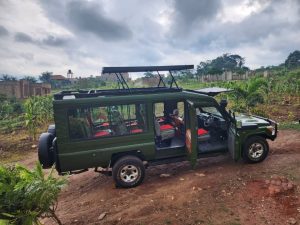
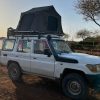
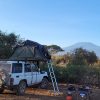
Whether you are planning a challenging border crossing from Uganda into Rwanda, or mapping out a multi-week self-drive safari across the rough terrain of East Africa, having the right vehicle makes all the difference. Explore our rugged, fully equipped, cross-border 4×4 rental vehicles designed to handle the toughest African roads with complete reliability.








No responses yet