

Crossing Borders with a Rental Car in East Africa: What Every Traveller Should Know
What Every Traveller Should Know
East Africa rewards cross border travellers beyond a single country. An east African safari can flow naturally through Kenya’s savannahs, into Tanzania’s Serengeti, Uganda’s forests, or Rwanda’s volcanoes, in the most flexible way with a rental vehicle to link these destinations together in single trip.
However, driving a rented vehicle across an international border is not as simple as pulling up to a checkpoint and continuing. It requires advance planning, the right documentation and a clear knowledge of the regional rules that differ from what travellers may expect elsewhere in the world. This article outlines what is genuinely involved for a smooth, safe and stress-free journey across Kenya, Uganda, Tanzania, and Rwanda.


Understanding Cross-Border Car Rental in East Africa
East Africa is one of Africa’s most accessible regions for overland travel. Several countries are connected through well-established road networks, making it possible to travel between neighbouring destinations with a rented vehicle. While many car rental companies permit cross-border travel, authorization is never automatic. Travelers must obtain written permission from the rental company before leaving the country where the vehicle was hired.
Cross-border travel is typically allowed between Uganda, Rwanda, Kenya, and Tanzania, although company policies vary. Some operators also permit travel to Burundi or South Sudan, and others can even connect to countries in the south part of Africa like connecting to Zambi, Zimbabwe and South Africa under specific conditions, while others may restrict access due to insurance limitations or security concerns. Confirming the approved travel route before booking is essential.
Authorization comes first
As with rentals anywhere in the world, the starting point is the rental company itself. Cross-border travel is only permitted when the company has formally authorized it and recorded that authorization in your contract. Booking a car with the general intention of crossing a border is not the same as having permission to do so.
Contact your rental provider as soon as your reservation is confirmed and share your full itinerary: include countries you intend to travel to, your approximate travel dates, and your planned drop off point. whether you plan to return the vehicle in a different country (one way rental) or returning where you collected it.
Reputable operators with a genuine cross-border presence especially those with offices in more than one East African capital, will coordinate and confirm quickly whether your route is approved and provide the necessary conditions to enable a peaceful adventure.
The COMESA Yellow Card: The region’s essential Insurance document
The single most important piece of paperwork for cross-border driving in East Africa is the COMESA Yellow Card. This is a regional third-party motor insurance certificate, (functioning much like the Green Card system used across Europe) and it is recognised at border posts throughout the Common Market for Eastern and Southern Africa. It provides liability cover across member states including Kenya, Uganda, Tanzania, Rwanda, Burundi, Ethiopia, and several others in the wider region.
Ask your rental company directly whether the Yellow Card is included in your agreement or whether you will need to arrange it yourself before departure. Purchasing it in advance through a licensed insurer is far more reliable than trying to source it at the border itself, because availability and pricing can vary and delays are common.
Border procedures and processing : Fees, permits, and paperwork to expect
Beyond insurance, expect additional charges specific to cross-border movement. A cross-border fee typically covers the administrative cost of extending your cover into a second country, while a separate and usually higher one-way fee applies if you return the vehicle somewhere other than your pick-up point.
Some countries also apply their own temporary entry rules for vehicles: Uganda, for example, grants a short free entry period for foreign-registered cars before a monthly charge applies. Rwanda grants only 14 days for foreign registered vehicles.
You should also carry a valid physical driving licence, a passport with several blank pages remaining (each border crossing generates its own stamps), the vehicle’s registration documents, and, in some cases, an International Driving Permit.
It’s worth noting that certain parks restrict entry to vehicles registered in specific countries, for example Kenyan-plated cars, face restrictions in some Tanzanian parks. So for this case, vehicles with Uganda plates are best preferred as they are accepted in all other countries. It’s always good to confirm your route with your rental company before setting off rather than assuming free movement everywhere.
Timing and vehicle restrictions
Requests for cross-border authorization are not processed instantly. Some companies need more days’ notice to arrange proper vehicle documents, process insurance, and approve your route. So, if you have a longer itinerary across different, it’s good to send in your booking inquiry early enough.
Choosing the Right Rental Vehicle
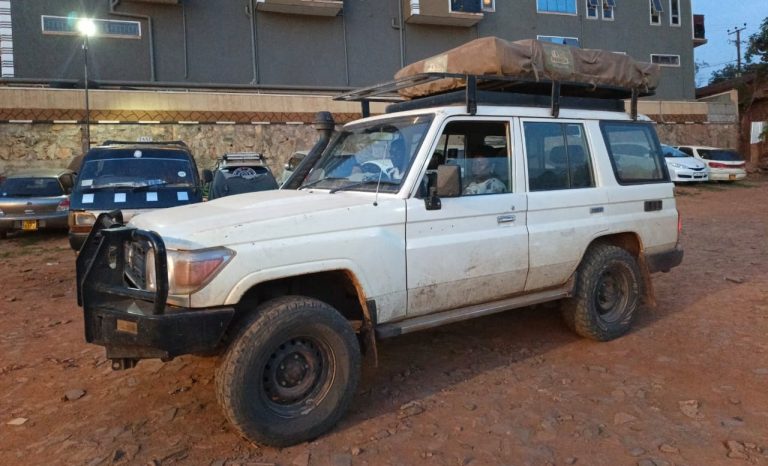
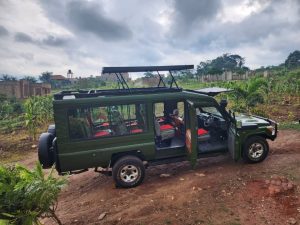
Selecting an appropriate vehicle contributes significantly to the success of your cross-border adventure. While standard and luxury sedans perform well on major highways, many travellers heading to national parks or rural destinations prefer four-wheel-drive vehicles.
Models such as the Toyota Land Cruiser Prado, Land Cruiser V8, Toyota Hilux, Nissan Patrols, and Land Cruiser LX are popular choices because they offer excellent ground clearance, reliability, and comfort on both paved and rough roads.
Before departure, inspect the vehicle carefully with the rental company representative to ensure its in good condition for long distance drives. Confirm that all safety equipment is available, the tires are in good condition, and the spare wheel and recovery tools are included. Recording the vehicle’s condition with photographs provides additional peace of mind.
Note: Some luxury or high-performance cars, large vans, and cargo vehicles are often harder to get approved for cross-border travel, and some may be excluded from using certain routes entirely.
Driving conditions worth planning around
Road conditions vary considerably once you leave main highways. Routes between capitals are generally well paved, but roads leading into national parks and remote areas are frequently unpaved, rough, bumpy, and easily affected by weather changes. Be careful with the driving sides, for instance Rwanda and Burundi drive on the right , Uganda, Kenya and Tanzania drive on the left-hand side, speed limits vary per country, and unmarked speed bumps at town entrances are common, some road signs are not clear in some places and internet connections may not be possible in remote areas.
Downloading offline maps, fuelling up while still in bigger towns as fuel stations are scarce in remote stretches, and avoid driving at night (beyond 7pm).
In closing
A cross-border road trip through East Africa is entirely achievable and can be one of the most rewarding ways to experience the region, Prepare groundwork well, Confirm early authorization with your rental company, secure your COMESA Yellow Card, budget for the associated fees, and carry every document required for border verification. With good preparation visitors to focus on what matters most: discovering the extraordinary landscapes, wildlife, and cultures that make East Africa one of the world’s most captivating travel destinations.









No responses yet