
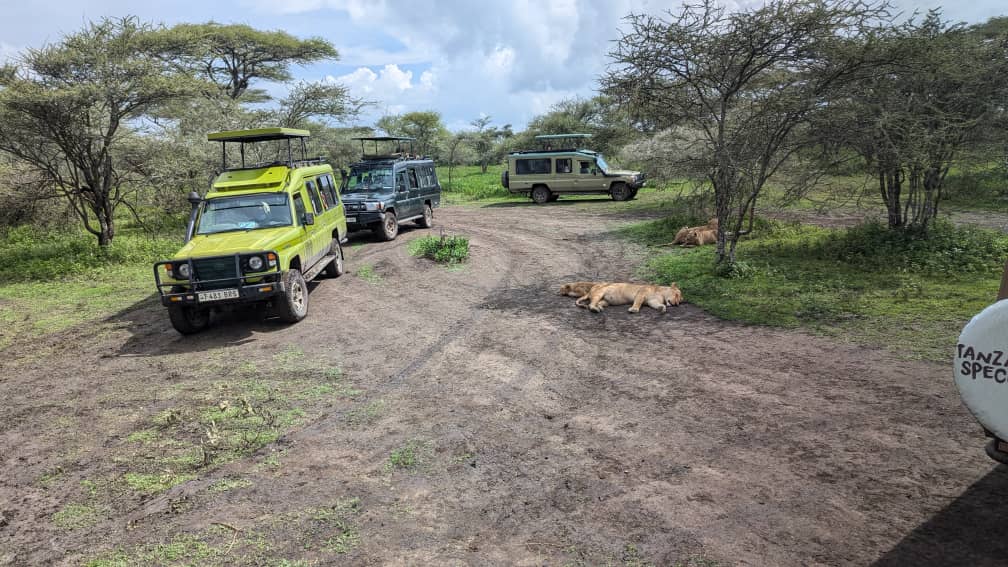
Recommendations for Overlanding in Kenya: Rough Roads & Rugged Terrain
Kenya is a premier destination for self-drive overlanding in East Africa. From the volcanic expanses of Lake Turkana and the rocky escarpments of the Great Rift Valley to the thick black cotton mud of the Maasai Mara during rainy seasons, exploring Kenya on four wheels offers unmatched freedom. However, traversing these remote and demanding environments requires adequate vehicle preparation, off-road driving skills, and selecting the right 4×4.
Whether you are navigating corrugated gravel tracks in Samburu, deep sand riverbeds in Turkana, or slick clay in the southern parks, this comprehensive guide covers expert recommendations for overlanding across Kenya’s rough roads and rugged terrains.
Navigating Kenya’s vast backcountry requires adjusting driving techniques according to soil type, elevation, and moisture levels.
Black cotton soil is a dense clay that expands when wet, turning tracks into treacherous, slick mud traps.
Extended dirt roads often develop severe "washboard" ripples that cause heavy vibrations and strain vehicle suspension systems.
Deep sand and fine volcanic dust (fesh-fesh) reduce wheel resistance and can sink heavy overland rigs quickly.
Jagged volcanic rock and seasonal riverbeds (laghas) test chassis durability, tire sidewalls, and ground clearance.
Ideal Overlanding Vehicles from 4×4 Kenya’s Fleet
Choosing the appropriate 4×4 is a crucial step when planning a self-drive expedition. The terrain in remote reserves requires high ground clearance, dual-range 4WD, heavy-duty suspension, and high payload capacities.
Below is an overview of top vehicle recommendations available from 4×4 Kenya:

Land Cruiser 76 Series – Hard top
- ngine: 4.2L Inline-6 Diesel / 4.5L V8 Turbo Diesel (also available with 2.8L 4-Cylinder Turbo Diesel in newer models)
- Drive System: Heavy-duty manual/automatic 4WD with high/low range, solid beam axles, front and rear differential locks.
- Best For: Long-distance overlanding, remote group tours, and severe backcountry routes (Chalbi Desert, Lake Turkana, Aberdare mud tracks).
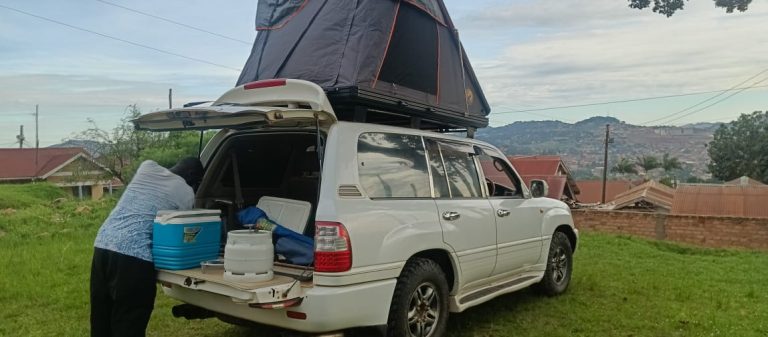
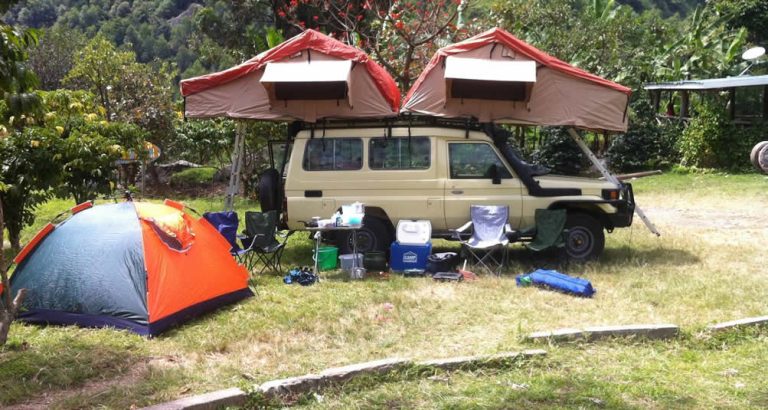
- Why Choose It: Built on the heavy-duty 70 Series body-on-frame platform with live axles, the 76 Series adds the versatility of a 5-door station wagon layout. It offers secure interior cargo room and passenger seating for up to 5–10 people without sacrificing off-road performance, making it ideal for mounting rooftop tents, dual fuel tanks, and heavy recovery gear for group expeditions.
Toyota Land Cruiser Prado (TX/TZ) – Versatile & Cost-Effective
- Engine: 3.0L Turbo Diesel (1KD-FTV) / 2.8L Turbo Diesel (1GD-FTV) / 2.7L 4-Cylinder Gasoline (2TR-FE)
- Drive System: Full-time 4WD with center Torsen differential lock and high/low transfer range.
- Best For: Couples, small families, solo travelers, and park-to-park self-drive routes covering Maasai Mara, Amboseli, Lake Nakuru, and Tsavo.
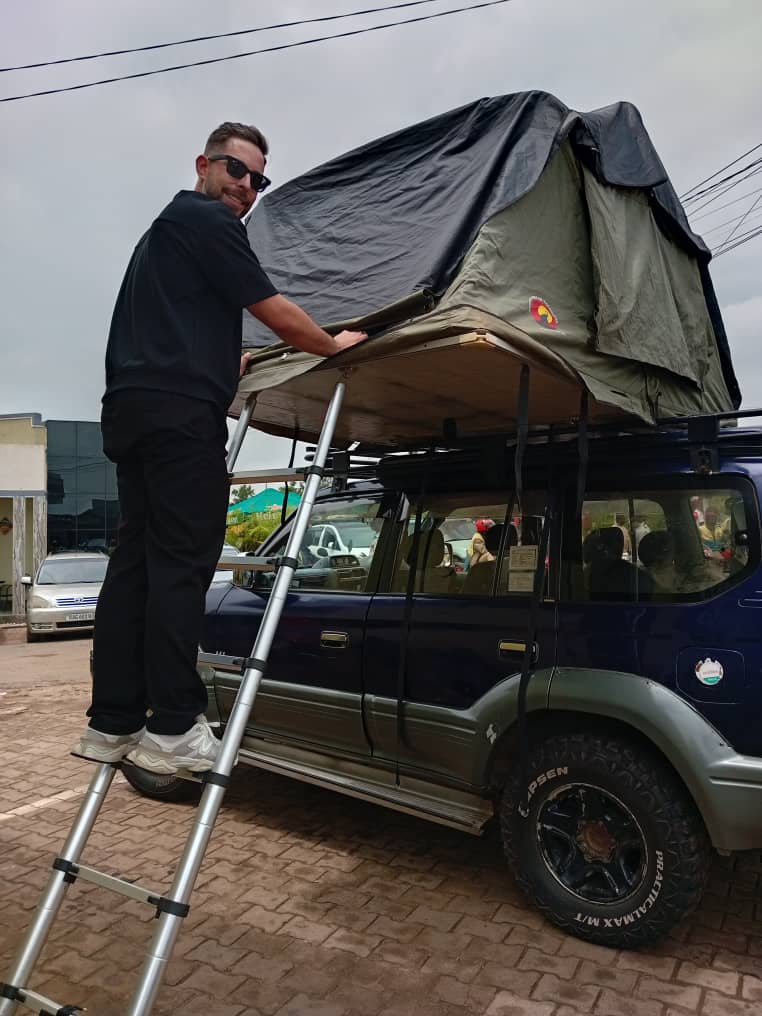
- Why Choose It: The Prado strikes a practical balance between true 4×4 off-road capability and on-road comfort with lower fuel consumption. Easily equipped with a single or double rooftop tent and basic overland camping gear, it comfortably navigates standard national park tracks, dirt bypasses, and light mud while remaining effortless to maneuver in urban areas.
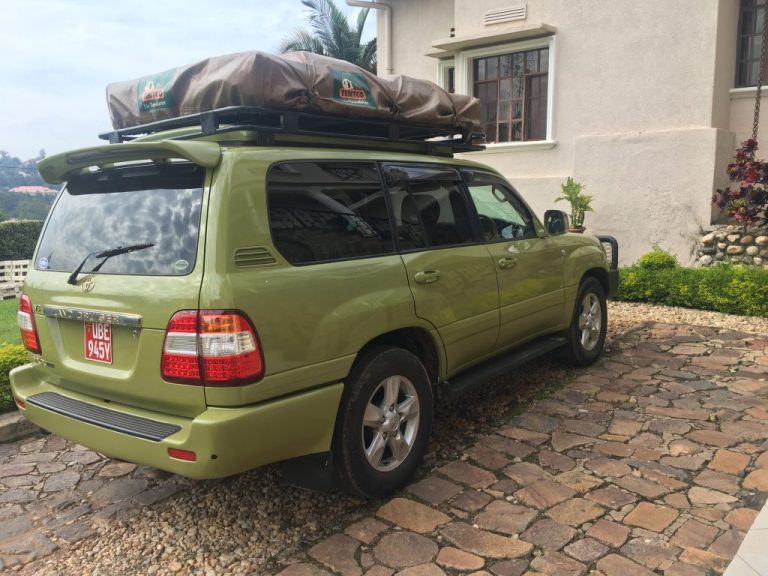
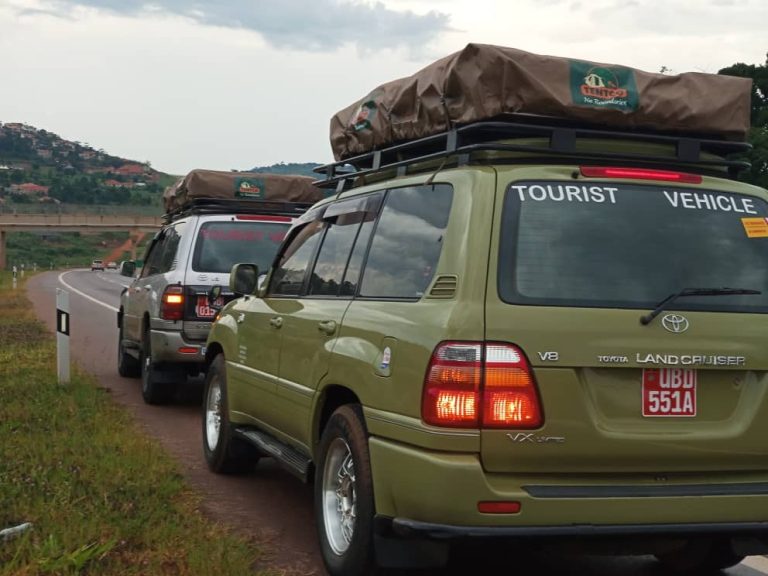
Toyota Land Cruiser 100 Series (V8) – High-Comfort Heavy Overland Crusher
- Engine:7L V8 Gasoline (2UZ-FE) / 4.2L Turbo Diesel (1HD-FTE)
- Drive System: Full-time 4WD with center locking differential, high/low range, and independent front suspension (IFS).
- Best For: Extended cross-country safaris, highway-to-bush transitions, and long-distance overland expeditions covering Tsavo, Amboseli, Samburu, and paved transit corridors.
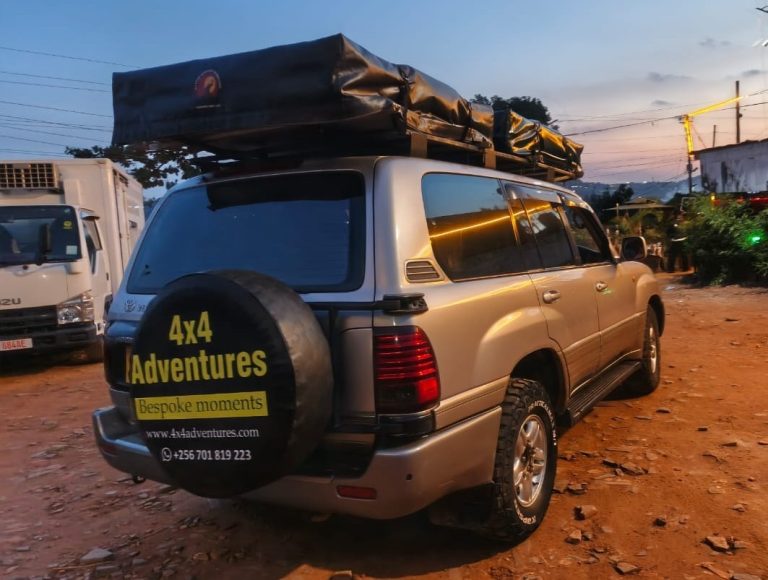
- Why Choose It: The 100 Series pairs heavy-duty towing and trail capability with a significantly smoother ride on rough surfaces thanks to its independent front suspension and spacious interior. The V8 (or 4.2L Turbo Diesel) provides effortless highway cruising power and high payload capacity, making it a favorite for long journeys with heavy gear, multiple passengers, or setup for luxury rooftop tent expeditions.
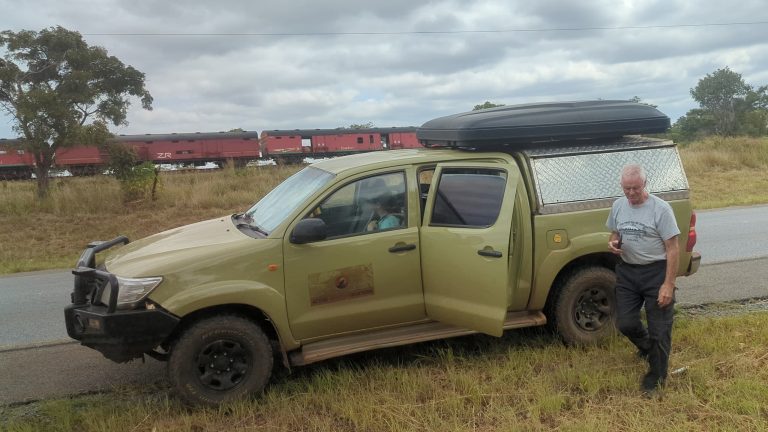
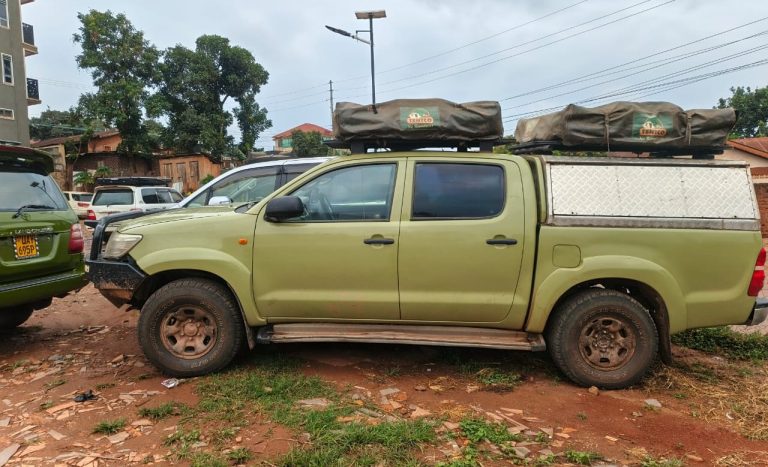
Toyota Hilux Double Cab – The Rugged Utility & Camping Workhorse
- Engine: 2.4L / 2.8L GD-6 Turbo Diesel (or 2.5L / 3.0L D-4D Diesel in older models)
- Drive System: Part-time 4WD with selectable 2WD, High-range 4WD, Low-range 4WD, and rear differential lock.
- Best For: Self-drive overland adventures, remote bush camping, and rugged routes (Rift Valley, Laikipia plateaus, Northern Kenya trails).
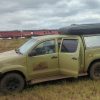
- Why Choose It: The Hilux Double Cab offers legendary durability combined with a separate rear pickup bed, making it ideal for keeping dusty recovery gear, kitchen equipment, and heavy camping supplies isolated from the passenger cabin. With seating for up to five and a high payload capacity, it easily supports dual rooftop tents or a canopy system while conquering steep, rutted tracks with ease.
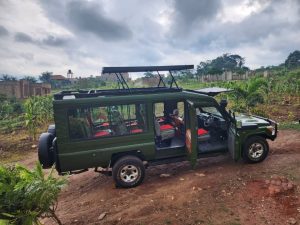
Toyota Land Cruiser Extended Safari (Custom 70 Series) – The Ultimate Game-Viewing Rig
- Engine: 4.2L Inline-6 Diesel (1HZ) / 4.5L V8 Turbo Diesel (1VD-FTV)
- Drive System: Heavy-duty manual 4WD with high/low range, solid beam axles, and front/rear differential locks.
- Best For: Group safaris, multi-day game drives, and high-capacity wildlife expeditions (Maasai Mara migration, Amboseli, Tsavo, and Serengeti cross-border trips).
- Why Choose It: Custom-built on a stretched 70 Series chassis, this icon features an extended wheelbase, pop-up roof hatches for 360-degree photography, and tiered seating (typically 7 to 9 seats) so every passenger gets a window view. Purpose-built for serious bush work, it easily handles extreme terrain, mud traps, and riverbeds while carrying onboard fridge units, dual spare tires, inverter systems, and heavy safari gear.
Key Essential Overlanding Gear Checklist
When renting or preparing an overland vehicle through 4x4 Kenya, ensure your setup includes the following essential equipment:
Self-Recovery & Mechanical Kit
- High-lift jack and hydraulic bottle jack.
- Heavy-duty tow strap (snatch strap) with rated shackles.
- Sand ladders or traction boards.
- 12V heavy-duty air compressor and tire pressure gauge.
- Tire puncture repair kit and two fully inflated spare tires.
Bush Camping Setup
- Rooftop tent(s) with high-density foam mattresses.
- 12V portable fridge/freezer powered by a dual-battery system.
- Gas stove, cooking utensils, water jerrycans (minimum 20L fresh water supply).
- Folding camp table and high-back camping chairs.
Navigation & Communication
- GPS system equipped with offline mapping applications (e.g., Tracks4Africa or Maps.me).
- Paper maps for remote northern regions where satellite coverage or digital devices can fail.
- Local SIM card (Safaricom offers the broadest network coverage in Kenya's bush areas).
Route Planning & Expert Driving Advice
Plan Days Around Daylight Hours
Off-road driving in Kenya drops to low average speeds (often 20–30 km/h in parks or on bad gravel tracks). Plan routes assuming realistic arrival times before 6:00 PM, as night driving in remote bush areas increases collision risks with wildlife or unlit obstacles.
Monitor Fuel & Supplies
Outside major regional hubs like Nairobi, Nakuru, Nanyuki, and Isiolo, high-quality diesel fuel stations can be sparse. Always fill primary and auxiliary tanks at every major station, and carry emergency fuel in certified jerrycans when heading north toward Maralal, Loyangalani, or Marsabit.
Ready to Tackle the Kenyan Wilderness?
Equip your journey with a fully customized, expedition-ready vehicle built to handle Africa's toughest terrains.

No responses yet