

Serengeti Self-Drive Safaris
Taking on a self-drive safari across the boundless savannahs of the Serengeti is one of the most liberating and exhilarating adventures a traveler can experience. Navigating the iconic landscapes independently allows you to set your own pace, linger at a lion sighting for hours, and immerse yourself truly in one of the world’s most spectacular wilderness areas.
However, driving through a vast ecosystem populated by millions of wild animals requires meticulous planning, an understanding of the terrain, and strict adherence to conservation regulations. This comprehensive guide provides the ultimate foundational knowledge, preparation steps, and safety frameworks needed to make your self-drive expedition successful.
1. Preparing for the Self-Drive Journey
Driving yourself through the Serengeti is drastically different from standard road trips. The isolation, harsh road conditions, and proximity to apex predators mean you must be completely self-reliant.
Vehicle Selection: The Non-Negotiable 4×4
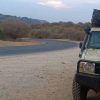
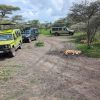
You cannot enter the Serengeti in a standard sedan or standard two-wheel-drive vehicle. A heavy-duty 4×4 with high ground clearance—ideally a customized Toyota Land Cruiser or a Nissan Patrol—is mandatory.
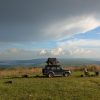
- Pop-up Roof: Most specialized safari rental vehicles come equipped with a pop-up roof. This is invaluable for unobstructed wildlife viewing and photography while remaining safely inside the vehicle chassis.
- Dual Fuel Tanks: Fuel stations inside the park are extremely limited (primarily found near the Seronera headquarters) and can occasionally run dry. A vehicle with a dual fuel tank system is critical for long-range game drives.
- Dual Spare Tires: Corrugated, gravel, and rocky tracks can easily tear through rubber. Never enter the park without two functional, fully inflated spare tires, a heavy-duty high-lift jack, a wheel spanner, and a solid wooden block to support the jack on soft sand or mud.
Essential Navigation and Offline Communication
Do not rely on active cellular networks for navigation. Large swathes of the Serengeti have zero signal coverage.
- Offline GPS Apps: Download applications like Maps.me or Tracks4Africa before departing Arusha. Pre-download the complete offline maps for northern Tanzania. These applications accurately feature minor game tracks, public campsites, ranger posts, and geographic topography.
- Physical Maps: Keep a high-quality topographic map of the Serengeti as a backup to counter electronic failures.
- Satellite Communication: If your budget allows, renting a satellite messenger (like a Garmin inReach) provides peace of mind, allowing you to trigger an SOS or message your vehicle rental agency if you suffer a major mechanical failure deep in the bush.
2. Rules, Fees, and Official Regulations
The Tanzania National Parks Authority (TANAPA) enforces strict guidelines to protect both visitors and the fragile ecosystem. Violations result in steep, non-negotiable fines levied directly on the driver or the rental company.
Park Entry Fees and the 24-Hour Rule
- Payment Protocols: Cash is not accepted at the park gates. All conservation fees, vehicle entry permits, and camping allowances must be paid using a major credit card (Visa or Mastercard) or via a pre-arranged government control number generated by your car rental operator.
- The 24-Hour Window: Park permits operate on a strict 24-hour cycle from the exact minute of entry. If you enter Naabi Hill Gate at 10:00 AM, you must exit or renew your permit by 10:00 AM the following day. Overstaying even by a few minutes will trigger an automated penalty equivalent to an entire extra day’s fee.
Code of Conduct in the Wild
- Speed Limits: The maximum speed limit inside the national park is 50 km/h on primary transit roads and 25 km/h on minor loop tracks. Driving slowly reduces the risk of hitting wildlife, minimizes structural wear on your vehicle, and prevents catastrophic rollovers on corrugated roads.
- Strictly No Off-Roading: Driving off the designated tracks is strictly illegal. It destroys delicate soils, crushes nests, and causes long-term ecological damage. Off-roading carries heavy fines and potential vehicle impoundment.
- Gate Hours: Park gates open strictly at 06:00 AM and close firmly at 06:00 PM. Driving after dark is forbidden unless you possess a specialized permit for night game drives accompanied by an authorized park ranger. Ensure your transit times are accurately calculated so you arrive at your campsite or lodge well before sunset.
- Right of Way: Animals always maintain the absolute right of way. Keep a safe distance of at least 25 meters from wildlife. If a herd of elephants or a pride of lions approaches or crosses the track, cut your engine, stay quiet, and give them space.
3. Comprehensive Packing List
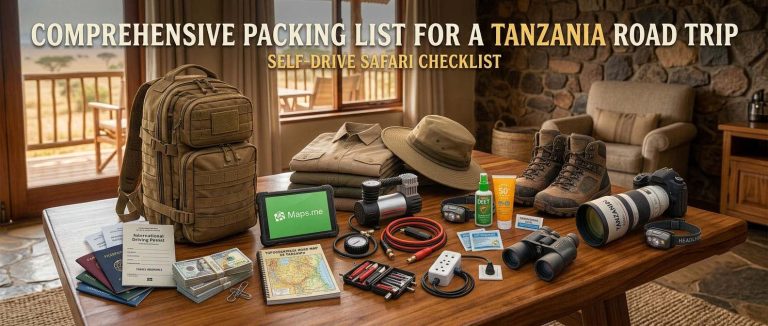
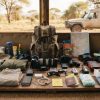
When traveling without a professional guide or support vehicle, what you pack directly dictates your safety and comfort. Use this checklist to ensure no critical components are left behind.
A. Vehicle Equipment & Mechanical Spares
- Double Spare Tires: Inspected for structural integrity and optimal air pressure before entry.
- High-Lift Jack & Base Plate: A wide wooden plank or steel plate to prevent the jack from sinking into soft savannah soils.
- Heavy-Duty Tow Strap & Shackles: Minimum 10-ton rating for recovery when bogged down in mud or sand.
- Basic Tool Kit: Containing basic spanners, screwdrivers, pliers, an adjustable wrench, a hammer, wire cutters, and WD-40 lubricant.
- Spare Fluids: 5 liters of engine oil, a bottle of brake fluid, coolant, and a funnel.
- Air Compressor & Tire Pressure Gauge: For adjusting tire pressure when transitioning from paved surfaces to rough washboard corrugated dirt roads.
- Jumper Cables: Heavy-duty copper cables to troubleshoot a drained battery deep in the field.
- Duct Tape & Zip Ties: For quick, temporary fixes on loose hoses or rattling body panels.
B. Camping & Bush Survival Gear
- Sturdy Canvas Tent: Heavy-weight material featuring fine insect mesh screens to keep out mosquitoes, tsetse flies, and snakes.
- High-Season Sleeping Bag & Mat: The Serengeti plains cool down dramatically at night; opt for a sleeping bag rated down to $5^\circ\text{C}$ to $10^\circ\text{C}$.
- Headlamps & High-Lumen Flashlight: Essential for moving safely around your campsite after dark. Bring extra rechargeable batteries or a USB charging bank.
- Multi-Fuel or Gas Camping Stove: Complete with extra fuel canisters. Finding dry firewood is difficult, and collecting wood within the park boundaries is strictly prohibited.
- Collapsible Water Jerry Cans: Plan for at least 4 to 5 liters of drinking water per person, per day, plus extra for cooking and basic washing.
- Comprehensive Cookware: Lightweight pots, pans, a durable cutting board, sharp knives, plates, cutlery, and an airtight bin for food storage to prevent attracting hyenas and baboons to your campsite.
C. First Aid, Health, & Personal Care
- Prescription Medications & Anti-Malarials: The Serengeti is a malaria-endemic region; consult your doctor regarding prophylaxis before your arrival.
- Broad-Spectrum Insect Repellent: Containing a high concentration of DEET or Picaridin to fend off disease-carrying insects.
- Advanced First Aid Kit: Packed with sterile gauze, medical tape, antiseptic wipes, blister pads, rehydration salts, antihistamines, pain relievers, anti-diarrheal pills, tweezers, and snakebite compression bandages.
- High-Factor Sunscreen & Lip Balm: Reef-safe, SPF 50+ broad-spectrum protection along with soothing after-sun lotion.
- Biodegradable Wet Wipes & Hand Sanitizer: Crucial for staying clean when water conservation is necessary.
D. Apparel & Personal Gear
- Neutral Safari Clothing: Pack lightweight, breathable fabrics in khaki, olive green, beige, or brown. Avoid dark blue and black garments, as they actively attract tsetse flies. Strictly avoid camouflage patterns, which are legally reserved for military and law enforcement personnel across East Africa.
- Layered Clothing: Mornings and late evenings are cold, requiring a heavy fleece, windproof jacket, and scarf. Mid-day heat requires short-sleeve shirts and breathable shorts.
- Footwear: Sturdy, closed-toe trail shoes or lightweight hiking boots with deep tread and ankle support. Pack comfortable sandals or flip-flops exclusively for use within designated lodge grounds or clean campsite shower blocks.
- Sun Protection: A wide-brimmed, packable safari hat and polarized sunglasses featuring comprehensive UV protection.
E. Electronics & Optics
- High-Quality Binoculars: Pack a dedicated pair for every traveler (ideally 8×42 or 10×42 optics). Sharing binoculars can mean missing fleeting wildlife encounters.
- DSLR or Mirrorless Camera: Equipped with a telephoto lens of at least 300mm to get detailed, safe close-ups of predators and birds.
- Dust-Proof Gear Bags: The fine, alkaline dust of the Serengeti can ruin camera sensors and sensitive electronics. Keep all devices sealed in padded, zippered bags when driving.
- In-Car Inverter & Power Bank: A multi-port USB inverter that plugs into your vehicle’s 12V cigarette lighter ensures your phones, camera batteries, and GPS units charge consistently while you drive.
Top 10 Serengeti Self-Drive Safaris Packages Reference Table
The following structured matrix outlines ten classic, highly recommended Serengeti self-drive safari packages. Use this as an operational blueprint to plan your self-drive routes, select accommodation hubs, and design your daily wildlife viewing itineraries.
| Package Details & Route | Destinations, Accommodations & Detailed Tourist Activities |
|---|---|
1. 3-Day Classic Serengeti Fly-In Safari
|
Destinations
|
2. 4-Day Serengeti & Ngorongoro Crater Fly-In
|
Destinations
|
3. 5-Day Classic Northern Tanzania Drive (Tarangire, Ngorongoro, Serengeti)
|
Destinations
|
4. 5-Day Great Migration Western Corridor Safari
|
Destinations
|
5. 6-Day Great Migration Mara River Crossing Safari
|
Destinations
|
6. 6-Day Wildebeest Calving Season Safari (Ndutu Plains)
|
Destinations
|
7. 7-Day Northern Tanzania Highlights (Tarangire, Manyara, Ngorongoro, Serengeti)
|
Destinations
|
8. 7-Day Luxury Serengeti Fly-In & Private Concession Safari
|
Destinations
|
9. 8-Day Budget Serengeti Camp & Drive Safari
|
Destinations
|
10. 10-Day Ultimate Cross-Border Kenya & Tanzania Overland
|
Destinations
|
5. Practical Contingency Planning & Emergency Protocols
A successful self-drive safari hinges on knowing how to handle unexpected emergencies calmly. Out on the savannah, help can be hours away.
What to Do if You Get Stuck in Mud or Sand
The Serengeti’s black cotton soil turns into a slick, sticky paste during heavy rains, easily bogging down even capable 4×4 vehicles.
- Assess Safely: Before stepping out of the vehicle, scan the surrounding bush thoroughly for predators. Never leave your vehicle if lions or elephants are nearby.
- Clear the Tires: Clear away mud or sand from around the stuck tires using a shovel.
- Lower Tire Pressure: Reduce the air pressure in your tires down to approximately 1.2 to 1.5 bar (18 to 22 PSI) to widen the tire’s footprint and increase surface traction.
- Use Traction Aids: Place vehicle sand tracks, heavy branches, or your rubber car floor mats directly underneath the spinning tires to provide immediate traction.
- Recover Gently: Engage the low-range 4WD gears ($4\text{L}$), keep the steering wheel perfectly straight, and accelerate gently to roll out of the rut. Avoid spinning the wheels aggressively, which only digs the vehicle deeper.
Handling a Flat Tire in Predator Territory
Getting a flat tire is common on the Serengeti’s rocky tracks. Changing it requires caution.
- Find a Clear Spot: If you notice a puncture, drive slowly to a clear, open area with short grass and high visibility. Avoid stopping next to thick brush or rock kopjes where predators can hide unseen.
- Lookout System: One traveler must act exclusively as a lookout, scanning $360^\circ$ around the vehicle continuously, while the other changes the tire as efficiently as possible.
- Stay Close to the Vehicle: Keep tools within arm’s reach and never wander more than a few meters from the vehicle doors. Leave the vehicle doors open so you can jump back inside immediately if an animal approaches.
Managing Mechanical Failures and Breakdowns
If your engine fails completely or your vehicle suffers a structural break:
- Stay Inside the Vehicle: Never leave your vehicle to walk for help. The vehicle provides safe shelter from predators and shields you from the intense midday heat.
- Call for Assistance: Use your cellular phone or satellite messenger to contact your rental agency or the TANAPA ranger headquarters.
- Signal for Help: Flag down passing professional safari vehicles. Safari guides monitor radio channels and can pass your exact GPS coordinates to the nearest ranger station or mechanical rescue team.
Expedition-Ready Fleet
Secure a Rugged 4x4 Built for the East African Tanzania Wilderness
4x4 Car Rental Tanzania & Kenya
Don't compromise on safety or capability when navigating deep savannah tracks, sandy riverbeds, and rugged terrain. Our field-proven, meticulously maintained 4x4 safari vehicles provide the absolute reliability you need to dominate the wild entirely at your own pace.


No responses yet