
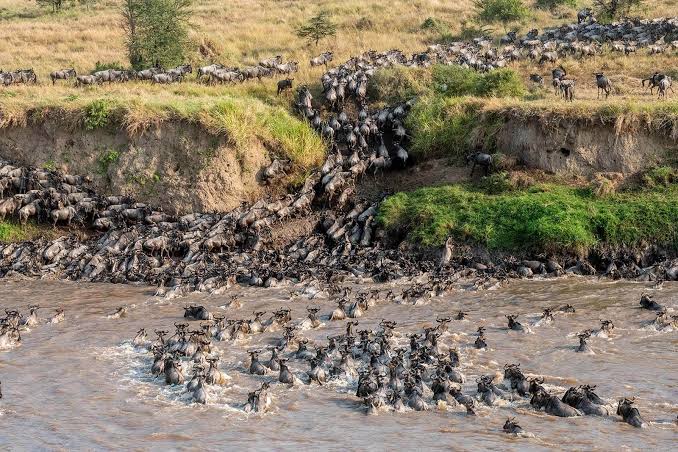
Peak Wildebeest Mara River Crossing (Aug–Sept): 5 Unique Self-Drive Safari Ideas
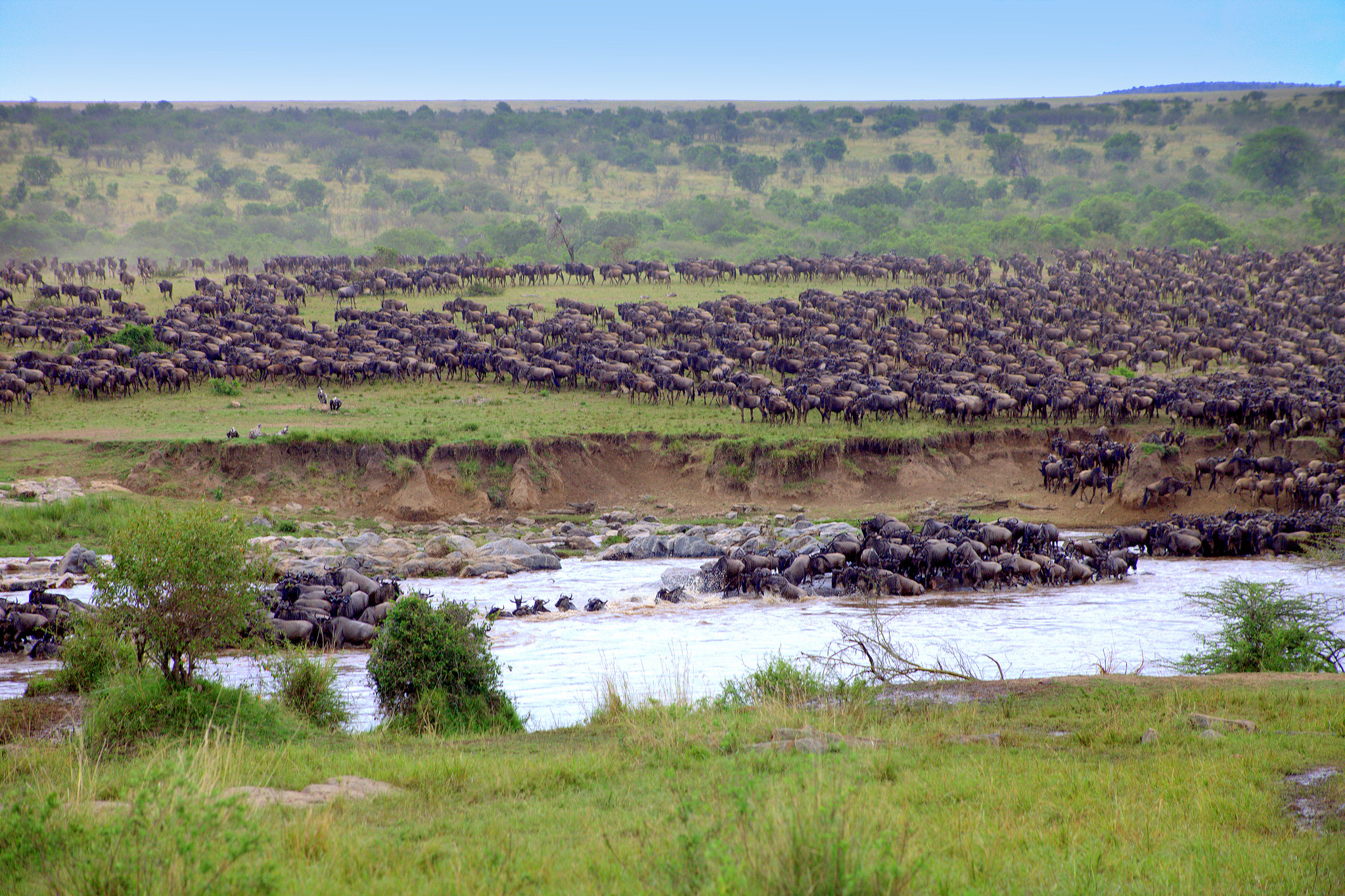
Every year between July and October, the rolling savannahs of East Africa play host to one of the most breathtaking visual spectacles on Earth: The Great Wildebeest Migration.
However, it is during the peak months of August and September that this global wonder reaches its absolute crescendo.
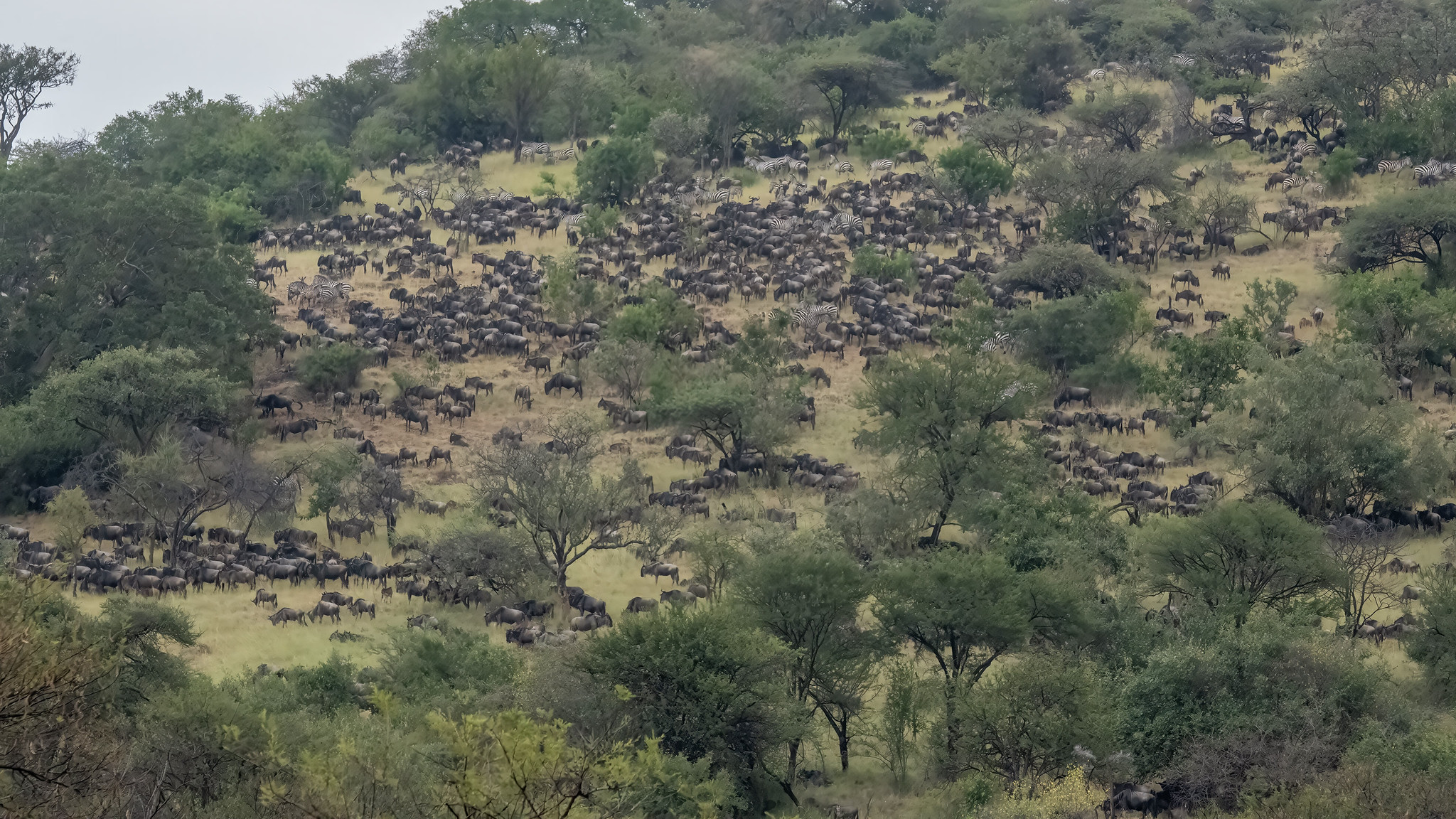
Millions of blue wildebeest, accompanied by hundreds of thousands of Burchell's zebras, Thomson's gazelles, and elands, surge into Kenya’s iconic Masai Mara National Reserve from the Serengeti plains of Tanzania.
What makes August and September exceptionally legendary among nature documentarians, wildlife photographers, and rugged road-trippers is the harrowing, high-adrenaline event known as the Mara River Crossing.
Here, massive herds gather along the steep, muddy banks of the Mara and Talek Rivers.
Instinct, thirst, and overcrowded pastures force these millions of animals to plunge into treacherous currents swarming with Nile crocodiles, while lions, leopards, cheetahs, and hyenas wait strategically in ambush along the opposite shores.
It is an unfiltered, visceral demonstration of natural survival.
While traditional guided group safaris constrain travelers to strict lodge schedules and shared game-drive vehicles, embarking on a self-drive 4x4 safari in Kenya unlocks an unprecedented level of freedom, flexibility, and immersion.
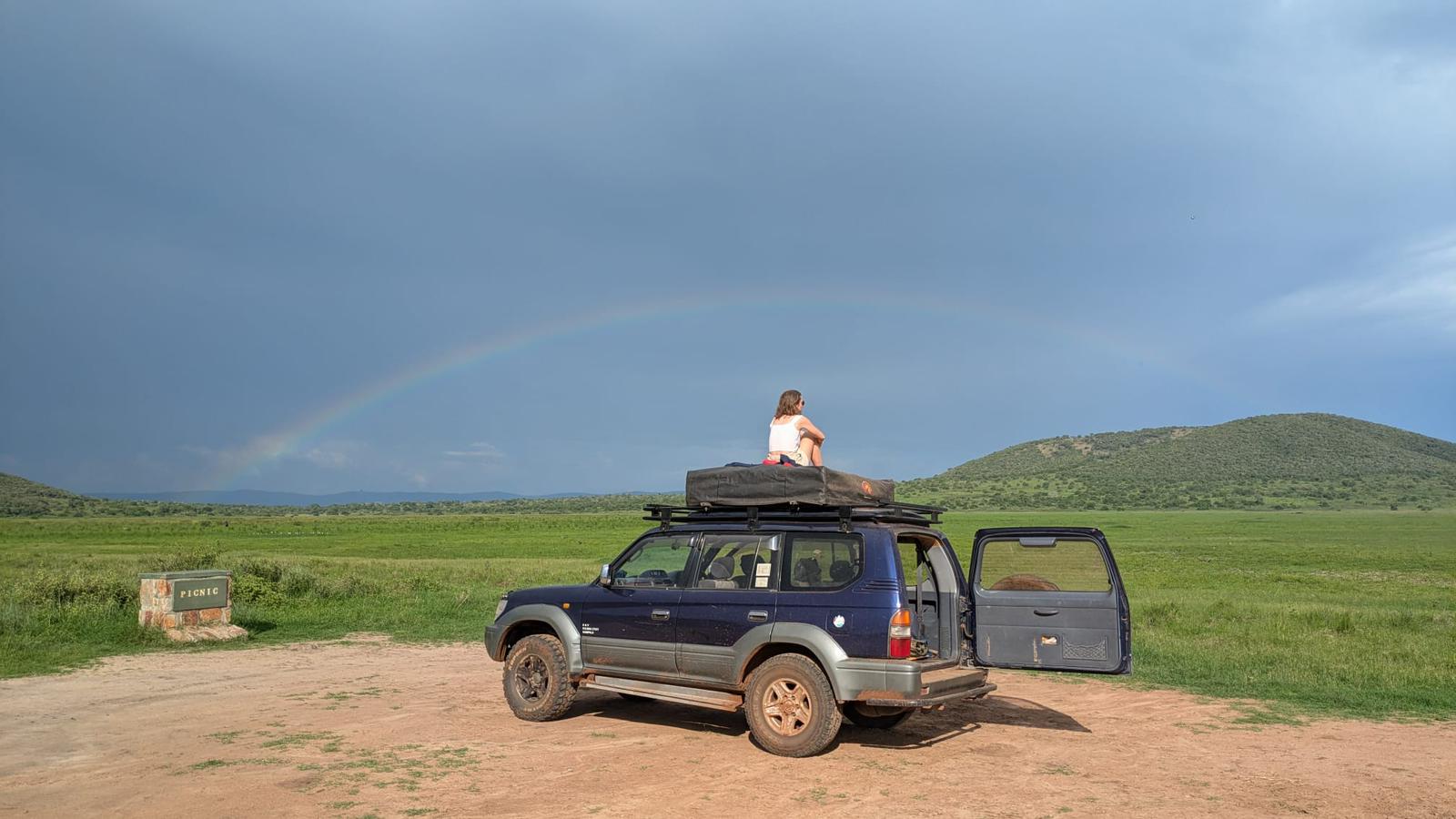
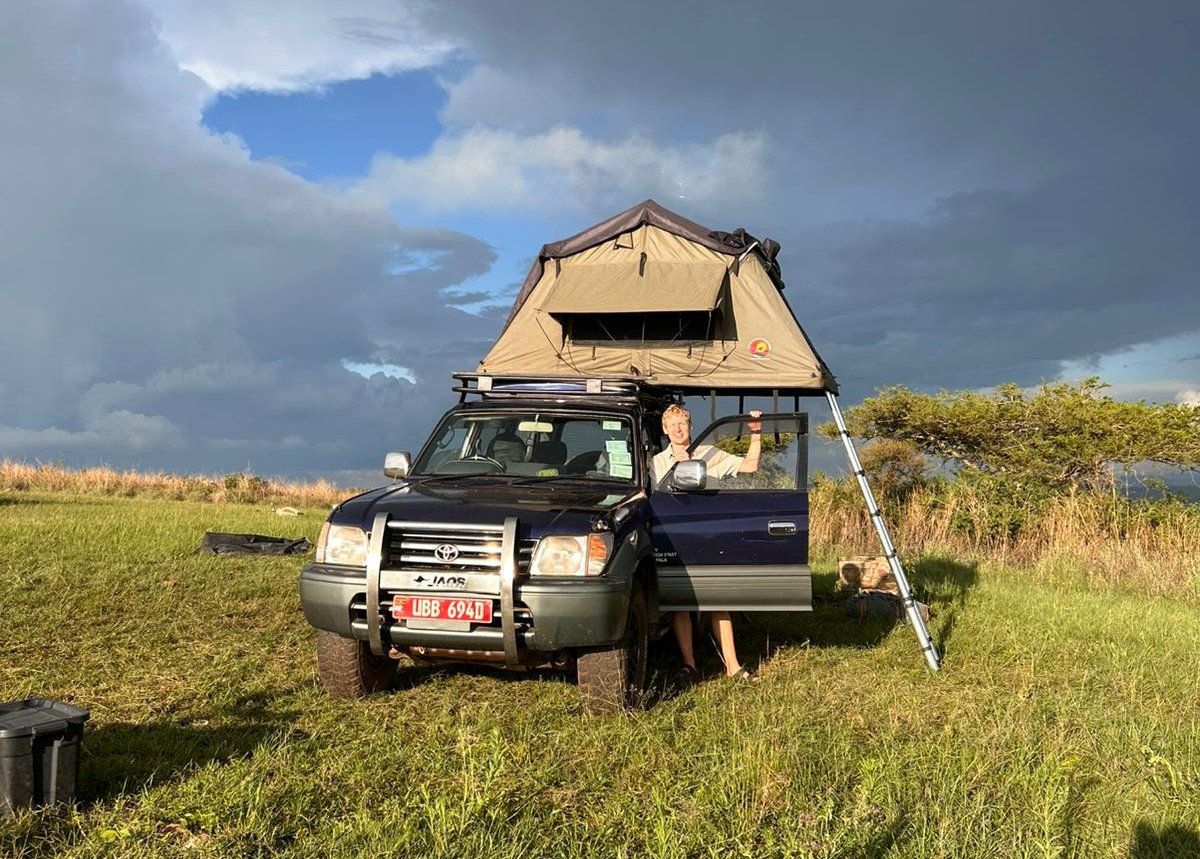
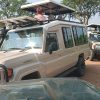
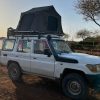
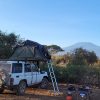
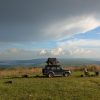
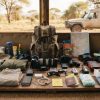
Renting a fully equipped 4x4 Toyota Land Cruiser—whether configured with a pop-up roof for ultimate wildlife viewing or outfitted with double rooftop tents and complete camping gear—allows you to track herd movements dynamically, camp under the star-studded African sky inside the Masai Mara ecosystems, and explore Kenya's wild landscapes at your own pace.
Quick Guide: The August & September Mara River Crossing at a Glance
- Primary Geographic Focus: Masai Mara National Reserve, Mara Triangle, Mara North Conservancy, Ol Kinyei, and Greater Mara Conservancies.
- Key River Crossing Points: Main Crossing Point 1 to 4, Cul-de-Sac, Lookout Crossing, and Purungat Bridge Area.
- Recommended Vehicle Specifications: Heavy-duty 4x4 Toyota Land Cruiser V8, Land Cruiser HZJ76/79, or Land Cruiser Prado with high ground clearance, low-range differential locks, heavy-duty suspension, snorkel, and optional rooftop tent camping setup.
- Ideal Trip Duration: 7 to 14 Days depending on route complexity and secondary destinations.
- Peak Season Driving Conditions: Dry, dusty tracks interspersed with steep riverbank descents, deep black cotton soil ruts in conservancy pockets, and rocky escarpments.
Understanding the August & September Wildebeest Mara River Crossing Phenomenon
To fully appreciate why a self-drive safari during August and September offers such an unmatched experience, one must understand the complex ecological drivers behind the migration movement.
By late July, the dry season takes firm hold of the southern Serengeti.
Deprived of nutritious green grasses and water, the massive mega-herds move steadily northward, drawn by the localized rain showers and rich, phosphorus-dense pastures of the Masai Mara ecosystem.
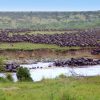
By early August, the bulk of the herds—exceeding 1.5 million wildebeest—has massed along the southern border of the Mara and along the banks of the Mara River.
The Mara River serves as the natural lifeblood of the ecosystem, but during the migration, it becomes the ultimate barrier.
The river crossings are not single, scheduled events; rather, they are chaotic, spontaneous, and intensely atmospheric occurrences.
Thousands of wildebeest accumulate on high riverbanks, pacing nervously.
A tense standoff ensues, often lasting hours or even days, as no individual animal wants to be the first to brave the waters.
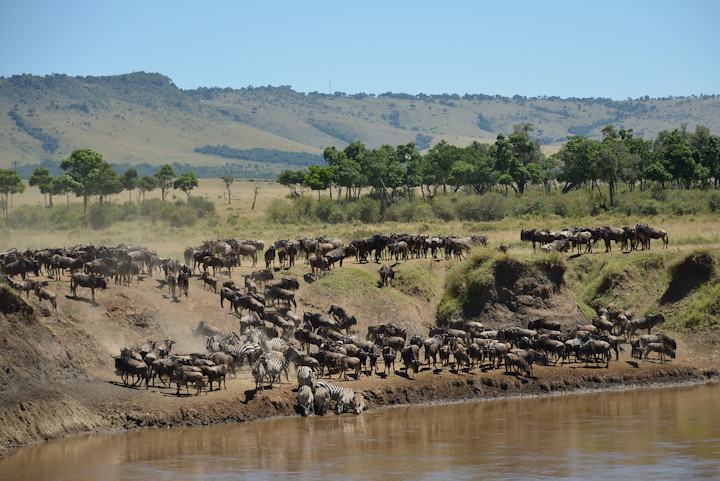
Then, driven by collective urgency or triggered by a single brave individual leaping into the torrent, the entire mass surges forward.
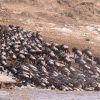
A cascading wall of animals thunders down vertical mud banks, kicking up blinding clouds of dust.
In the churning waters, thousands fight against strong currents, attempting to dodge the waiting jaws of giant Nile crocodiles.
The sound is deafening: a roaring chorus of panicked grunts, splashing water, and predator growls.
Once across, surviving animals scramble up steep clay banks, reunited on the lush Mara plains to graze through September.
Why Self-Drive is the Ultimate Way to Experience the Great Migration
Experiencing this natural drama via a self-drive 4x4 rental provides unique strategic advantages that no fixed safari package can replicate:
- Complete Schedule Autonomy: River crossings require extreme patience. A herd might sit at a riverbank for six hours before leaping into the water, or cross within five minutes. On a self-drive safari, you are not bound by a commercial tour driver's strict meal times or radio calls. You can pack a cooler box, set up your vehicle at a prime viewing spot, and wait as long as necessary.
- Unrestricted Mobility Across Conservancies: Having your own 4x4 Land Cruiser allows you to move seamlessly between the Masai Mara National Reserve (the Main Reserve) and surrounding private conservancies such as Mara North, Olare Orok, and Lemek, adjusting your location based on real-time ranger reports and herd movements.
- Immersive Overland Camping: Camping in a rooftop tent atop a 4x4 Land Cruiser puts you right at the edge of the wilderness. Waking up to the distant grunts of wildebeest and nocturnal roars of lions right outside your tent creates an authentic connection to the wild.
- Cost Efficiency for Families and Groups: Renting a self-drive 4x4 vehicle with camping equipment or booking self-drive lodge packages significantly reduces per-person costs compared to high-end fly-in safaris, making an extended 10 to 14-day migration expedition financially accessible.
Choosing Your Self-Drive 4x4 Fleet for the Masai Mara Terrain
Navigating the terrain of the Masai Mara ecosystem during peak migration season demands a powerful, robust, and impeccably maintained four-wheel-drive vehicle.
The Mara’s terrain varies from corrugated gravel roads and black cotton clay tracks to steep river crossings and rocky ruts.
At 4x4 Kenya, our specialized fleet is purpose-built to conquer the African bush while providing maximum safety, comfort, and visibility for wildlife photography:
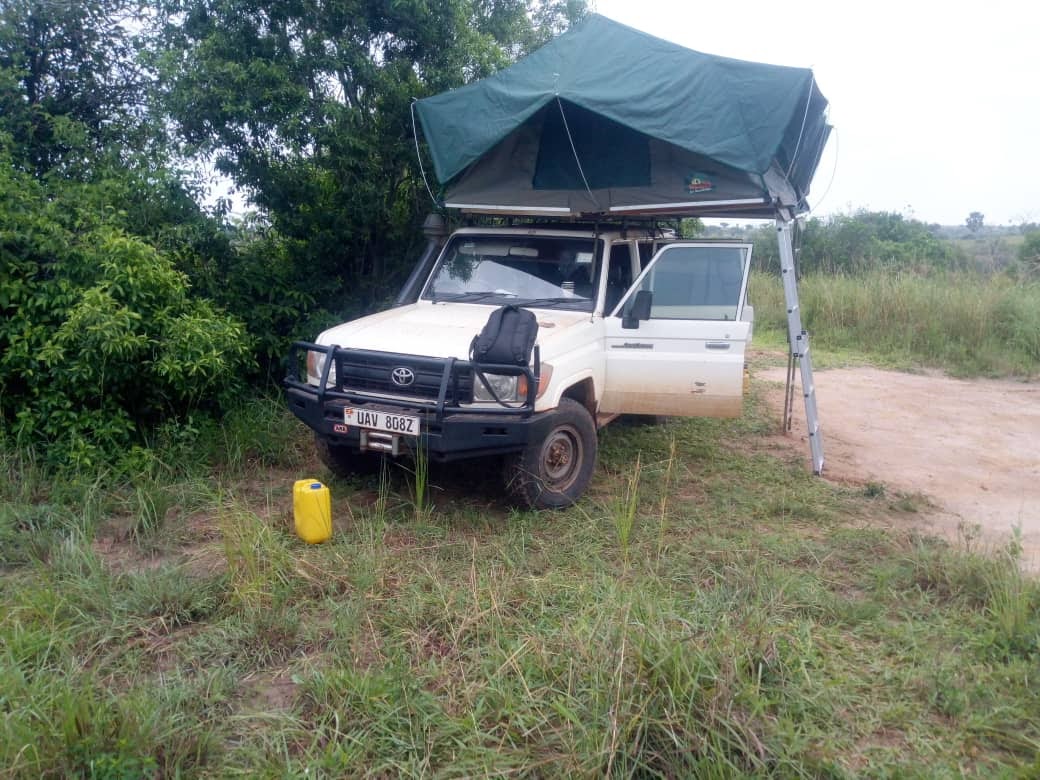
- Toyota Land Cruiser 70 Series (HZJ76 / HZJ79 Hardtop Safari): The undisputed king of the African safari. Equipped with high-clearance suspension, snorkel, heavy-duty winches, dual fuel tanks, pop-up hatch roof, and high-torque diesel engines. Perfect for rugged off-road track navigation and photography.
- Toyota Land Cruiser V8 / Prado with Rooftop Tents: Ideal for self-drive camping enthusiasts seeking high comfort combined with extreme capability. Outfitted with single or double rooftop tents, integrated mattresses, gas burners, 12V fridge/freezer units, recovery gear, and camping chairs.
- Custom Customized Safari Land Cruisers with Extended Body: Engineered with wide slide-out windows, pop-up roofs for 360-degree viewing, charging ports for camera gear, and heavy-duty 4WD transfer cases.
5 Unique Self-Drive Itinerary Ideas to Fully Immerse You into the Migration Adventure
To help you plan your dream August-September expedition, we have designed 5 distinct, comprehensively detailed self-drive itineraries.
Each route caters to different travel timelines, budget preferences, campsite desires, and secondary geographical interests—ranging from quick 7-day Mara deep-dives to grand 14-day multi-park overland circuits combining Rift Valley lakes, Mount Kenya, and Amboseli Kilimanjaro vistas.
Itinerary 1: The Classic 7-Day Express Mara Migration & River Crossing Self-Drive
Trip Highlights: Itinerary 1
- Direct focus on the iconic Mara River crossing points (Main Crossing 1, 2, and 3).
- Traverse the Great Rift Valley escarpment scenic driving route via Narok.
- In-depth exploration of both the Central Mara Plains and the Mara Triangle.
- Camping or lodging inside/adjacent to the reserve for early morning sunrise game drives.
- High density of big cat encounters (lions, cheetah coalitions, and leopards on the Talek River).
Itinerary Overview & Route Breakdown
- Primary Route: Nairobi → Mai Mahiu → Narok Town → Sekenani Gate / Talek Gate (Masai Mara) → Mara Triangle (Oloololo Gate) → Narok → Nairobi.
- Total Distance Covered: Approx. 750 kilometers.
- Terrain Type: Smooth tarmac (Nairobi to Narok), rough corrugated gravel road (Narok to Sekenani/Talek), dirt tracks and riverbed crossings inside the reserve.
- Accommodation Options: Mara Serena Safari Lodge, Ashnil Mara Camp, Sarova Mara Game Camp, Fig Tree Camp.
- Camping Sites: Kiboko Public Campsite (inside reserve), Eluai Campsite (Mara Triangle), Crocodile Public Campsite, Oloololo Public Campsite.
- Key Destinations: Great Rift Valley Viewpoint, Narok, Masai Mara National Reserve, Mara River, Talek River, Mara Triangle.
Full Day-by-Day Detailed Breakdown
Day 1: Arrival in Nairobi, 4x4 Vehicle Orientation & Drive to the Great Rift Valley
Your self-drive journey begins in Nairobi.
Upon picking up your fully prepped 4x4 Toyota Land Cruiser from the 4x4 Kenya dispatch center, our technical team will conduct a thorough 45-minute vehicle orientation.
We will cover low-range 4WD engagement, tire pressure adjustment for loose gravel vs. mud, operation of the dual battery system, 12V fridge operation, and rooftop tent deployment.
Depart Nairobi by mid-morning, navigating onto the Southern Bypass and joining the A104 towards the Great Rift Valley.
Stop at the famous Great Rift Valley Viewpoint at Mai Mahiu for breathtaking panoramic views of Mount Longonot and the vast valley floor.
Descend the escarpment and drive through the bustling agricultural hub of Narok Town—the last major stop for refueling your Land Cruiser's dual fuel tanks, drawing cash at ATMs, and purchasing fresh produce and supplies.
From Narok, branch onto the C12 gravel road leading south toward the Masai Mara.
Arrive at Sekenani Gate or Talek Gate by late afternoon.
Check into your chosen lodge or set up your rooftop tent at your campsite.
Enjoy your first evening under the African sky surrounded by the distant calls of night wildlife.
Overnight Stay / Camping: Ashnil Mara Camp / Fig Tree Camp OR Kiboko Public Campsite.
Day 2: Full Day Central Mara Plains & Talek River Wildebeest Gathering Tracks
Wake up at 5:30 AM to the sound of birdsong.
Enjoy a fresh press of Kenyan coffee before starting your engine at dawn (6:00 AM) when gates open.
August mornings in the Mara are crisp and vibrant, offering the best light for photography.
Drive along the Talek River circuit.
During August, vast herds of wildebeest gather along the grassy banks of the Talek, preparing to cross into the central reserve.
Drive slow along the sand banks where lions often lay in ambush within the riverine bushes.
Observe the intense predator-prey dynamics as lion prides hunt distracted wildebeest separated from the main herds.
By midday, stop at a designated secure picnic site beneath a shady Acacia tree to unpack your self-drive lunch box.
In the afternoon, explore the Paradise Plains and Rhino Ridge, areas famous for female cheetahs teaching their cubs to hunt young gazelles amidst the migrating herds.
Return to camp before sunset for a campfire dinner.
Overnight Stay / Camping: Ashnil Mara Camp / Fig Tree Camp OR Kiboko Public Campsite.
Day 3: Dedication Day — Tracking the Peak Mara River Crossings (Main Crossing 1 & 2)
Today is entirely dedicated to witnessing the raw spectacle of the Mara River Crossing.
Pack a full-day picnic lunch, extra water, and full camera memory cards into your 4x4 Land Cruiser.
Depart early toward the main Mara River vantage points—specifically Main Crossing 1, Main Crossing 2, and Cul-de-Sac.
Position your 4x4 Land Cruiser at a safe, non-disruptive distance from the riverbank edge, adhering to reserve park rules by keeping engine idling to a minimum and allowing the herds a clear, unblocked path to the water.
Exercise patience.
Observe how thousands of wildebeest begin milling at the top of the cliffs, grunting nervously.
As the pressure builds from behind, a lead wildebeest will jump into the roaring brown waters.
Watch as hundreds of wildebeest plunge down steep 20-foot clay embankments, battling churning rapids and huge Nile crocodiles.
Document the incredible courage and raw power of nature.
Remain at the river point through the afternoon to potentially catch multiple crossing events across different river bends.
Return to camp at dusk with unforgettable memories and photos.
Overnight Stay / Camping: Mara Serena Safari Lodge OR Crocodile Public Campsite.
Day 4: Cross the Mara River to the Mara Triangle & Oloololo Escarpment
After breakfast, cross the bridge at Purungat River Gate to enter the famous Mara Triangle—the northwestern third of the Masai Mara National Reserve, managed by the Mara Conservancy.
The Mara Triangle is renowned for its low vehicle density, pristine tracks, strict anti-poaching enforcement, and spectacular landscapes framed by the towering Oloololo Escarpment.
Spend the morning driving the tracks along the western bank of the Mara River.
The Mara Triangle features vast open grasslands where millions of wildebeest spread out to graze after successfully surviving the river crossing.
Keep a sharp eye out for black rhinos in the acacia scrub near the escarpment base and large leopard populations along the Serena Loop.
In the late afternoon, drive up toward the crest of the Oloololo Escarpment for a stunning sunset overview of the entire Mara ecosystem stretching toward Tanzania.
Overnight Stay / Camping: Little Governors' Camp / Kilima Camp OR Oloololo Public Campsite (Rooftop Camping with Escarpment Views).
Day 5: Deep Exploration of the Mara Triangle River Vantage Points & Lookout Hill
Spend another full day immersing yourself in the Mara Triangle.
Start early with a drive toward Lookout Hill, a historical geographic point offering panoramic vistas over the Mara River winding through the savannah.
Track secondary wildebeest movements heading toward the northern conservancies.
Test your Land Cruiser's 4WD low-range capabilities on steep track inclines and rocky passes around the escarpment.
Because the Mara Triangle allows carefully designated off-road access near certain river tracks under ranger guidance, you can position yourself strategically for unobstructed photographic angles of river crossings.
Enjoy an afternoon game drive focusing on the heavy concentrations of hyena clans, jackals, and vultures scavenging on recent river crossing casualties along the sand bars.
Overnight Stay / Camping: Mara Serena Safari Lodge OR Eluai Campsite.
Day 6: Mara Triangle to Olare Orok Conservancy / Eastern Mara Boundary
Exit the Mara Triangle via Oloololo Gate and make a scenic transit drive through the surrounding community lands toward the Olare Orok and Mara North Conservancies.
Private conservancies border the national reserve and offer exclusive, low-density wilderness experiences.
Enjoy a leisurely afternoon game drive in these private wildlife corridors.
Private conservancies offer unique self-drive advantages, including night game drives (where permitted with local guides) and guided bush walks.
Observe large resident lion prides—such as the famous Marsh Pride descendants—resting under big balanites trees after heavy nighttime hunting sessions.
Overnight Stay / Camping: Karen Blixen Camp / Kicheche Mara Camp OR Mara North Private Wilderness Campsite.
Day 7: Final Morning Game Drive, Return Transit to Nairobi
Embark on your final early morning game drive in the Mara as the golden sun rises over the savannah.
Capture final photos of giraffe silhouettes, grazing wildebeest, and peaceful acacia landscapes.
Return to camp for a hearty breakfast and pack down your rooftop tent setup.
Start your return journey via the C12 route back to Narok Town.
Stop for lunch and fuel before ascending the Great Rift Valley escarpment on the highway back to Nairobi.
Drop off your 4x4 Land Cruiser at the 4x4 Kenya office by late afternoon, concluding your unforgettable 7-day migration express adventure.
Overnight Stay / Camping: End of services (Nairobi hotel or airport transfer).
Ready to Experience the 7-Day Mara Migration Express?
Equip yourself with the ultimate 4x4 Toyota Land Cruiser with rooftop tents or pop-up safari roofs for this exact route!
Book a 4x4 Vehicle for this Trip Browse Our 4x4 FleetItinerary 2: The 10-Day Bush & Lakes Overland (Masai Mara, Lake Naivasha & Lake Nakuru)
Trip Highlights: Itinerary 2
- Combines the Wildebeest Migration river crossings with the Great Rift Valley's birding and flamingo havens.
- Guided walking safari amidst giraffes and zebras on Crescent Island in Lake Naivasha.
- Rhino sanctuary exploration at Lake Nakuru National Park (both Black and White Rhinoceros).
- Self-drive transit through diverse ecosystems from freshwater lakes to volcanic craters and savannah plains.
- Flexible combination of lodge stays and wilderness camping setups.
Itinerary Overview & Route Breakdown
- Primary Route: Nairobi → Lake Naivasha (Hell's Gate) → Lake Nakuru National Park → Narok → Masai Mara (Talek & Mara River) → Nairobi.
- Total Distance Covered: Approx. 980 kilometers.
- Terrain Type: Smooth tarmac highways (A104/B4), paved park roads, mixed gravel tracks, and off-road Mara black cotton soils.
- Accommodation Options: Lake Naivasha Sopa Resort, Sarova Lion Hill Game Lodge (Nakuru), Ashnil Mara Camp, Mara Bush Camp.
- Camping Sites: Camp Carnelley's (Naivasha), Makalia Public Campsite (Nakuru), Talek Bush Public Campsite (Mara).
- Key Destinations: Lake Naivasha, Crescent Island, Hell’s Gate National Park, Lake Nakuru National Park, Makalia Falls, Masai Mara River Crossings.

Full Day-by-Day Detailed Breakdown
Day 1: Nairobi to Lake Naivasha — Hell’s Gate & Lakeside Camping
Pick up your 4x4 Land Cruiser in Nairobi and head west along the scenic Escarpment Highway to Lake Naivasha (approx. 2.5 hours drive).
Check into your lakeside resort or pitch your rooftop tent at the shaded, grass-covered grounds of Camp Carnelley's right along the lake shore.
In the afternoon, drive your 4x4 into Hell’s Gate National Park, one of Kenya's few national parks where you can cycle or walk among wildlife.
Drive through towering geothermal cliffs, Fischer’s Tower, and dramatic gorges while spotting zebras, elands, and warthogs.
Return to Camp Carnelley’s for dinner overlooking hippos emerging from the lake at nightfall.
Overnight Stay / Camping: Lake Naivasha Sopa Resort OR Camp Carnelley's Camping Ground.
Day 2: Boat Safari on Lake Naivasha & Transit to Lake Nakuru National Park
Begin your morning with a relaxing 2-hour boat safari across Lake Naivasha.
Spot hundreds of bird species—including African Fish Eagles diving for fish—and observe massive hippo pods wallowing in the shallows.
Land on Crescent Island Game Sanctuary for a guided foot safari to walk alongside giraffes, wildebeest, and waterbucks without vehicle barriers.
Return to your vehicle, pack up, and take a 2-hour drive north on the B4 highway to Lake Nakuru National Park.
Enter through Main Gate and take a slow late-afternoon game drive along the alkaline lake shore, where thousands of flamingos, pelicans, and storks feed.
Overnight Stay / Camping: Sarova Lion Hill Game Lodge / Lake Nakuru Lodge OR Makalia Public Campsite.
Day 3: Rhino Tracking in Lake Nakuru & Drive South to Narok Gateway
Lake Nakuru is one of East Africa's most successful sanctuaries for endangered white and black rhinos.
Spend the morning conducting a targeted game drive along the acacia forests and cliffs surrounding Baboon Cliff viewpoint.
Spot large herds of endangered Rothschild's giraffes, tree-climbing lions, and dense leopard populations in the fever tree forests.
After lunch, exit Lake Nakuru National Park and head south towards Njoro and Mau Narok, crossing fertile agricultural highlands before descending to Narok Town.
Rest and stock up your vehicle's food, water, and fuel supplies for the upcoming Mara migration leg.
Overnight Stay / Camping: Seasons County Hotel Narok OR Maji Moto Eco Camp.
Day 4: Narok into the Heart of Masai Mara (Talek Sector)
Depart Narok early on the C12 gravel road, driving straight to the Talek Gate of the Masai Mara.
As you enter the reserve, the vast open plains open up before you, filled with dense mega-herds of wildebeest arriving from the south.
Engage 4WD and spend the afternoon following track loops along the Talek River.
Position your vehicle near busy animal crossing points where wildebeest navigate shallow river bends.
Set up camp at your designated site, listening to the night roar of Mara lions.
Overnight Stay / Camping: Mara Bush Camp / Fig Tree Camp OR Talek Bush Public Campsite.
Day 5: Full Day Tracking Mara River Crossings & Purungat Region
Devote the entire day to the Mara River crossing zones.
Drive early toward the Purungat Bridge area and Main Crossing sites.
In August and September, the high concentration of wildebeest creates non-stop drama along the riverbanks.
Utilize your 4x4 Land Cruiser's elevated roof hatch to capture professional-grade photography of stampeding wildebeest battling crocodiles and high river currents.
Enjoy a packed picnic lunch overlooking the river before tracking big cat activity along the nearby Ol Misigiyio bush tracks.
Overnight Stay / Camping: Ashnil Mara Camp OR Crocodile Public Campsite.
Day 6: Mara Triangle Crossing & Oloololo Escarpment Exploration
Cross over to the west bank into the Mara Triangle.
Drive along the river plain loops where wildebeest congregate after surviving the crossing.
The landscape here provides classic African backdrop views, with the dramatic Oloololo Escarpment framing the open savannah.
Look out for cheetah coalitions hunting gazelles on the open plains and large prides of lions resting in the shade of balanites trees.
In the evening, ascend to your high-altitude campsite on top of the escarpment for spectacular views across the Mara basin.
Overnight Stay / Camping: Kilima Camp OR Oloololo High Escarpment Campsite.
Day 7: Conservancy Deep Dive — Mara North & Lemek
Descend the escarpment and head into the Mara North Conservancy.
Private conservancies offer exclusive wildlife tracking with fewer tourist vehicles.
Enjoy an afternoon game drive exploring the Lemek hills and riverine forests.
Take advantage of guided walking safaris accompanied by local Maasai naturalists, gaining deep insights into animal tracking, medicinal plants, and bush survival skills.
Overnight Stay / Camping: Saruni Mara / Karen Blixen Camp OR Mara North Off-Grid Campsite.
Day 8: Full Day Mara North Wildlife Tracking & Cultural Immersion
Spend a full day exploring Mara North.
Visit an authentic local Maasai Boma (village) to learn about traditional pastoralist culture, homestead construction, and how local communities coexist harmoniously with migrating wildlife and apex predators.
In the late afternoon, embark on an extended game drive until twilight, spotting nocturnal species like bushbabies, serval cats, and aardvarks on the way back to camp.
Overnight Stay / Camping: Karen Blixen Camp OR Mara North Off-Grid Campsite.
Day 9: Eastern Mara Plains & Migration Herd Exit Tracking
Drive east toward the Sekenani and Ol Kinyei sectors.
Track the secondary herds moving through eastern migration corridors where wildebeest feed on fresh post-rain shoots.
Enjoy your final full safari day photographing plains game, elephant herds, and topis perched on termite mounds.
Overnight Stay / Camping: Sarova Mara Game Camp OR Sekenani Public Campsite.
Day 10: Sekenani Gate to Narok & Return Transit to Nairobi
Enjoy a final sunrise breakfast in the bush.
Exit Sekenani Gate by 9:00 AM and begin your return drive along the C12 route to Narok Town.
After a lunch break in Narok, climb the Great Rift Valley escarpment back into Nairobi, returning your trusted 4x4 Land Cruiser to 4x4 Kenya by late afternoon.
Overnight Stay / Camping: End of services.
Conquer the 10-Day Bush & Lakes Overland Circuit
Hire a Land Cruiser V8 or Prado equipped with rooftop camping kits for the ultimate Great Rift Valley & Mara experience!
Book a 4x4 Vehicle for this Trip Browse Our 4x4 FleetItinerary 3: The Ultimate 12-Day Grand Migration & Big Cat Photography Safari
Trip Highlights: Itinerary 3
- Designed specifically for wildlife photographers and videographers targeting peak river crossings and big cat action.
- Extended 6-day immersion inside the Masai Mara National Reserve and Mara Triangle.
- Custom pop-up roof or open-hatch Land Cruiser configuration for unobstructed 360-degree photography angles.
- In-depth exploration of famous big cat territories: Marsh Pride, Topi Pride, and Paradise Plains cheetahs.
- Visits to the pristine Lake Magadi and southern Rift Valley landscapes.
Itinerary Overview & Route Breakdown
- Primary Route: Nairobi → Lake Magadi / Olorgesailie → Narok → Mara North → Masai Mara Central → Mara Triangle → Sekenani → Nairobi.
- Total Distance Covered: Approx. 1,150 kilometers.
- Terrain Type: Tarmac, intense corrugated gravel, deep sand, muddy river approaches, and off-grid wilderness tracks.
- Accommodation Options: Governor’s Camp, Mara Serena Safari Lodge, Naibor Camp, Entim Camp.
- Camping Sites: Sand River Public Campsite, Kiboko Campsite, Oloololo Escarpment Wilderness Camp.
- Key Destinations: Lake Magadi, Masai Mara National Reserve, Mara River Crossing Points 1–4, Sand River Crossing, Mara Triangle.
Full Day-by-Day Detailed Breakdown
Day 1: Departure Nairobi to Lake Magadi (Southern Rift Valley Adventure)
Pick up your specialized 4x4 Toyota Land Cruiser Hardtop fitted with extra camera equipment racks and charging ports.
Head south from Nairobi towards the remote, off-the-beaten-path terrain of Lake Magadi in the deep southern Rift Valley.
Drive through dramatic volcanic scenery, passing the prehistoric site of Olorgesailie.
Arrive at Lake Magadi by afternoon, exploring its pink-tinted soda lake, flamingo colonies, and natural hot springs.
Test your 4x4 vehicle's low-range response on loose sand tracks surrounding the lake before relaxing at your camp under a canopy of stars.
Overnight Stay / Camping: Lake Magadi Sports Club Lodge OR Lake Magadi Bush Campsite.
Day 2: Lake Magadi to Narok Town Overland Transit
Depart Lake Magadi early, taking the rugged back-country overland route crossing the Mosiro plains toward Narok.
This scenic 4x4 track offers true off-road driving through remote Maasai pastoral lands with backdrop views of the Rift Valley wall.
Arrive in Narok by early afternoon to rest, service tire pressures, top up dual diesel tanks, and restock fresh food provisions for your extended 8-day deep Mara migration expedition.
Overnight Stay / Camping: Seasons County Hotel Narok.
Day 3: Narok to Masai Mara — Sand River Gate & Southern Border Tracks
Depart Narok early morning for the Masai Mara, entering via Sekenani Gate and heading straight south toward the Sand River Gate along the Tanzania border.
The Sand River is historically where the Great Migration herds first enter Kenya from the Serengeti in July and early August.
Explore the southern river boundary where thick wildebeest herds often cross back and forth across sandbanks.
The southern sector features dramatic granite kopjes where leopards and lions often sit watching the surrounding plains.
Overnight Stay / Camping: San River Bush Camp OR Sand River Public Campsite.
Day 4: Deep Central Mara — Rhino Ridge & Paradise Plains Big Cat Photography
Head north into the heart of the central reserve.
Spend the day tracking the famous Marsh Pride lions around Musiara Marsh and Paradise Plains.
August is prime hunting season for big cats, as abundant wildebeest numbers provide non-stop opportunities for dramatic predator action.
Position your 4x4 Land Cruiser along Paradise Ridge for golden-hour morning lighting, capturing cheetah coalitions hunting on the open savannah and leopards stashing prey in large sausage trees.
Overnight Stay / Camping: Governors’ Camp / Entim Camp OR Kiboko Public Campsite.
Day 5: Mara River Crossing Intensive — Points 1, 2, and 3
Dedicate the entire day to photographing river crossings.
Arrive at the Main Crossing points by 6:30 AM.
Position your vehicle strategically to capture wide-angle shots of thousands of wildebeest leaping into the Mara River, as well as tight telephoto shots of crocodile strikes and dramatic water splashes.
Spend all day at the river, enjoying a tailgate picnic lunch from your Land Cruiser's 12V portable fridge while observing the intense animal interactions.
Overnight Stay / Camping: Naibor Camp OR Crocodile Public Campsite.
Day 6: Mara River Crossing Intensive — Cul-de-Sac & Lookout Points
Focus on alternate crossing sites today, including Cul-de-Sac and Lookout Crossing.
These locations feature steeper clay banks where Wildebeest display dramatic, panic-driven leaps into deep river pockets.
In the late afternoon, track hippo pods and large crocodiles basking on exposed rocks along the river banks, taking advantage of side-lighting for wildlife portraits.
Overnight Stay / Camping: Ashnil Mara Camp OR Kiboko Public Campsite.
Day 7: Transit across Mara River to the Mara Triangle
Cross Purungat Bridge and transition into the Mara Triangle.
Spend the day exploring the western grasslands along the base of the Oloololo Escarpment, where post-crossing herds gather in vast, concentrated sweeps across the landscape.
Focus your camera lenses on black rhinos, bat-eared foxes, hyena den sites, and majestic martial eagles perched high in acacia treetops.
Overnight Stay / Camping: Mara Serena Safari Lodge OR Oloololo Escarpment Campsite.
Day 8: Escarpment Vantage Photography & Mara Triangle River Loops
Rise early for a sunrise drive along the top ridge of the Oloololo Escarpment, capturing breath-taking aerial-style landscape photos of mist rising over the Mara River winding through the plain below.
Descend back into the valley floor for an afternoon tracking male lion coalitions patrolling the riverine forest edge.
Overnight Stay / Camping: Little Governors’ Camp OR Eluai Public Campsite.
Day 9: Mara North Conservancy — Predator Immersion
Exit the triangle and transit into Mara North Conservancy.
Private conservancies offer unique off-road driving rules under local ranger guidance, allowing photographers to approach big cat sightings respectfully for clear, low-angle photos.
Spend the afternoon following leopard movements in the acacia thickets along the Zone 5 wilderness tracks.
Overnight Stay / Camping: Kicheche Mara Camp OR Mara North Wilderness Campsite.
Day 10: Mara North to Olare Orok Conservancy
Drive southeast into Olare Orok Conservancy, known for having one of the highest lion densities in Africa.
Spend the morning observing lion cubs playing on rocky outcrops and prides sharing wildebeest kills.
Enjoy an evening bush dinner under the stars at camp, listening to night predator calls echo across the plain.
Overnight Stay / Camping: Mara Plains Camp OR Olare Orok Wilderness Camp.
Day 11: Return Drive from Mara Ecosystem to Narok Town
Enjoy a final morning game drive across the eastern conservancy plains.
Exit via Talek Gate and begin a comfortable self-drive return journey back to Narok Town.
Check into your hotel in Narok, unwind, charge camera batteries, and prepare for the final highway drive back to the capital.
Overnight Stay / Camping: Seasons County Hotel Narok.
Day 12: Narok to Nairobi — Final Gear Drop & Departure
Depart Narok after breakfast, driving east along the B3 highway over the Great Rift Valley escarpment.
Arrive in Nairobi by early afternoon.
Drop off your 4x4 Land Cruiser vehicle and camera equipment at 4x4 Kenya headquarters, ending your 12-day photography adventure.
Overnight Stay / Camping: End of services.
Book Your 12-Day Big Cat & Migration Photography 4x4
Rent a custom 4x4 Land Cruiser with pop-up roof, camera charging ports, and dual fridges today!
Book a 4x4 Vehicle for this Trip Browse Our 4x4 FleetItinerary 4: The 14-Day Ultimate Kenya Circuit (Amboseli Kilimanjaro, Lake Naivasha & Masai Mara Migration)
Trip Highlights: Itinerary 4
- The ultimate two-week grand safari combining Kenya’s most famous wildlife parks.
- Iconic views of massive elephant herds backed by Mount Kilimanjaro in Amboseli National Park.
- Drive through the Great Rift Valley, Lake Naivasha, and Hell’s Gate.
- Extended 5-day focus on the peak August-September Wildebeest Mara River Crossing in Masai Mara.
- Ultimate cross-country self-drive overland experience across diverse African landscapes.
Itinerary Overview & Route Breakdown
- Primary Route: Nairobi → Amboseli National Park → Lake Naivasha → Narok → Masai Mara (Central & Triangle) → Nairobi.
- Total Distance Covered: Approx. 1,450 kilometers.
- Terrain Type: Tarmac highways (A109 / A104), corrugated red dust roads, dry lake beds, muddy river valleys, and savannah tracks.
- Accommodation Options: Amboseli Serena Safari Lodge, Ol Tukai Lodge, Lake Naivasha Sopa, Ashnil Mara Camp.
- Camping Sites: Kiboko Public Campsite (Amboseli), Camp Carnelley's (Naivasha), Talek Public Campsite (Mara).
- Key Destinations: Amboseli National Park, Mount Kilimanjaro views, Lake Naivasha, Great Rift Valley, Masai Mara National Reserve.
Full Day-by-Day Detailed Breakdown
Day 1: Nairobi to Amboseli National Park — Views of Mount Kilimanjaro
Pick up your high-clearance 4x4 Toyota Land Cruiser V8 / Prado in Nairobi.
Take the A109 Mombasa Road highway south before turning onto the C102 route toward Amboseli National Park (approx. 4 hours drive).
Enter Amboseli through Kimana or Meshanani Gate.
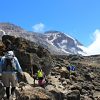
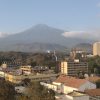
Immediately experience the dramatic vistas of Africa’s highest peak, Mount Kilimanjaro, towering over the dry lakebed and palm groves.
Enjoy an evening game drive observing Amboseli's world-famous elephant families grazing in the lush Enkongo Narok swamps.
Overnight Stay / Camping: Amboseli Serena Safari Lodge / Ol Tukai Lodge OR Kiboko Public Campsite (Amboseli).
Day 2: Full Day Amboseli National Park — Swamps, Elephants & Observation Hill
Wake up early at 6:00 AM for peak clear views of Kilimanjaro’s snow-capped summit before morning clouds roll in.
Drive up to Observation Hill for a panoramic view across the entire park, watching herds of elephants, hippos, and buffaloes navigate the turquoise swamps below.
Spend the afternoon exploring the dry lake bed tracks, spotting lions, cheetahs, servals, and large flocks of flamingos in Lake Amboseli.
Overnight Stay / Camping: Ol Tukai Lodge OR Kiboko Public Campsite.
Day 3: Amboseli to Lake Naivasha via Great Rift Valley Highway
Depart Amboseli after breakfast and drive north back toward Nairobi, taking the Southern Bypass to connect onto the A104 Great Rift Valley Highway.
Descend the escarpment and arrive at Lake Naivasha by early afternoon.
Check into your hotel or set up your rooftop tent at Camp Carnelley’s.
Relax under giant yellow fever trees as white-colobus monkeys play in the canopy above.
Overnight Stay / Camping: Lake Naivasha Sopa Resort OR Camp Carnelley’s.
Day 4: Lake Naivasha Boat Safari, Hell’s Gate & Transit to Narok Gateway
Enjoy a early morning boat safari on Lake Naivasha to see hippos and fish eagles, followed by a walk on Crescent Island.
In the afternoon, take a quick 4x4 drive through Hell’s Gate National Park before driving west toward Narok Town, the gateway to the Masai Mara.
Overnight Stay / Camping: Seasons County Hotel Narok.
Day 5: Narok to Masai Mara — Sekenani Sector & Central Plains Entry
Depart Narok on the C12 route, arriving at Sekenani Gate of the Masai Mara by mid-morning.
Drive slowly through the central plains as thousands of wildebeest and zebras surround your vehicle.
Set up camp along the Talek River sector and take an evening game drive searching for leopards hunting in the river thistles.
Overnight Stay / Camping: Sarova Mara Game Camp OR Talek Public Campsite.
Day 6: Mara River Crossing Expedition — Day 1
Spend the whole day at Main Crossing 1 and 2 along the Mara River.
August and September are the absolute peak of the crossing frenzy.
Watch wildebeest plunge down steep banks into crocodile-infested waters in a heroic bid to reach green pastures.
Overnight Stay / Camping: Ashnil Mara Camp OR Crocodile Public Campsite.
Day 7: Central Plains & Topi Plains Wildlife Exploration
Explore the southern and central sectors around Topi Plains and Sand River.
Spot large prides of lions resting after nighttime hunts, spotted hyenas at communal den sites, and topis perched on termite mounds.
Overnight Stay / Camping: Fig Tree Camp OR Kiboko Public Campsite.
Day 8: Crossing to the Mara Triangle & Oloololo Escarpment
Drive west across Purungat Bridge into the famous Mara Triangle.
Spend the afternoon exploring low-density game tracks below the Oloololo Escarpment, where massive wildebeest herds graze undisturbed.
Overnight Stay / Camping: Mara Serena Safari Lodge OR Oloololo Escarpment Campsite.
Day 9: Mara Triangle River Crossings & Black Rhino Tracking
Focus on river crossing vantage points along the western bank while actively searching for rare black rhinos in the dense acacia thickets near the Serena Loop.
Overnight Stay / Camping: Little Governors’ Camp OR Eluai Public Campsite.
Day 10: Northern Conservancies — Mara North Immersion
Exit the Triangle and head north into Mara North Conservancy.
Private conservancies offer peaceful wilderness viewing with limited vehicle numbers.
Enjoy sunset drinks overlooking the Mara River loops.
Overnight Stay / Camping: Karen Blixen Camp OR Mara North Wilderness Campsite.
Day 11: Mara North Guided Bush Walk & Cultural Boma Visit
Take part in a guided bush walking safari led by local Maasai trackers.
Learn the art of tracking animal footprints, identifying bird calls, and understanding indigenous plant medicine.
In the afternoon, visit a local Maasai cultural village.
Overnight Stay / Camping: Karen Blixen Camp OR Mara North Wilderness Campsite.
Day 12: Eastern Mara Conservancies — Ol Kinyei & Maji Moto
Transit east toward Ol Kinyei Conservancy and Maji Moto.
Experience natural hot springs and pristine wilderness corridors where migrating herds enter from the Loita hills.
Overnight Stay / Camping: Maji Moto Eco Camp.
Day 13: Maji Moto to Narok Town — Transit & Relax
Enjoy a relaxed morning at Maji Moto before driving back into Narok Town for an evening of rest, vehicle check-over, and meal preparation.
Overnight Stay / Camping: Seasons County Hotel Narok.
Day 14: Narok to Nairobi — Farewell Kenya Safari
Drive back to Nairobi via the scenic Great Rift Valley escarpment.
Drop off your 4x4 Land Cruiser at 4x4 Kenya's main depot, carrying incredible memories of Kenya's ultimate 14-day wildlife circuit.
Overnight Stay / Camping: End of services.
Embark on the 14-Day Ultimate Kenya Grand Circuit
Hire a fully equipped 4x4 Toyota Land Cruiser with rooftop tents for the journey of a lifetime!
Book a 4x4 Vehicle for this Trip Browse Our 4x4 FleetItinerary 5: The Budget-Friendly 8-Day Rooftop Tent Camping Migration Expedition
Trip Highlights: Itinerary 5
- Designed for adventurous, self-sufficient travelers seeking a 100% off-grid wilderness camping experience.
- Includes a fully equipped 4x4 Land Cruiser with double rooftop tents, sleeping bags, mattresses, gas stoves, and fridge.
- Zero high-end lodge costs—stay exclusively at public and private wilderness campsites.
- In-depth focus on the Great Wildebeest Mara River crossings and conservancy camping.
- Maximum freedom to move campsites based on real-time river crossing activity.
Itinerary Overview & Route Breakdown
- Primary Route: Nairobi → Narok → Sekenani Public Campsite → Kiboko Campsite → Oloololo Escarpment Campsite → Narok → Nairobi.
- Total Distance Covered: Approx. 820 kilometers.
- Terrain Type: Rough gravel roads, river mud crossings, steep rocky escarpment tracks, and savannah trails.
- Accommodation Options: None (100% Wilderness Rooftop Tent Camping).
- Camping Sites: Sekenani Public Campsite, Kiboko Public Campsite, Crocodile Campsite, Oloololo Public Campsite.
- Key Destinations: Narok, Masai Mara Main Reserve, Mara River Crossing Sites, Mara Triangle Escarpment.
Full Day-by-Day Detailed Breakdown
Day 1: Nairobi Pick-up, Equipment Check & Drive to Sekenani Public Campsite
Pick up your 4x4 Toyota Land Cruiser Hardtop outfitted with double rooftop tents at our Nairobi branch.
Our technicians will guide you through setting up and packing down the tents, operating the gas cooking stove, portable water tanks, 12V fridge freezer, and recovery kit (hi-lift jack, tow ropes, sand ladders).
Drive to Narok Town to buy groceries, firewood, drinking water, and fuel.
Continue onto the C12 road to Sekenani Gate.
Enter the reserve and set up camp at Sekenani Public Campsite under thick shade trees.
Cook your first bush dinner over an open campfire.
Overnight Camping: Sekenani Public Campsite (Rooftop Tent Setup).
Day 2: Morning Game Drive across Central Plains to Kiboko Campsite
Unpack breakfast from your camping kitchen box and head out at dawn.
Drive through the central plains filled with thousands of wildebeest, zebras, and impalas.
Track lion prides hunting near Rhino Ridge.
In the afternoon, move camp to Kiboko Public Campsite, located deep inside the reserve near the Talek River.
Set up your rooftop tent and enjoy camping surrounded by natural wildlife sounds.
Overnight Camping: Kiboko Public Campsite (Rooftop Tent Setup).
Day 3: Full Day Mara River Crossing Tracking & Crocodile Campsite
Pack a day picnic and drive early to the Main River Crossing points (1, 2, and 3).
Spend the entire day watching massive Wildebeest herds build up on the riverbanks before leaping into the Mara River.
In the evening, set up camp at Crocodile Public Campsite, located close to the riverbank, listening to hippo grunts and night bird calls.
Overnight Camping: Crocodile Public Campsite (Rooftop Tent Setup).
Day 4: Deep River Loop & Lookout Hill Off-Grid Camping
Explore the dramatic Lookout Hill sector, driving along riverbank tracks where small crossing events occur throughout the day.
Observe Nile crocodiles and vultures scavenging along the river edge.
Cook a hearty campfire meal under the stars at your campsite.
Overnight Camping: Kiboko Public Campsite (Rooftop Tent Setup).
Day 5: Transit to Mara Triangle & Oloololo Escarpment Camping
Cross Purungat Bridge into the Mara Triangle.
Drive along the escarpment base tracking post-crossing Wildebeest herds.
In the late afternoon, drive up the steep track to the crest of the Oloololo Escarpment Campsite.
Enjoy one of the most magnificent sunset camping spots in Africa, overlooking the vast Masai Mara ecosystem below your rooftop tent.
Overnight Camping: Oloololo Escarpment Public Campsite (Rooftop Tent Setup).
Day 6: Mara Triangle Wilderness Tracks & Eluai Campsite
Descend the escarpment for a full day of game driving inside the Mara Triangle.
Track black rhinos, female cheetahs with cubs, and large buffalo herds.
Set up camp at the secluded Eluai Public Campsite.
Overnight Camping: Eluai Public Campsite (Rooftop Tent Setup).
Day 7: Mara Triangle to Narok Town Return Drive
Enjoy a final sunrise coffee overlooking the savannah before packing down your rooftop tent.
Exit via Oloololo Gate and take the scenic road back through Lemek to Narok Town.
Check into a comfortable local hotel in Narok, clean your camping gear, and rest up after 6 nights of authentic wilderness camping.
Overnight Stay: Seasons County Hotel Narok.
Day 8: Narok to Nairobi — Vehicle Return
Drive back from Narok along the B3 highway to Nairobi.
Return your 4x4 Toyota Land Cruiser with rooftop tent equipment to 4x4 Kenya, completing an unforgettable budget-friendly overland camping expedition!
Overnight Stay: End of services.
Book Your 8-Day Rooftop Tent Camping 4x4 Land Cruiser Today!
Get a fully equipped 4x4 Toyota Land Cruiser with rooftop tents, dual fridges, and complete camping gear for your self-drive migration journey!
Book a 4x4 Vehicle for this Trip Browse Our 4x4 FleetEssential Self-Drive Tips for August & September Migration Safaris
Navigating the Masai Mara during the peak Wildebeest Migration season requires careful preparation and strict adherence to bush driving ethics.
Here are essential tips from our 4x4 Kenya expedition experts:
- Respect the River Crossing Etiquette: Never park your 4x4 vehicle directly on the riverbank edge where wildebeest are assembling to cross. Keep your vehicle back at least 100 meters behind the tree line until the lead animal enters the water. Blocking an approach path will spook the herd and cause them to retreat.
- Master Black Cotton Soil Driving: Rain can fall unexpectedly in late August and September. Masai Mara's black cotton clay becomes extremely slippery when wet. Always engage 4WD high/low range early, maintain continuous momentum, and avoid sudden braking or sharp steering inputs in muddy tracks.
- Tire Pressure Adjustment: Lower your tire pressure slightly (around 28-30 PSI) when navigating loose gravel and rocky escarpment tracks to improve traction and prevent sharp stone punctures. Re-inflate to standard pressure (35 PSI) before highway driving back to Nairobi.
- Pack Adequate Provisions: Public campsites inside the Masai Mara reserve do not have shops or restaurants. Ensure your 4x4 vehicle's 12V portable fridge is stocked with fresh food, bring plenty of drinking water (at least 5 liters per person per day), and carry firewood purchased in Narok Town.
- Ranger Rules & Off-Road Driving: Off-road driving in the Masai Mara National Reserve is strictly prohibited and subject to heavy fines by park authorities, except in designated conservancies under local ranger supervision. Always stay on marked tracks.
Plan Your Ultimate Great Migration Self-Drive Safari with 4x4 Kenya
The August and September Wildebeest Mara River Crossing represents the pinnacle of African wildlife safari adventures.
Choosing a self-drive 4x4 Land Cruiser from 4x4 Kenya grants you unmatched freedom, comfort, and flexibility to witness this raw spectacle on your own terms.
Whether you choose our 7-day Express route, our 10-day Bush & Lakes trip, our 12-day Photography expedition, our 14-day Grand Circuit, or our 8-day Rooftop Tent Camping trip, our team provides 24/7 breakdown assistance, fully serviced vehicles, and custom camping setups to guarantee an unforgettable journey across Kenya's wild interior.
Reserve Your 4x4 Vehicle for August & September Peak Season!
Due to extreme demand during the peak Wildebeest Migration season, 4x4 vehicles and rooftop tent camping setups book out months in advance. Secure your self-drive vehicle today!
Book a 4x4 Vehicle for this Trip Browse Our 4x4 Fleet

No responses yet